
Get the groundwork right and a block paving Lincoln driveway looks after itself.
Most driveways do not fail because of the blocks. They fail because of what went underneath them.
Block paving Lincoln driveways are one of the jobs we are asked about most this summer, usually by homeowners tired of patching up the old one. Across Lincoln, Gainsborough and the surrounding areas, the sunken, weed-filled front approach fills our diary through August and September.
This guide comes from landscape gardeners Lincoln homeowners have used since 2010. It covers what decides whether a driveway is still flat in ten years: the depth under it, the drainage around it, and the edges holding it together. We explain every term as we go.
The short version
- Judge every contractor on the groundwork and the drainage, not on the blocks they show you.
- Anything over five square metres has to drain within your own boundary, or it needs planning permission.
- Block paving, resin-bound, gravel and tarmac all last well when the groundwork is right.
- Late summer usually gives the driest ground for excavation and compaction.
- Plan the driveway alongside fencing installation Lincoln and garden design Lincoln work rather than on its own.
On this page
- The Quick Answer
- Why Block Paving Lincoln Driveways Are Being Planned Now
- How We Build a Block Paving Driveway, Step by Step
- Comparing Surfaces: Block Paving, Resin, Gravel and Tarmac
- Drainage, SuDS and the Five Square Metre Rule
- Design Choices That Still Look Right in Ten Years
- Planning the Driveway With the Rest of Your Garden
- Choosing a Landscaping Company in Lincoln
- Frequently Asked Questions
- Areas We Cover
- Book Your Free Site Visit
The Quick Answer
If you are planning a block paving Lincoln driveway this summer, the checklist above covers it. Everything below explains why each point matters.
Why Block Paving Lincoln Driveways Are Being Planned Now
Most of the driveways we lift went down fifteen to thirty years ago, on a thin layer of hardcore that was never deep enough for a modern car. Usually the blocks themselves are still sound. It is everything below them that has failed.
The symptoms are always the same
Most enquiries this month follow that pattern, from properties where the original driveway surface went straight onto compacted soil.
Timing matters too. Groundwork is the disruptive part, and dry ground is far quicker to dig out, cart away and compact. It is also the time of year when you can book a driveway alongside other hard landscaping Lincoln work without one job holding up the next.
How We Build a Block Paving Lincoln Driveway, Step by Step
Every driveway we build follows the same sequence. If a contractor skips any of these stages, ask what they are leaving out and why.
Site visit and levels
We measure the area, check which way the ground slopes away from the house so we know where rainwater will go, and dig a small test hole to see what the existing base is made of. We agree nothing before that.
Excavation
The old surface and everything under it comes out, deeper where a van or caravan will stand, and deeper again where the ground is soft clay.
Foundation
A membrane goes down first so the stone and the soil never mix. Crushed stone then goes in and the machine packs it down hard in thin layers, because thin layers pack evenly and one thick layer never does. A drive that has to carry a van gets a deeper foundation than one that carries a car.
Edge restraints
Every open edge is set on concrete. Block paving holds its strength because the blocks grip against each other, and the edges are what keep that grip in place.
Drainage
Channel drains, linear gullies or a soakaway go in before the surface does, sized for the area being paved and positioned where the water actually wants to travel.
Laying course and blocks
A bed of coarse sand is smoothed level, then the blocks go on top, cut in tight against edges and gullies rather than filled with slivers of mortar.
Jointing and compaction
Dry sand is brushed into every joint, then the whole surface is vibrated so everything locks tight and the joints are topped up. This is the step that stops movement and keeps weeds down.
Handover
We clean down, take all the dug-out material away, and leave you the specification in writing so you know exactly what’s under your driveway.
Comparing Surfaces: Block Paving, Resin, Gravel and Tarmac
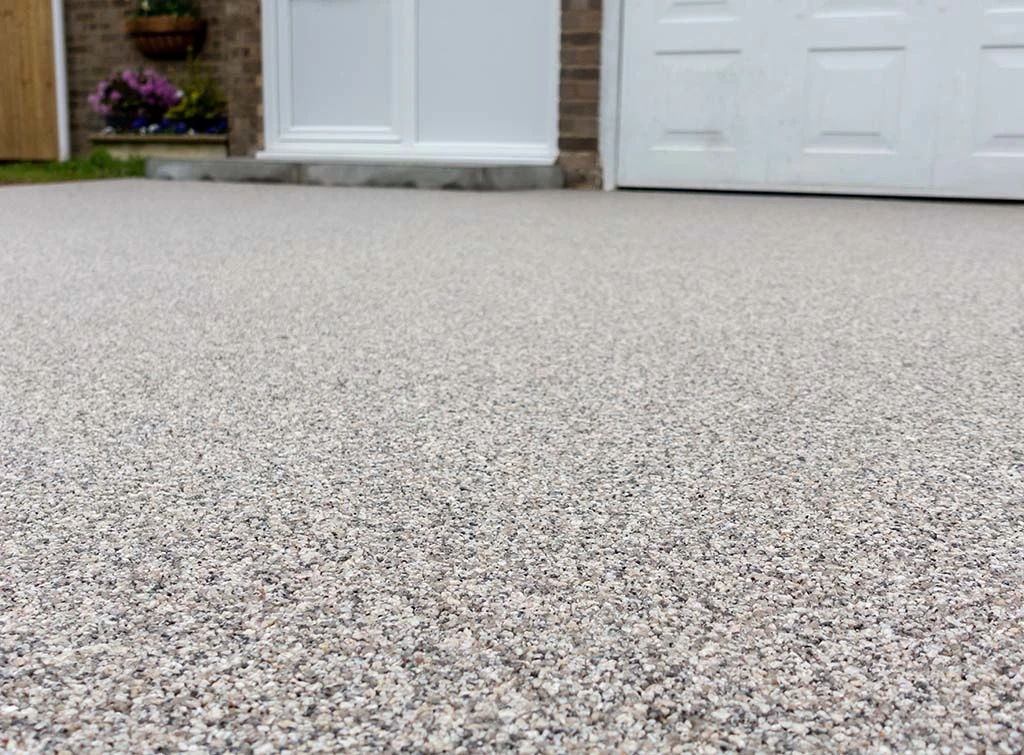
Four surfaces cover almost every driveway we install, and all four fail the same way when the base beneath them is wrong. Resin-bound is covered on our resin driveways page. If you are weighing the same choice for a patio, porcelain paving answers a slightly different question.
| Surface | Character | Repairs | Drainage | Best suited to |
|---|---|---|---|---|
| Block pavingMost repairable | Concrete, clay or natural stone blocks. Concrete gives the widest choice of colour and format, clay keeps its colour for decades, and stone setts suit older properties. | Individual units lift and relay, so an oil stain or a trench for a cable is a local job rather than a whole-surface job. | Permeable versions available, using blocks that let rain drain straight through into the stone below. | Family drives across Lincoln and Gainsborough where cars turn and reverse daily. |
| Resin-boundSmoothest finish | Natural aggregate bound in clear resin, laid as one continuous surface with no joints for weeds to find, in blends from natural stone to contemporary greys. | Patch repairs are possible but the join is usually visible, so the base has to be right first time. | Lets rain drain through when laid on the right base. | Prams, bikes and wheelchairs, and contemporary properties. |
| GravelSimplest option | Loose decorative aggregate over a membrane, ideally in a stabilising grid so it stays where you put it. | Top up as needed. The simplest surface to maintain, and the easiest to change your mind about. | Free-draining by nature, which usually simplifies the whole surface water question. | Rural properties around Torksey, Stow, Marton and Newton-on-Trent. |
| TarmacFastest to lay | A continuous black surface, quick to install over a large area and hard-wearing under weight. | Patches show. Edges are the usual failure point when they are not restrained properly. | Not permeable unless specified as porous, so a drainage strategy is essential. | Long drives and larger plots near Scunthorpe and Saxilby. |
Drainage, SuDS and the Five Square Metre Rule
In England the cut-off is five square metres, less than half a parking space. Pave more than that at the front and the rain must either drain through the surface itself, or run somewhere inside your own boundary that can soak it up: a border, a lawn, or a soakaway. Do neither and you need planning permission. Councils call it SuDS, and the principle is that your rain stays on your plot.
What Clay and Sand Mean for Your Drainage
In practice, every driveway we plan includes a surface water strategy from the outset. That means one of three things: permeable blocks that take the water down into the foundation, a channel drain running to a soakaway sized for the area, or a gentle fall into a planted border that can absorb it.
The heavier clay soils around Lincoln and Sturton-by-Stow drain slowly, so soakaways there need to be larger and further from the house. The lighter ground towards Torksey, Marton and Newton-on-Trent takes water more readily. Only a site visit tells you which you have.
If the fall of your plot runs towards the house, this stage is not optional. Get it wrong and you push water at your damp-proof course, the barrier in your walls that keeps the house dry. No amount of good blockwork fixes that afterwards.
Not sure what is under your driveway?
We’ll dig a small test hole, tell you exactly what is under there, and put the plan in writing before any work starts.
Block Paving Lincoln Design Choices That Still Look Right
The block paving Lincoln driveways that still look good after a decade are usually the plainest. The ones that look dated usually have too much going on.
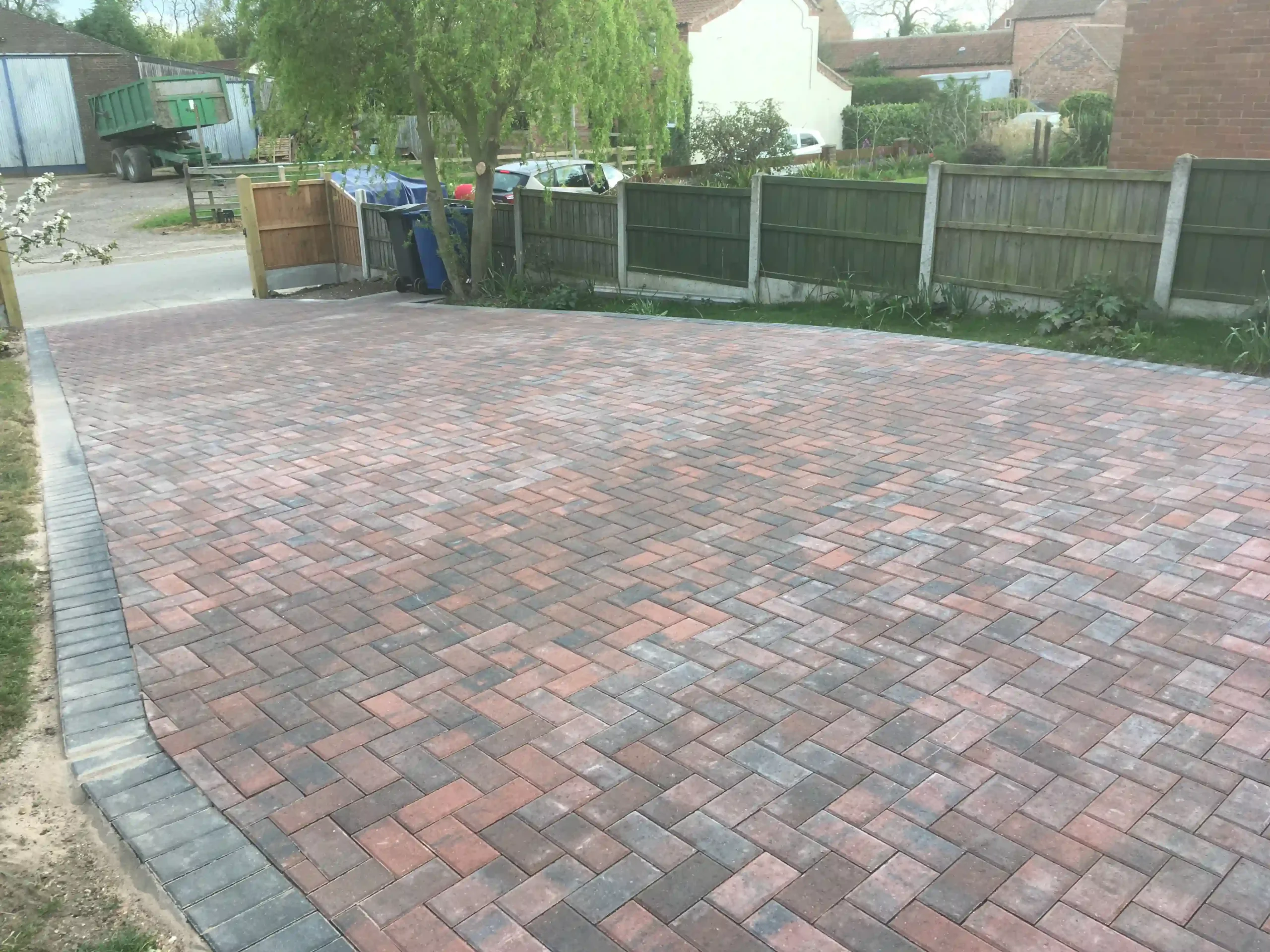
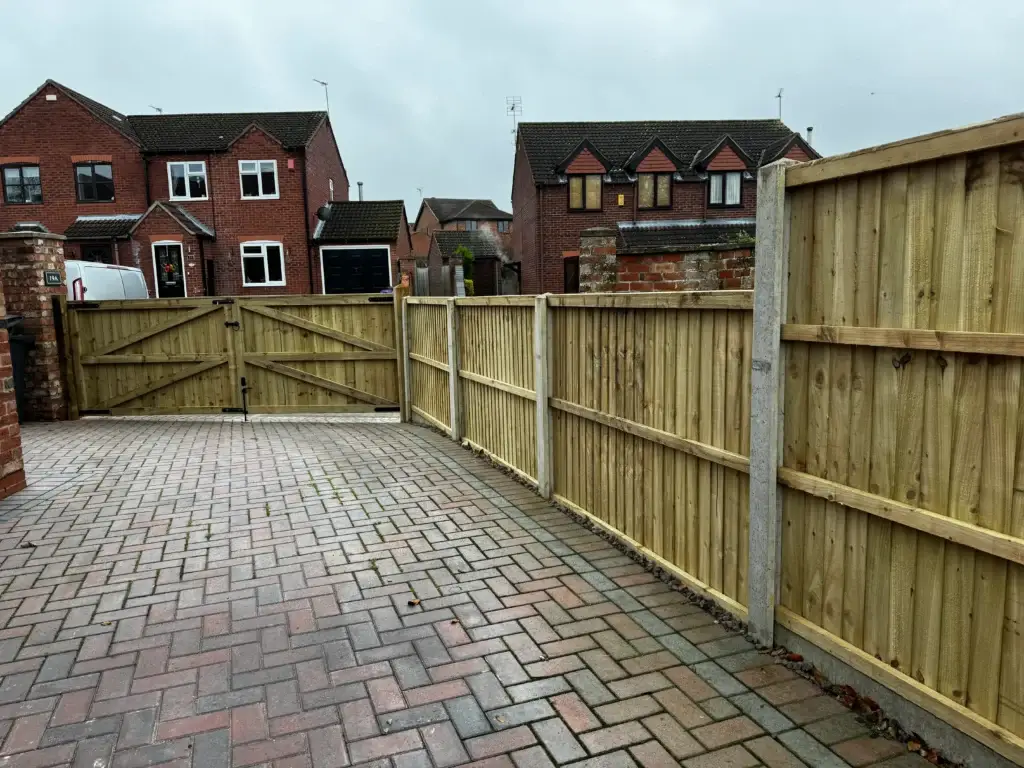
Herringbone, the classic zig-zag laid at forty-five degrees to the direction you drive, is the strongest pattern, because the angled joints resist the twist of turning wheels. Stretcher bond looks tidier on narrow drives and paths. Circle features and multiple contrasting colours date quickly and complicate any future repair.
Take the colour cue from the house rather than from a brochure. Red brick properties across Lincoln and Gainsborough sit well with charcoal and buff blends, while rendered and stone properties suit silver-grey tones. If you are unsure, our garden designer Lincolnshire team will lay samples on your own drive in daylight before anything is ordered.
Two colours, one laying pattern, and a border that follows the shape of the house. A drive built like that is also the easiest one to repair later.
Reshape Landscaping Ltd · Design teamRecent projects
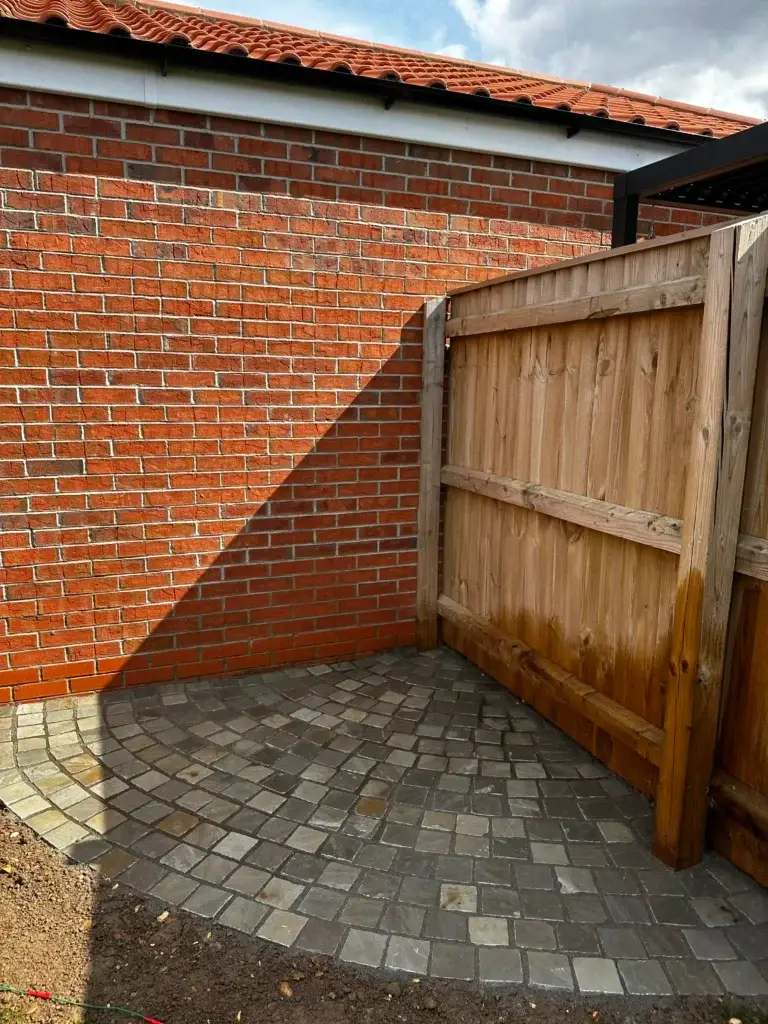
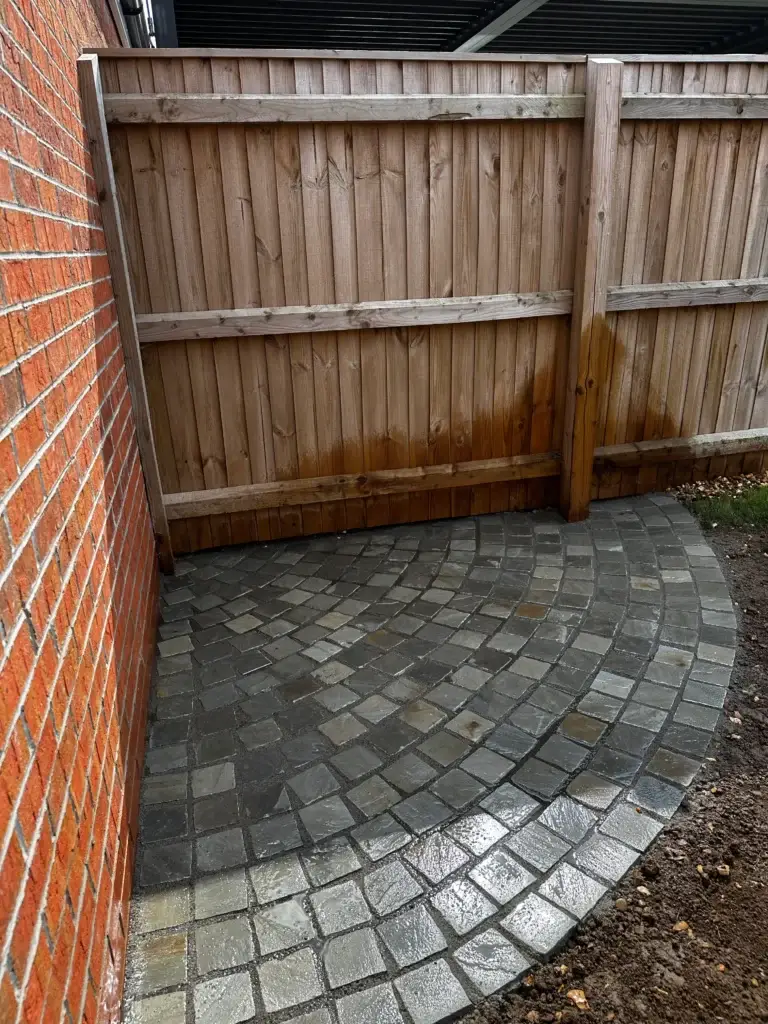
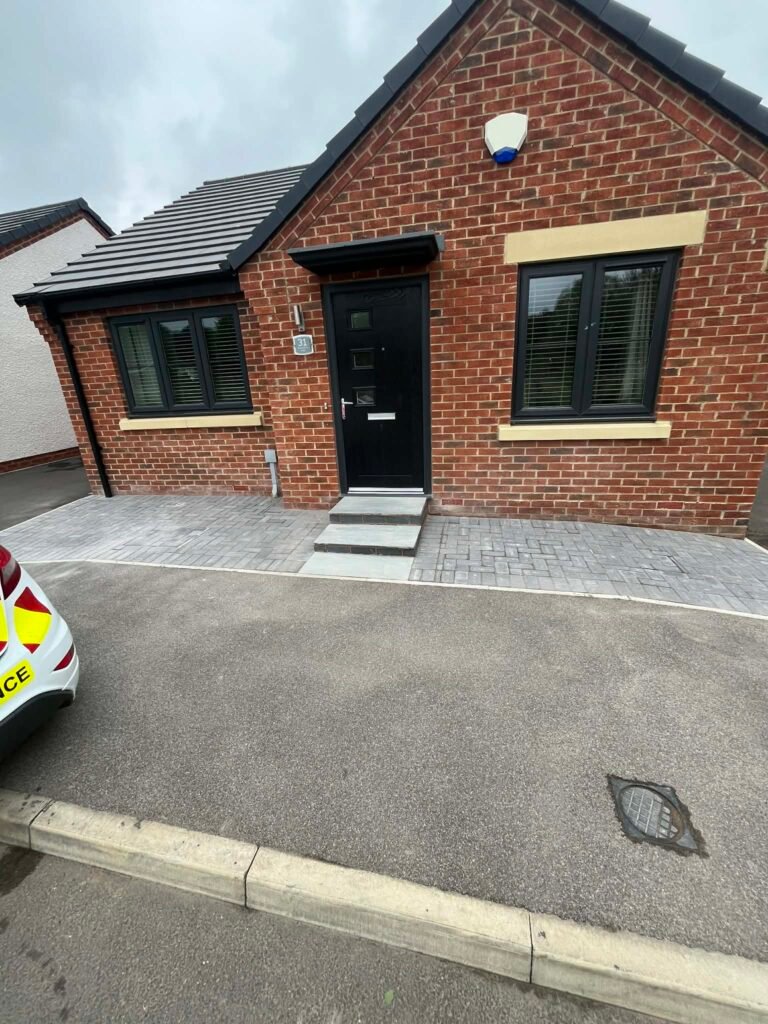
A selection of our work
Planning the Driveway With the Rest of Your Garden
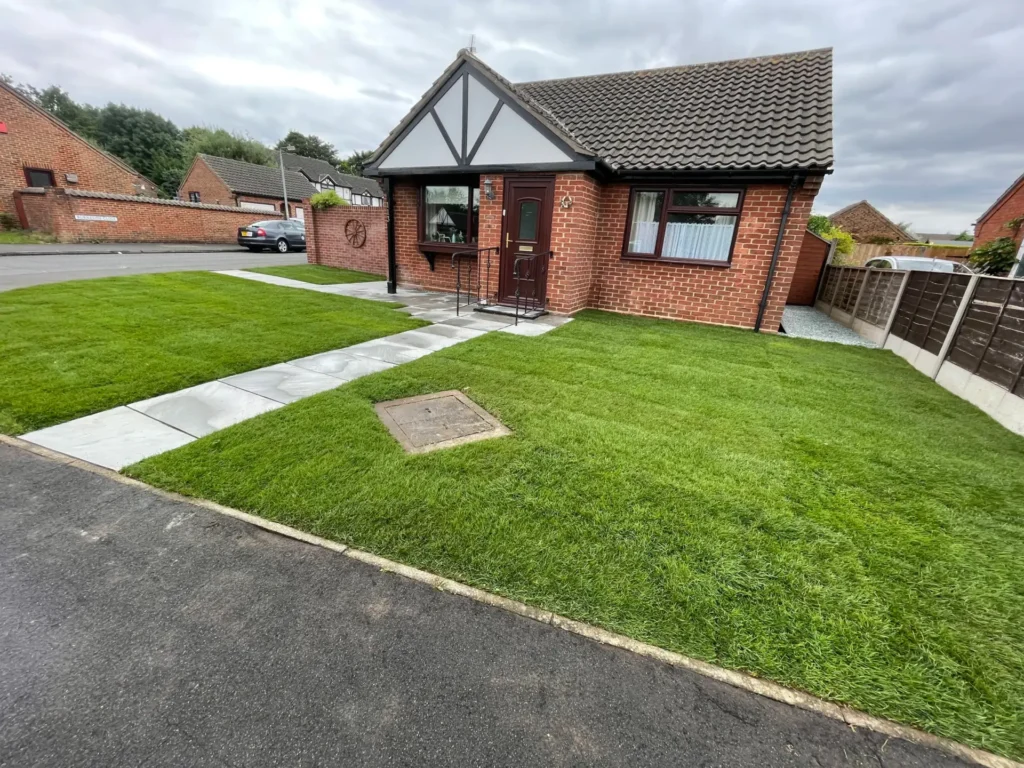
A block paving Lincoln driveway is the first thing anyone sees, and it rarely looks finished on its own. The front boundary, the path to the door, the planting and the lighting all read as one picture from the pavement.
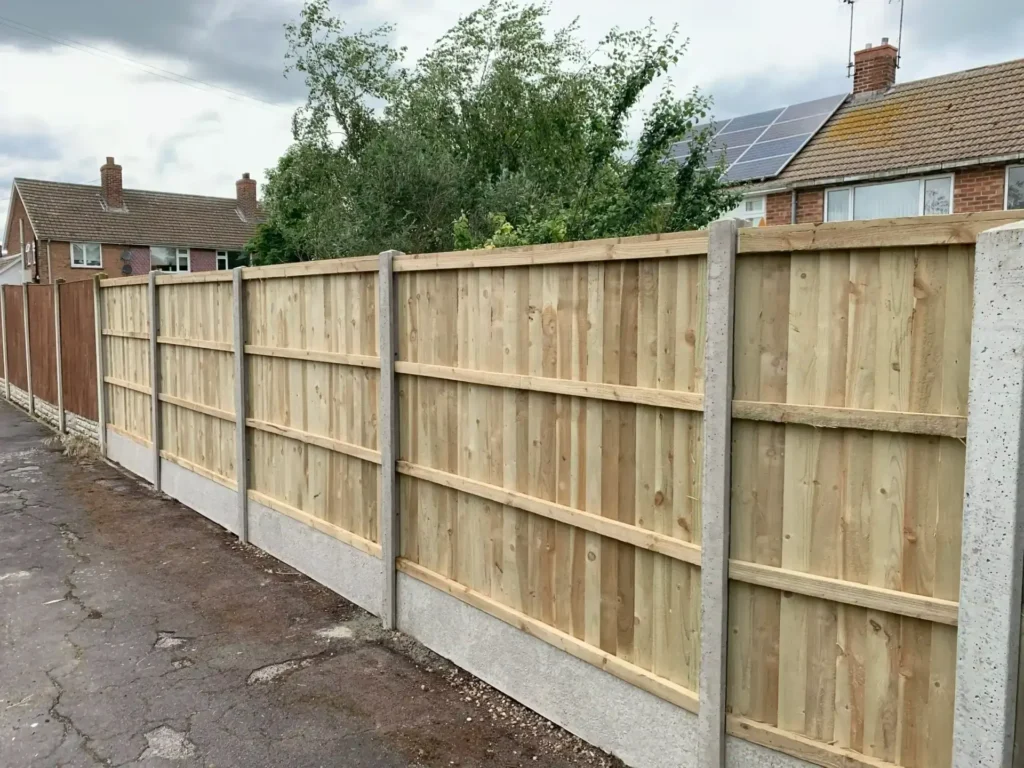
Most of our garden makeover Lincoln projects start at the front for that reason, and our patio installation Lincolnshire work often runs in the same visit. Bringing the fencing installation Lincoln, the patio and the turfing Lincoln into one programme is simpler than coming back for each, because the digging, the levels and the waste removal are shared.
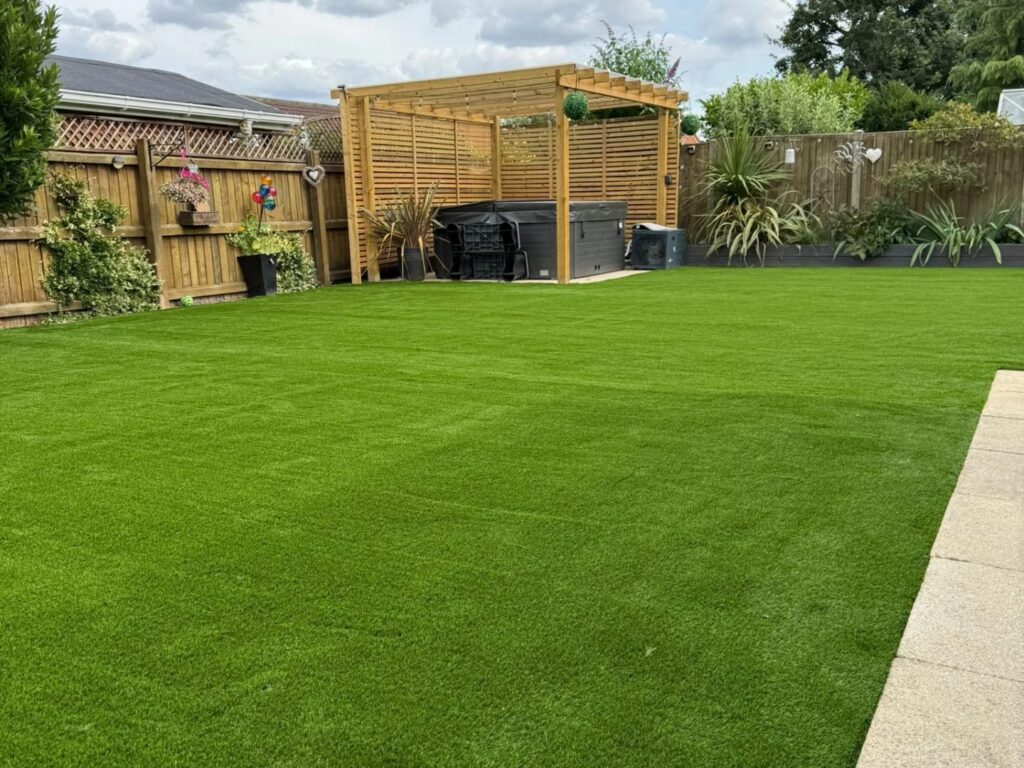
Where a front garden is small or overshadowed, artificial grass installation Lincolnshire gives a low maintenance garden Lincoln finish that stays green beside hot paving. Where there is more room, soft landscaping Lincoln with structural, drought-tolerant planting works better.
Explore the rest of what we do
Choosing a Landscaping Company in Lincoln
The team laying it matters as much as the blocks going on it. If you are comparing driveway installation in Lincoln, ask each one who will actually be on site and where the surface water is going to go.
A contractor who answers both plainly is nearly always the safer choice. Any landscaping company Lincoln or landscaping company Gainsborough homeowners are considering should be willing to put that in writing without being chased.
Why homeowners pick us
Reshape Landscaping Ltd was established in 2010 and has completed more than 400 projects across Lincoln, Gainsborough and the wider Lincolnshire area. Our designers are National Design Academy qualified, we hold the Houzz 2026 Best of Service award, helped design and build a garden featured on ITV’s Garden of the Year, and we are approved installers for Talasey and Select Living Group products.
- The full specification written down before we start
- Surface water strategy agreed before we lift a slab
- Recent local driveways you’re welcome to go and look at
- Our own team on site, not a rotating set of subcontractors
Block Paving Lincoln: Frequently Asked Questions
What is the best time of year to lay a block paving driveway?
Block paving Lincoln driveways go down all year, although the groundwork is easier when the site is not saturated. Late spring to early autumn gives the cleanest run. Winter is fine, provided the open ground is kept clear of standing water.
How long does a block paving Lincoln driveway take?
Most domestic driveways take between three and fourteen days on site, and a straightforward single drive is usually done inside a week. However, larger areas, difficult access or a soakaway extend that. You get a start date and a working sequence before the first machine arrives.
Can you lay a block paving Lincoln driveway over the existing one?
Almost never, and it is one of the most common reasons driveways fail early. Laying over an old surface raises the finished level, often above the damp-proof course, and leaves the weak base in place. Instead, we excavate and rebuild from the ground up.
Do I need planning permission for a new driveway?
For most homes no, provided the surface is permeable or the water goes to a soakaway, border or lawn inside your own boundary. It becomes an issue when more than five square metres drains onto the road. We design the drainage so it does not come up.
Which driveway material copes best with Lincolnshire ground?
All four work here when the base is right. Block paving Lincoln jobs handle heavy clay well, because single units can be lifted and relaid if anything settles. Gravel suits the lighter ground. Resin-bound needs a very well prepared base, and tarmac wants properly restrained edges.
How do I stop weeds growing through block paving?
Weeds grow in the joints, not up through the blocks. Fill every joint with fine dry sand or a compound that sets firm, compact the surface, then top the joints up again. Then brush the drive a few times a year and re-sand it every couple of years.
What is the cheapest way to pave a driveway?
Gravel is usually the most affordable surface. Block paving, resin-bound and tarmac cost more, and all four fail the same way when the base beneath them is wrong, so the groundwork matters more than the surface on top.
Areas We Cover
We install block paving Lincoln driveways, patios, fencing and full garden schemes across Lincoln, Gainsborough, Scunthorpe, Sleaford and the areas between them, and further afield across Lincolnshire when the job suits. Our driveways page sets out the surfaces we lay in Lincoln, Gainsborough, Scunthorpe and Sleaford. If you’re not sure whether you’re inside our patch, just ask.
Book Your Free Site Visit
If your driveway is sinking, ponding or overrun with weeds, now is a good time of year to put it right. Every block paving Lincoln survey starts the same way: we assess the ground, explain what is causing the failure, set out the drainage you need, and put the whole specification in writing.
Whether it’s a driveway on its own, decking installation Lincolnshire at the back, ongoing lawn care Lincoln, a small garden design Lincoln scheme or garden design Gainsborough for a larger plot, the site visit is free and there is no obligation.