
Most fences that come down in the wind fail at the posts.
When a repair is enough, when the run should be replaced, and the posts we recommend for the new fence.
Autumn and winter bring the strongest winds of the year, and that is when a fencing contractor in Lincolnshire sees the most storm-damaged fences. Repairs are best booked in before the next spell of high wind, while a damaged section is still standing.
This guide covers why fences fail in high winds, when a repair is enough and when the fence should be replaced. It also covers the posts, panels and materials we recommend, and what to ask before booking the work.
THE SHORT VERSION
- Most fence damage in high winds starts at the posts.
- Where the posts are sound, new panels are often enough.
- Snapped or rotten posts mean the run should be replaced.
- For a replacement we recommend concrete posts and gravel boards.
- The old posts and footings should come out before the new fence goes in.
ON THIS PAGE
- The quick answer
- Why fences fail in strong winds
- How we replace a fence
- Fence repair, new panels or a full replacement
- Why concrete posts and gravel boards hold up
- Timber, composite or metal fencing
- Fencing alongside patios, gates and driveways
- What to ask a fencing contractor
- Frequently asked questions
- Areas we cover
- Book your free site visit
The Quick Answer
A storm-damaged fence can be repaired where the posts are upright and sound and only the panels have come out. Where posts have snapped or rotted at ground level, the run should be replaced, and we recommend concrete posts with gravel boards for the new fence. Any fencing contractor in Lincolnshire should check every post on the run before recommending either. We repair and replace fences through the autumn and winter in Lincoln, Gainsborough, Scunthorpe, Sleaford and the surrounding areas.
Why Fences Fail in Strong Winds
Most storm-damaged fences we look at have one or more of these problems.
WHAT WE ARE FINDING ON SITE
Timber Posts and Ground-Level Rot
Timber posts rot where they enter the ground, because that is where the wood stays wet the longest. The rot is usually hidden below the soil, so a fence can look sound until a strong wind snaps it. When one post goes, the posts either side take the extra load, which is why a whole run often comes down together.
How We Replace a Fence, Stage by Stage
A replacement fence goes through eight stages, in this order. The same stages apply to a single damaged section and to a full boundary, and our page on fence replacement in Lincoln covers the service itself.
Site visit
We walk the full run, check every post and panel for movement and rot, and agree the line and height with you.
Strip out
We take down the damaged panels and remove the old posts, breaking out the old concrete footings as we go.
Set out
A string line goes up along the boundary, and the post positions are marked to suit the panel width.
Dig the holes
Each post hole is dug to the depth the fence height needs, with the spoil set aside for removal.
Set the posts
Concrete posts go in on concrete, each one checked for level and line before the next goes in.
Gravel boards
Concrete gravel boards slot in along the bottom of each bay, between the posts.
Panels and gates
The panels slide down into the post grooves, and any gates are hung and adjusted to close and latch correctly.
Clear up
The old fence and the spoil are taken away, and paths and patios are swept clean.
Fence Repair, New Panels or a Full Replacement
A new fence line on concrete posts is the option we recommend for most storm-damaged fences, although all four have a place. Where only a panel or two has blown out and the posts are upright, new panels on the existing posts are enough.
Where posts have snapped or rotted, patching one bay leaves the rest of the run standing on the same weak posts. This is how the four options compare.
| Option | What it involves | In high winds | Upkeep | Best suited to |
|---|---|---|---|---|
| New fence on concrete postsOur recommendation | Old posts and footings out, then new concrete posts, gravel boards and panels. | Concrete posts do not rot, and a panel that lifts out can be refitted. | Treating the timber panels from time to time. | Fences that have failed at the posts, and most rear and side boundaries. |
| New panels on existing postsWhere posts are sound | Damaged panels replaced, with the posts left in place. | Depends on the condition of the posts that stay. | Treating the timber panels from time to time. | Concrete posts that are upright and undamaged. |
| Composite fencingLowest upkeep | A complete composite fencing system on new posts. | Fitted as one system on posts set in concrete. | No treating or painting. | Homeowners who want a low-maintenance boundary. |
| Re-setting a timber postShort-term repair | A loose or leaning timber post set again in fresh concrete. | Holds again until the timber rots at ground level. | Treating the posts and panels from time to time. | Newer timber posts that have moved but not rotted. |
Why Concrete Posts and Gravel Boards Hold Up
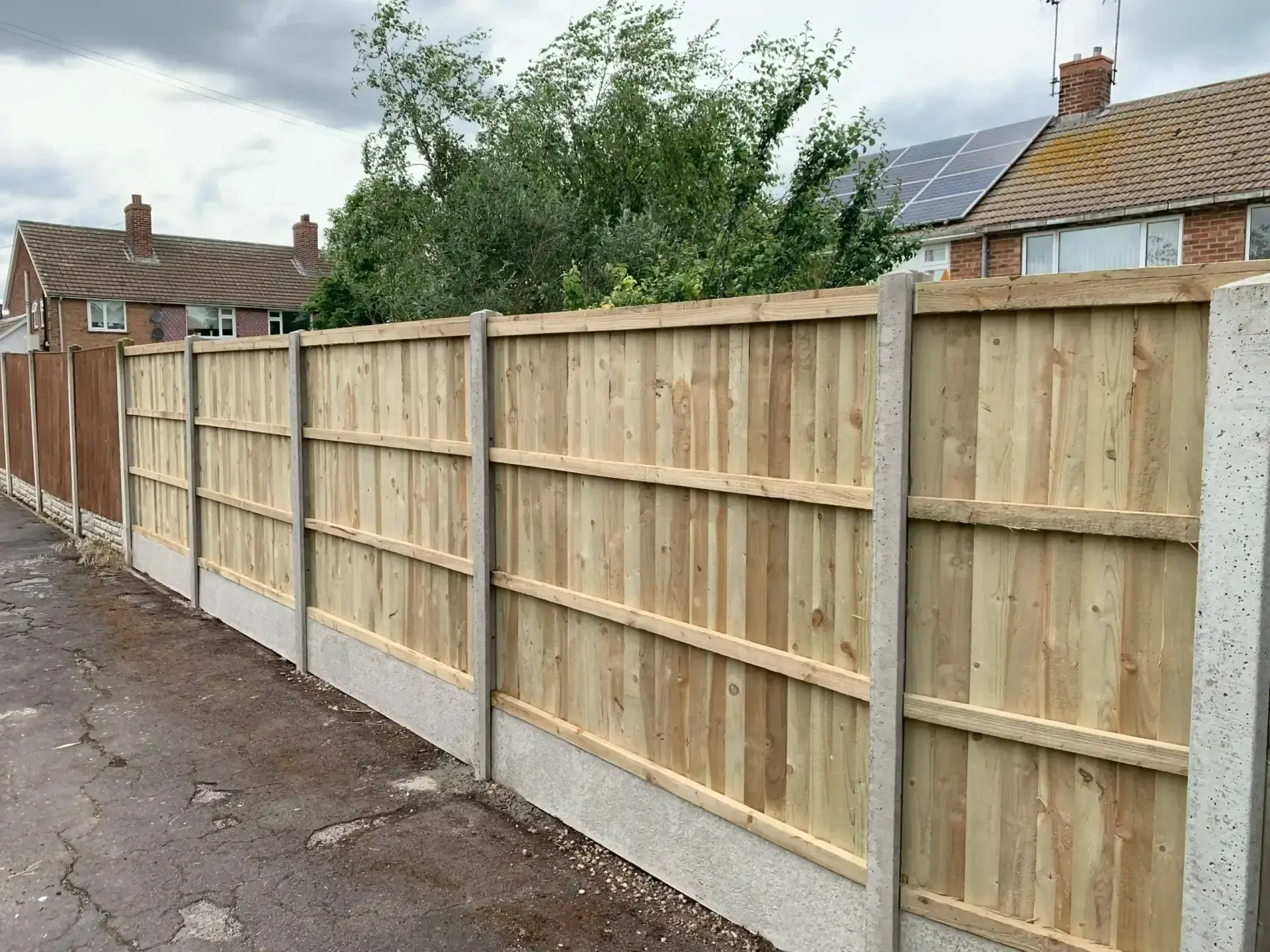
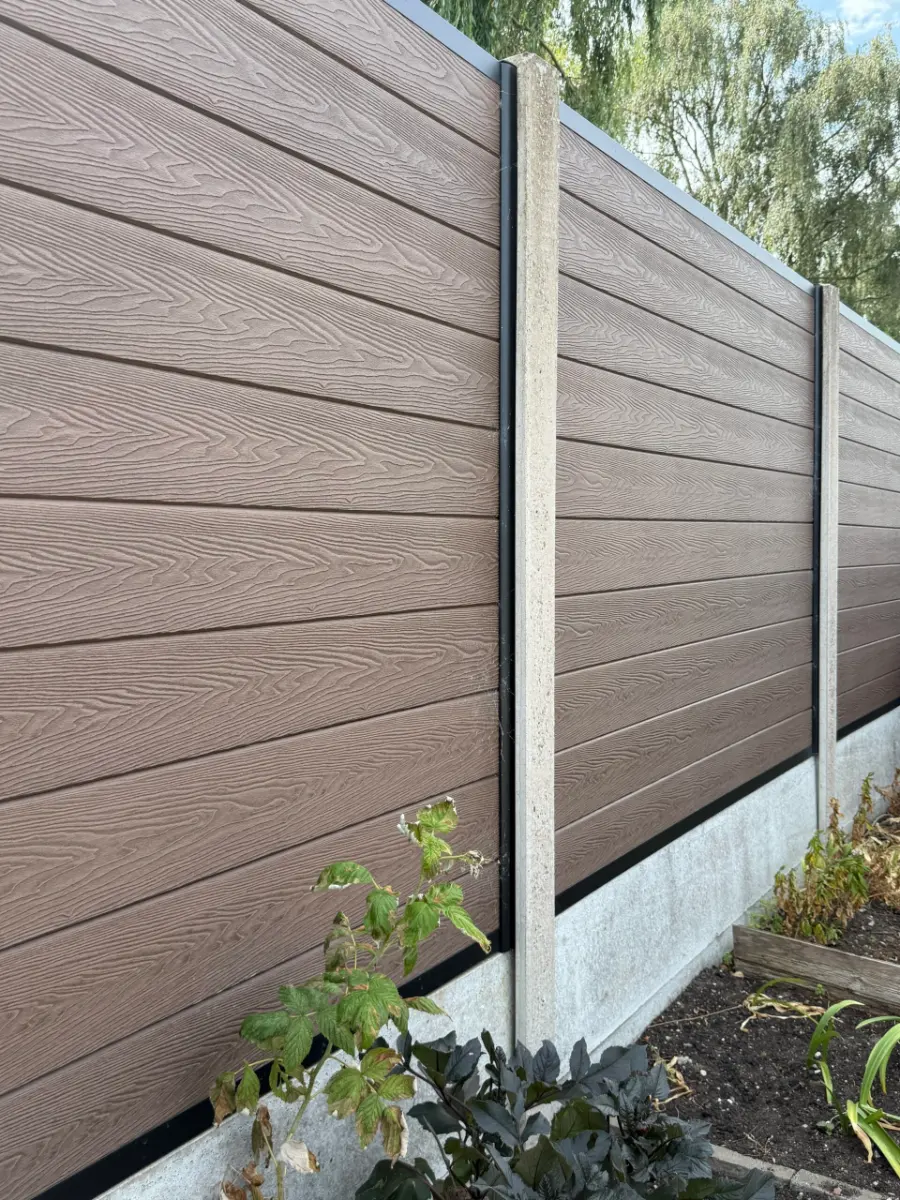
A concrete post does not rot, so the fence keeps the strength it had on the day it went in. Many homeowners across Lincolnshire now choose concrete posts and gravel boards when a storm-damaged fence is replaced.
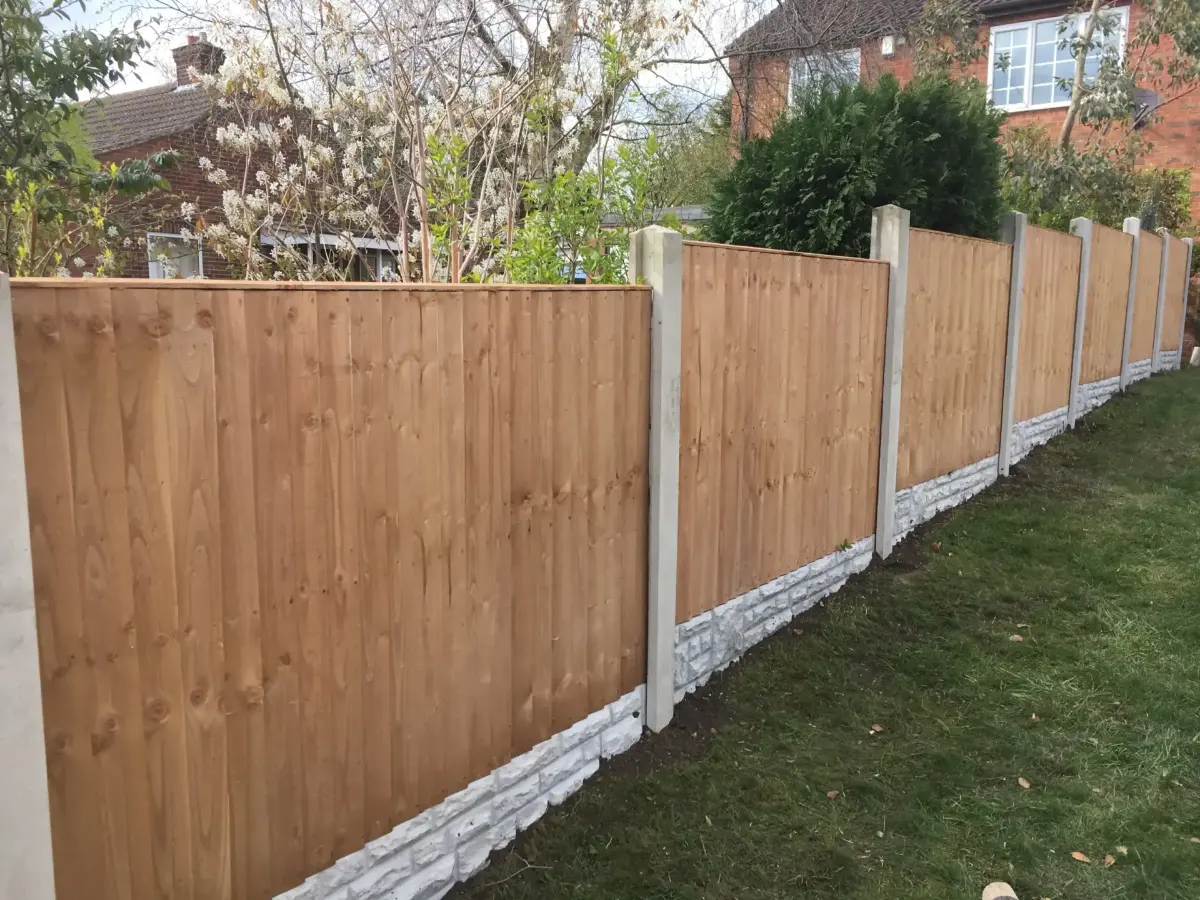
Panels slot into grooves in the concrete posts. In very strong winds a panel can lift out of its slot while the post stays standing, and the panel can then be put back or replaced without digging anything out.
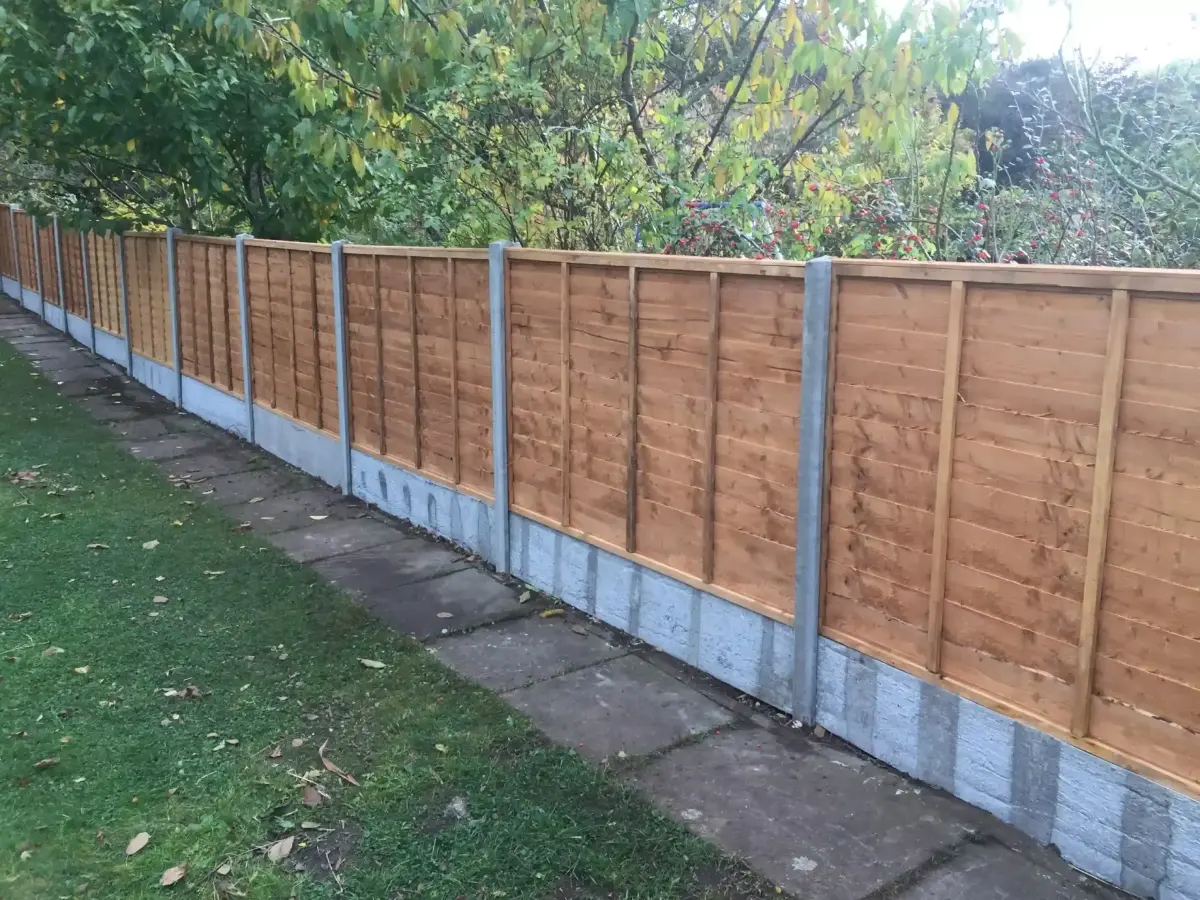
Gravel boards run along the bottom of each bay. They keep the timber panels clear of the soil, where they would otherwise start to rot first, and a damaged board can be swapped on its own. Our guide to garden fence maintenance covers looking after the timber once the fence is up.
Not sure if the fence can be repaired?
We check every post, panel and gate on the run before recommending a repair or a new fence. It is all part of the free site visit.
Timber, Composite or Metal Fencing
We fit timber, composite and metal fencing systems, and on most jobs the choice comes down to looks and upkeep.
Close-boarded fencing gives the most privacy and is the usual choice for rear and side boundaries. Decorative timber panels, trellis and decorative screens give a softer boundary where full privacy is not needed.
Composite fencing needs no treating or painting, and we fit systems from Talasey Landscaping Solutions and Charles & Ivy. Metal fencing systems suit modern frontages where a lighter, more open look is wanted. Our garden fencing page covers every option, and all three can be fitted with matching gates.
On an open boundary, a solid panel catches the full force of the wind, so we look at the exposure before recommending a style.
Reshape Landscaping, LincolnRecent projects
RECENT FENCING WORK
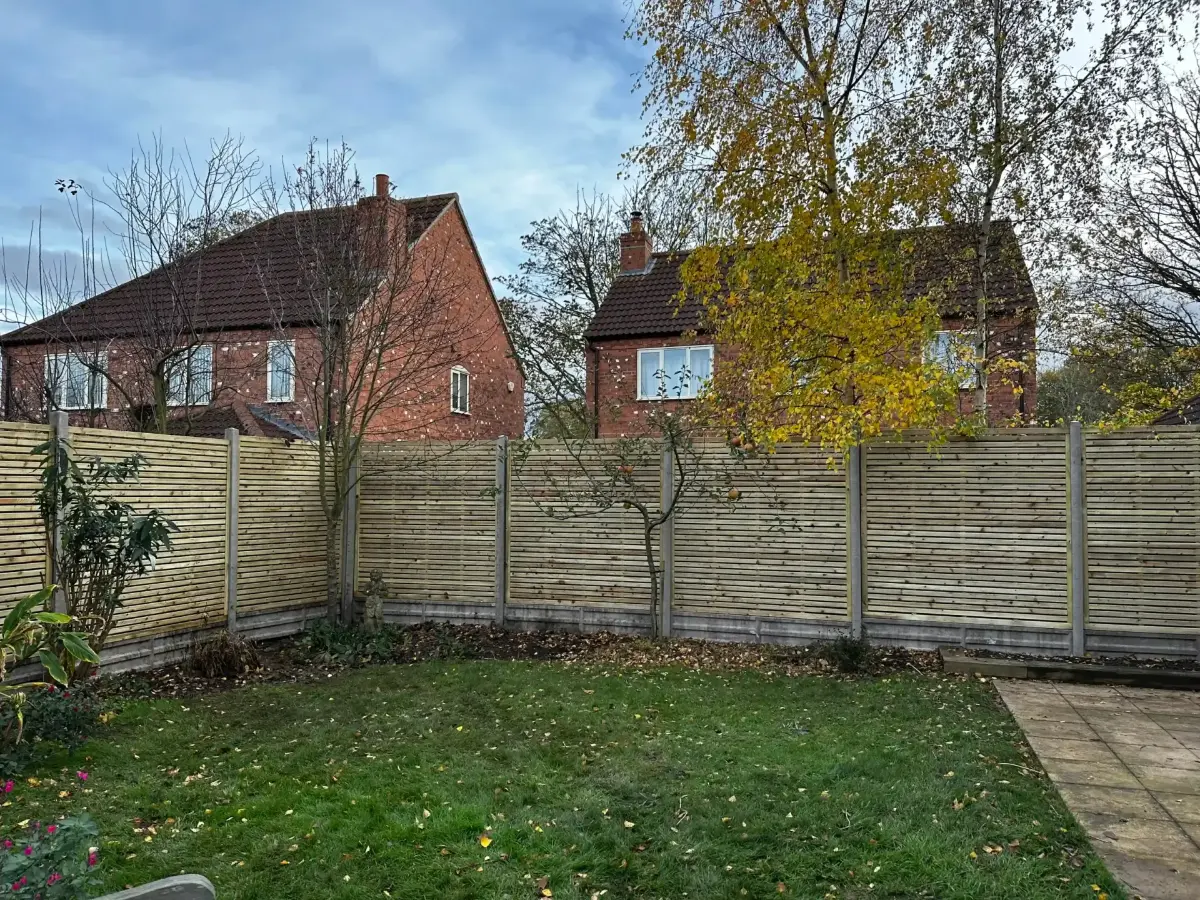
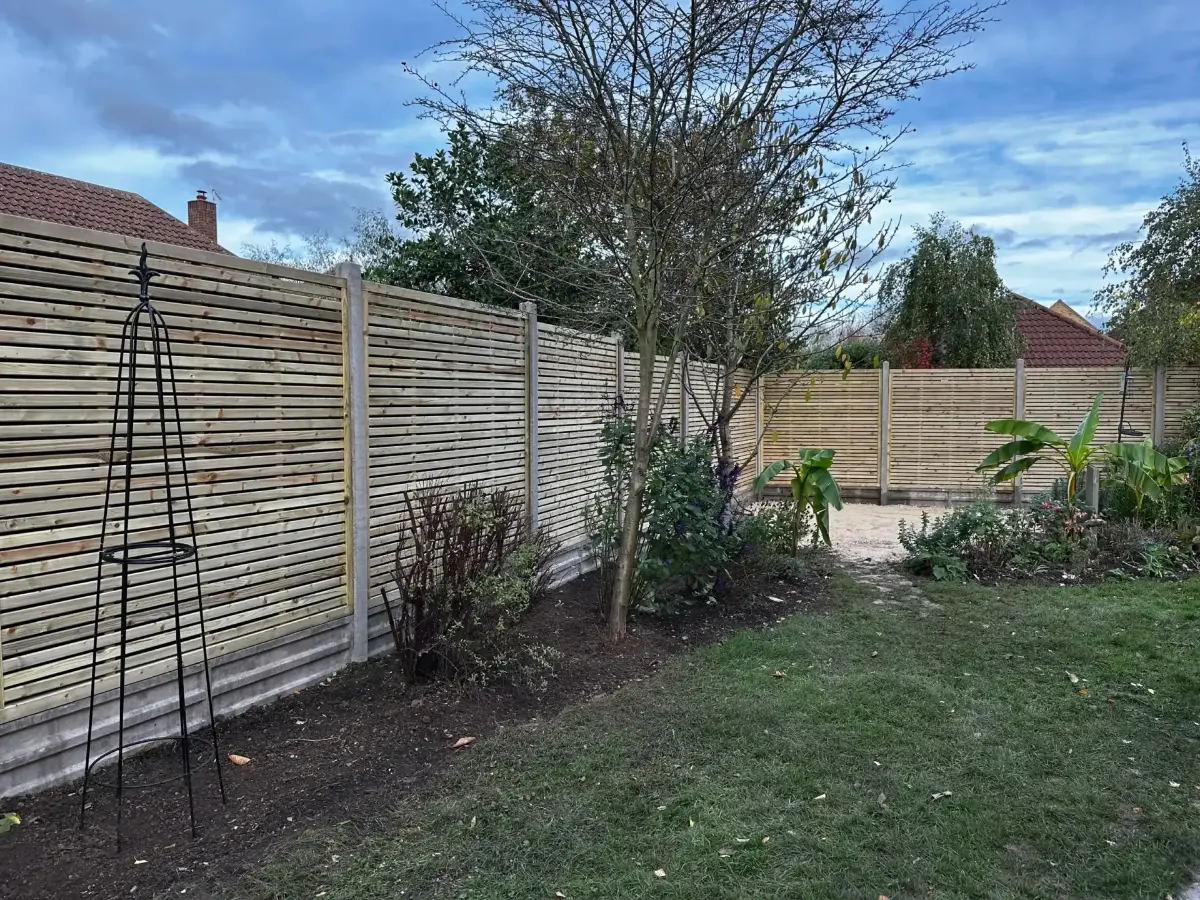
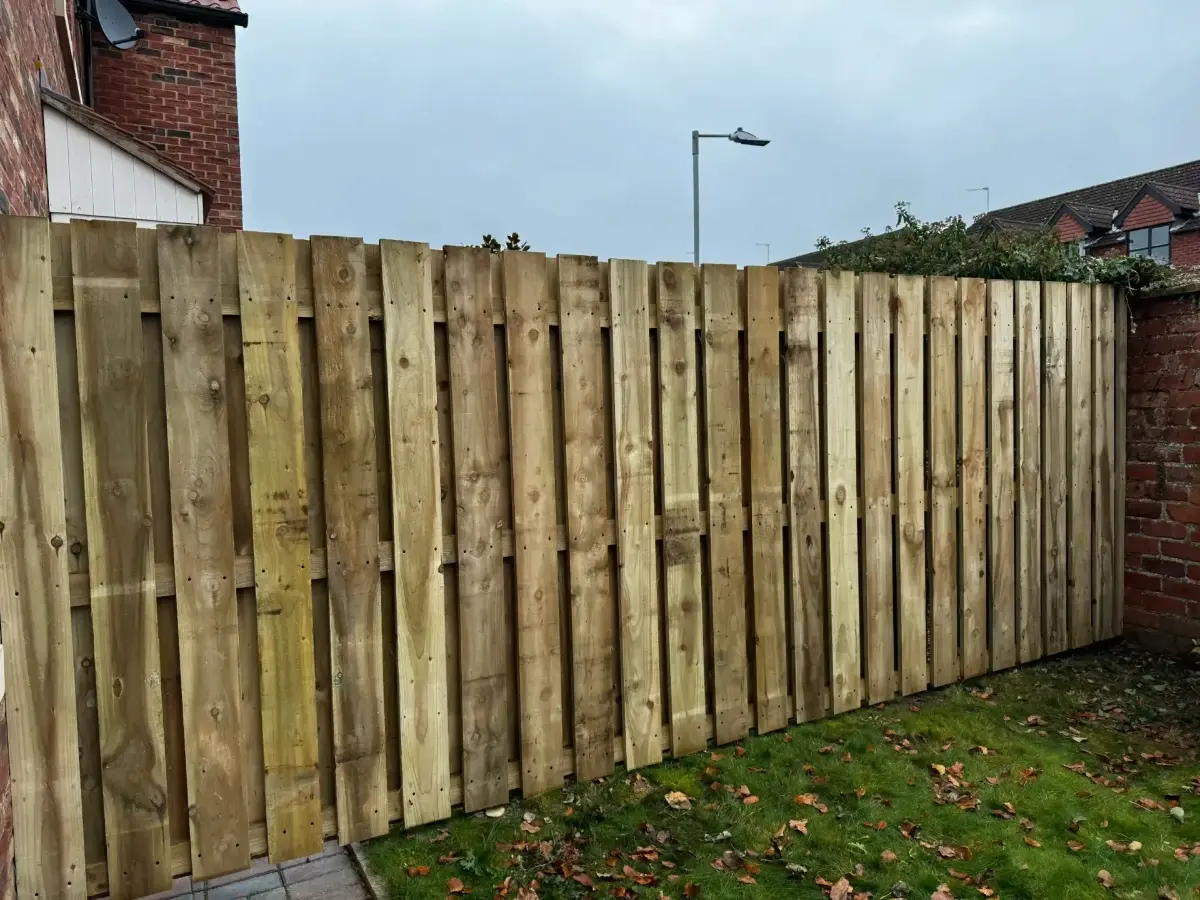
Fencing Alongside Patios, Gates and Driveways
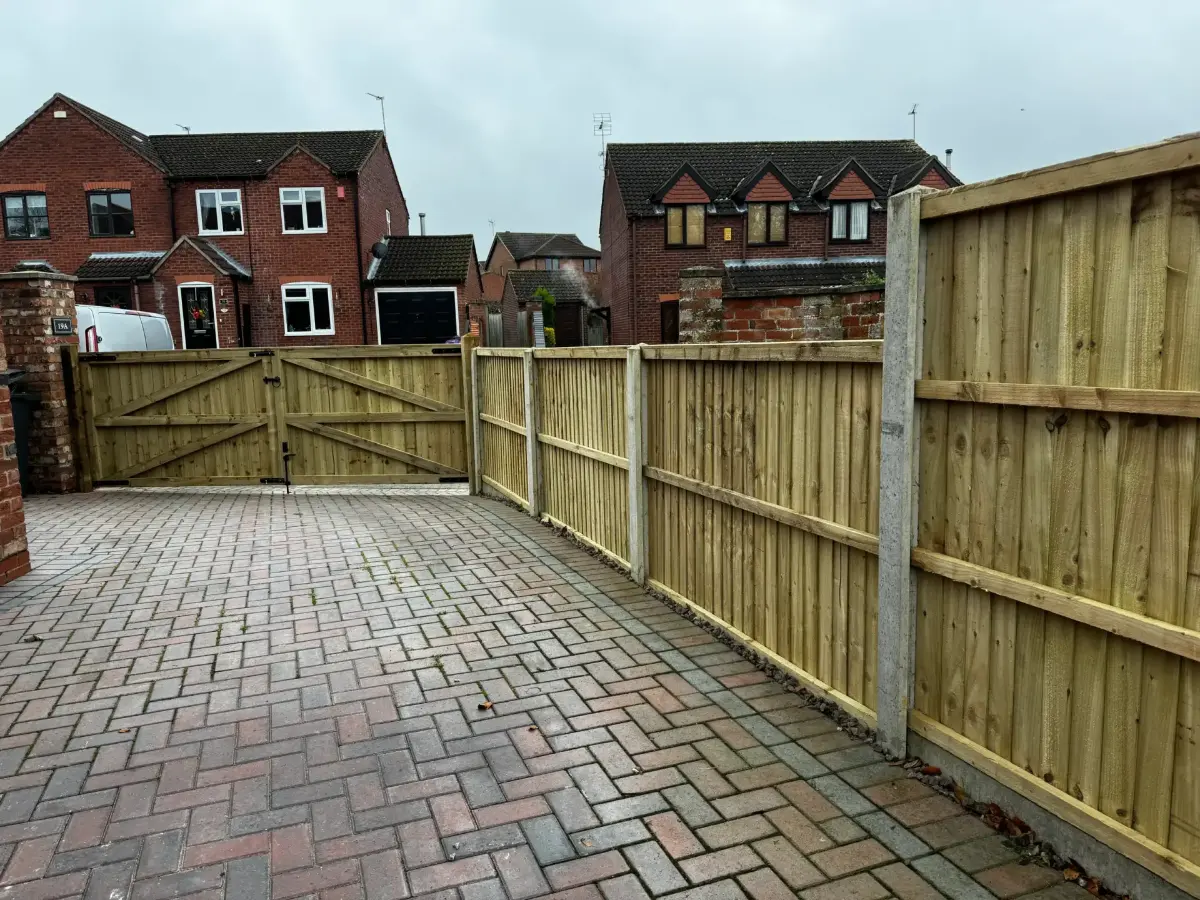
A replacement fence often goes in as part of a bigger job. Where a patio or driveway is being laid at the same time, the fence goes in first. The gravel boards are then set to the finished levels, and the paving is laid neatly up to them.
Fencing often runs alongside patio installation, driveways and new gates. As landscape gardeners in Lincoln, we plan the fence line, the levels and the gate positions together. Driveway gates are hung to clear the finished surface, and side gates are placed to suit the paths.
Our pages on fencing in Gainsborough and fencing in Sleaford cover the same service in those towns.
Explore the rest of what we do
What to Ask a Fencing Contractor in Lincolnshire
Before booking fence repairs, ask what will happen to the old posts and their concrete. Some fencing contractors leave the old footings in the ground and set the new posts beside them, which pushes the line off the boundary and changes the panel spacing. If yours does, ask what is being left out and why.
Ask what the new posts will be and how they will be set. Ask too if gravel boards are included, or if the panels will sit directly on the ground.
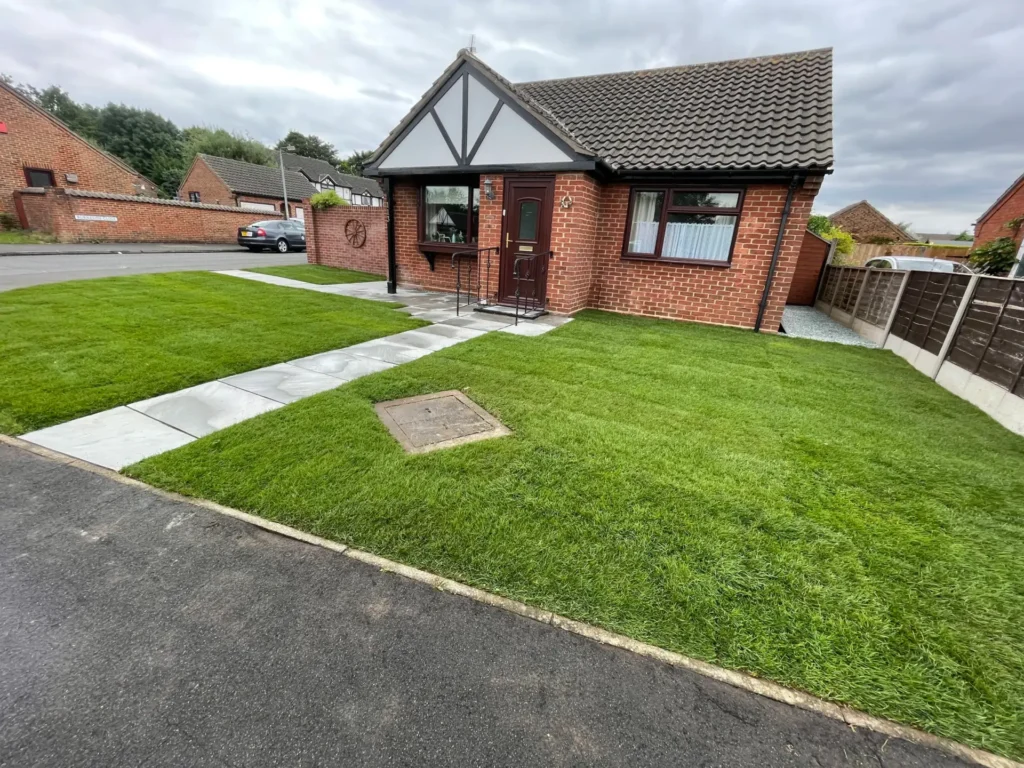
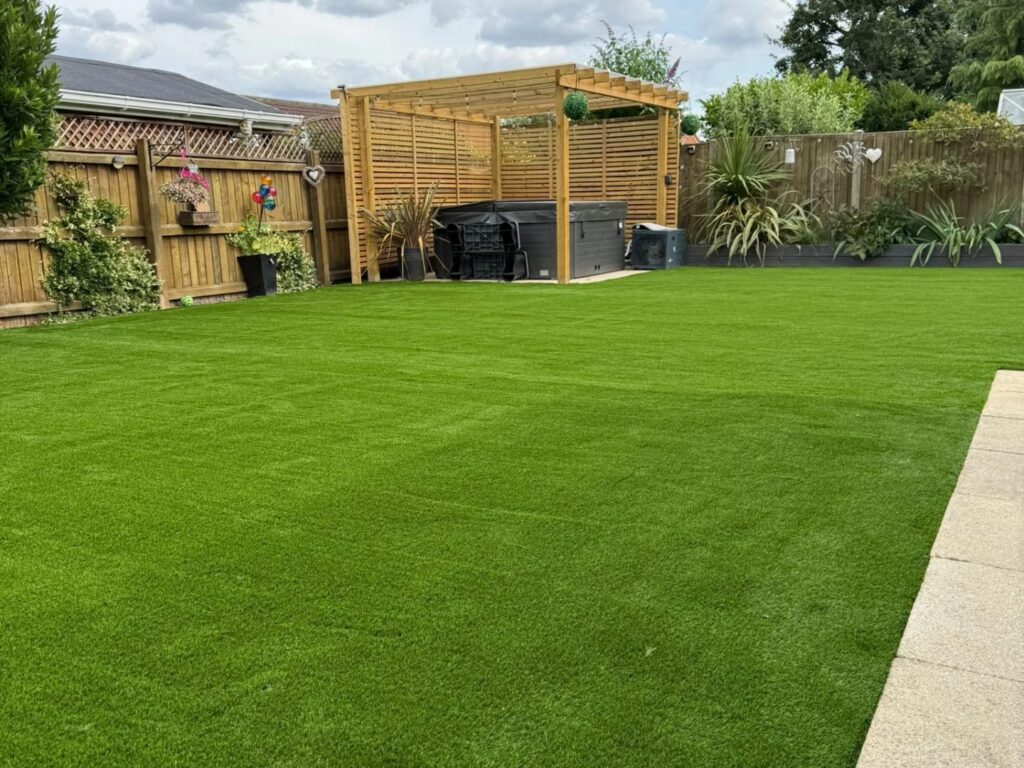
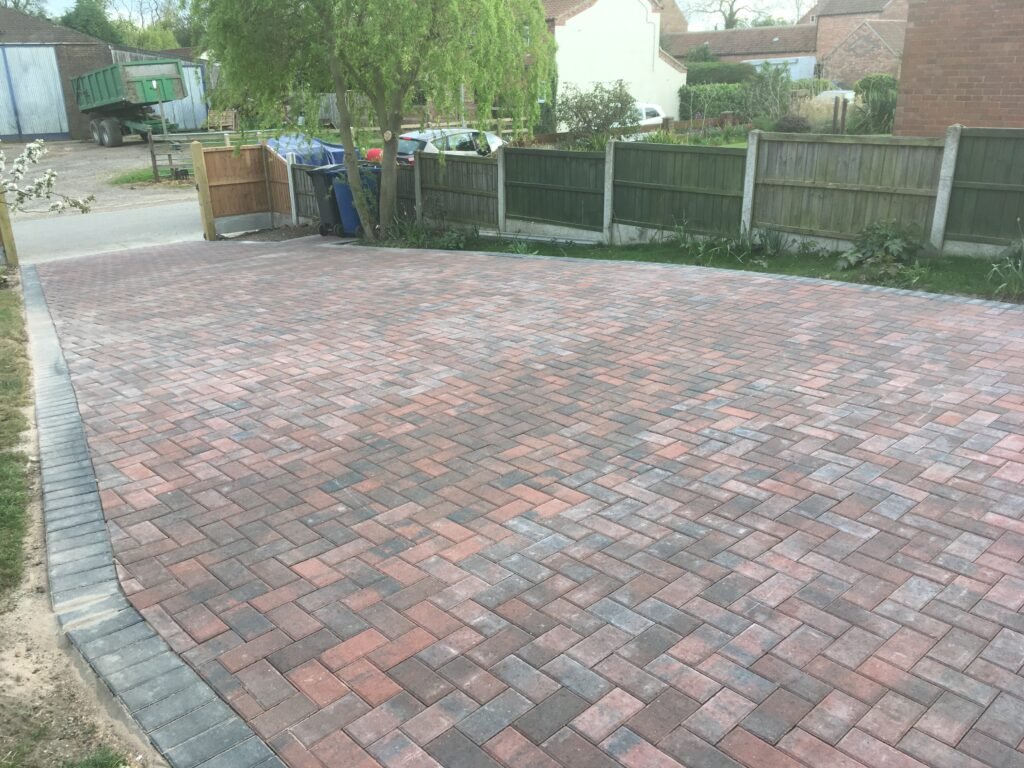
It is also worth asking to see finished fences. Our recent projects and the fencing gallery show completed work from across Lincolnshire.
WHY HOMEOWNERS PICK US
We are a British-owned and run landscaping company based in Lincoln, covering the city, Gainsborough, Scunthorpe, Sleaford and the surrounding areas.
- Established in 2010, with over 400 completed projects.
- Prestige Awards 2026 – Landscaper of the Year, Lincolnshire.
- Houzz 2026 Best of Service award, judged on customer feedback.
- Winners at the SME News Midlands Enterprise Awards 2026.
- Approved installers for Talasey Landscaping Solutions and Select Living Group.
- Helped design and build a Japanese-inspired garden featured on ITV’s Garden of the Year.
- Insured, including public liability.
Storm-Damaged Fences: Frequently Asked Questions
Can new panels go into my existing concrete posts?
Usually, if the posts are upright and undamaged and the gap between them matches a standard panel width. Older fences were not always set out to the same width, so we measure each bay before ordering new fence panels. A post that has cracked or moved is replaced along with the fence panels either side of it.
Can a gate be replaced at the same time as the fence?
Yes. A gate that has dropped or been damaged in the wind is often hanging on a post that has moved, so we replace the gate post as well. We fit single gates and driveway gates, chosen to match the new fence.
Who is responsible for a fence between two gardens?
The property deeds or title plan often show which side owns the boundary, although many do not say. Where it is unclear, it is worth agreeing the work with the neighbour before it starts. A replacement fence goes back on the existing line, so the boundary itself does not move.
Do I need planning permission to replace a fence?
Not usually, where the new fence is no higher than the old one. Planning Portal guidance allows a garden fence up to two metres high without planning permission, or one metre next to a road used by vehicles. Listed buildings and conservation areas have their own rules, so check with the local council first in those cases.
Can a fencing contractor in Lincolnshire replace a fence in winter?
Yes. Fencing goes in right through the winter. The exceptions are days when the ground is frozen or waterlogged, and the concrete for the posts is not laid in freezing weather, so it can set correctly.
Will home insurance cover a storm-damaged fence?
It depends on the policy. Many home insurance policies treat fences and gates differently from the house, so check the wording before the work is booked. We can provide photographs of the damage and a written estimate to send to your insurer.
Areas We Cover
We work as a fencing contractor throughout Lincolnshire. Our fencing in Lincoln, Gainsborough, Scunthorpe, Sleaford and the surrounding areas covers repairs and replacements, close-boarded, composite and metal fencing, concrete posts and gravel boards, and single and driveway gates.
Book Your Free Site Visit
If a fence has come down or started to lean, use the form below or call us to arrange a site visit.
Our fencing page covers the full service. The Reshape blog has more guides on looking after a garden through the year.