
Reshape Landscaping Ltd

Which Side of the Fence Is Mine? Ownership, Height and Posts

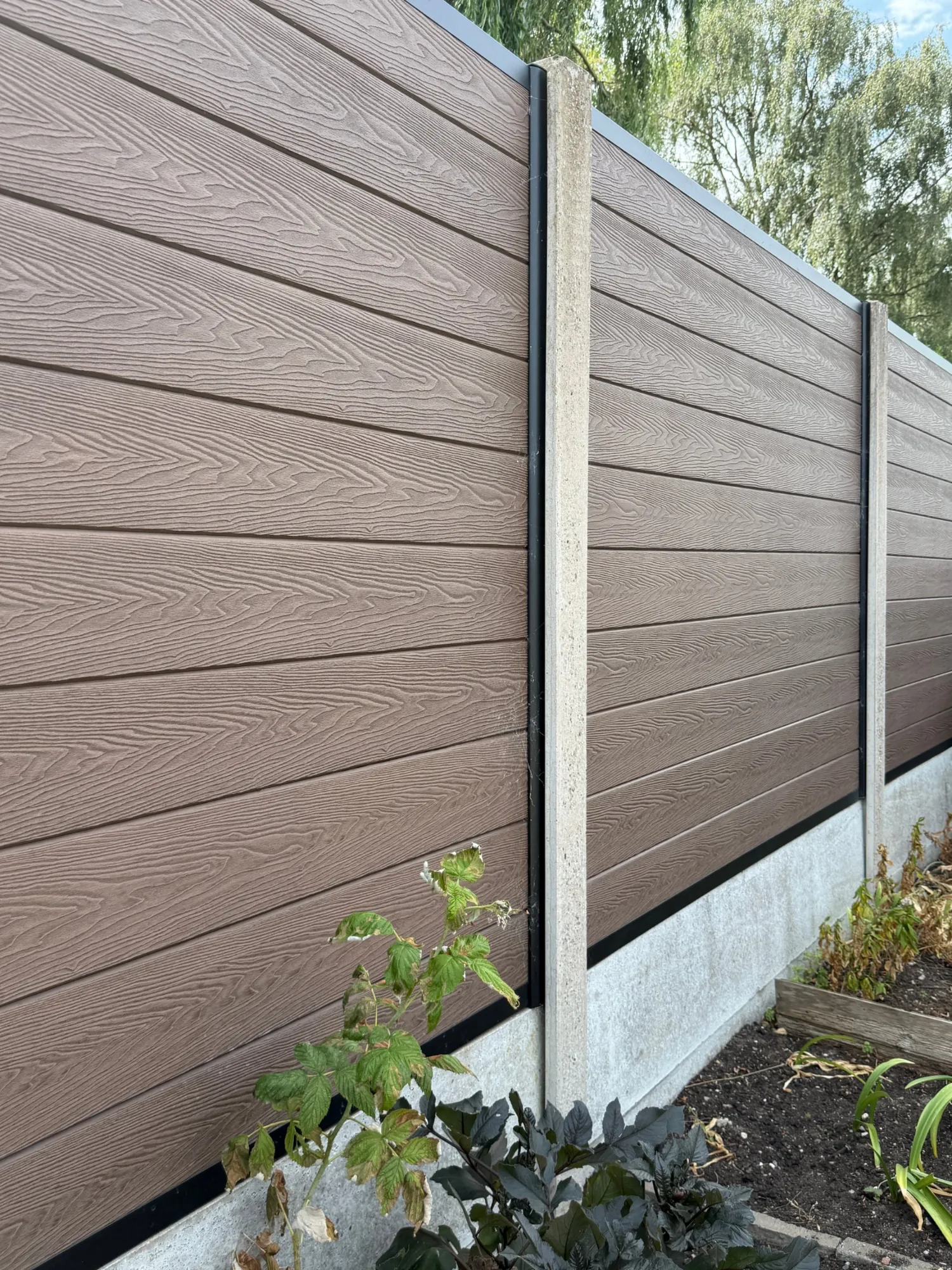
Fencing installation in Lincoln: brown woodgrain composite fence boards on concrete posts and gravel boards
Est. 2010 · Lincoln400+ projectsNational Design Academy qualified
FENCING · LINCOLNSHIRE

Most fence disputes start with a boundary nobody has checked.

Which side of the fence is yours, how high a garden fence can go and which posts hold up to the wind.
Reshape Landscaping Ltd10 min readUpdated November 2026
Prestige Awards 2026Landscaper of the Year, Lincolnshire
Houzz 2026Best of Service
Midlands Enterprise Awards 2026Best Bespoke Garden Landscaping Service, Lincolnshire

Most fence replacements we quote for in Lincoln over the colder months start with the same question: which side of the fence is yours? Fencing installation in Lincoln picks up when winter winds bring down weak runs, and the next question is how high the new fence can go.

This guide covers fence ownership, garden fence heights, concrete posts against timber posts and the fence panels we fit. It also covers each stage of an installation and what to ask fencing contractors.

THE SHORT VERSION

  • Check the title plan and the deeds first to see which side of the fence is yours.
  • There is no rule that the fence on the left belongs to you.
  • Planning rules set garden fence heights, so check with the local council first.
  • Concrete posts and gravel boards last longer than timber posts in wet ground and high winds.
  • Agree the boundary with the neighbour before the old fence comes down.

The Quick Answer

To find out which side of the fence is yours, check the title plan and the deeds for T marks or wording that names the owner of each boundary. However, where nothing is recorded, agree the boundary with the neighbour in writing before the fence is replaced. Height limits come from planning rules, so check with the local council first. For fencing installation in Lincoln, Gainsborough, Scunthorpe, Sleaford and the surrounding areas, we set concrete posts in concrete with gravel boards along the bottom.

Which Side of the Fence Is Mine?

The answer to which side of the fence is your responsibility is often in the paperwork, so start with the title plan and the deeds.

WHERE TO CHECK

T marks on the title planA T drawn against a boundary on the title plan or in the deeds shows which property is responsible for that fence or wall. The T sits on the owner's side of the line.
An H markTwo Ts joined into an H show a shared boundary. In that case, both owners agree the work and share it.
Wording in the deedsOlder deeds and conveyances often state which boundaries the buyer must put up and maintain, even where the plan carries no marks.
No mark at allMany title plans show the general line of a boundary only. When that is all a plan shows, the fence has no recorded owner and the neighbours agree between them.

Left, Right and Which Way the Fence Faces

Who owns the fence cannot be settled by which side of the garden it stands on. Although the idea that the left-hand fence is always yours is a common belief, there is nothing in law behind it.

The side the posts and rails face is a better clue, because fences are usually put up with the posts on the owner’s side. Even so, it is a convention only. Copies of the title register and title plan come from HM Land Registry, so that is the place to start. If the paperwork says nothing, agree with the neighbour who will replace the fence before work starts, and put it in writing.

Fencing Installation in Lincoln, Stage by Stage

These are the stages we follow on every fencing installation in Lincoln and across the county, from a short run of panels to a full boundary. Each stage affects how straight and solid the new fence stands, so we do not skip any of them.

1

Agree the boundary

First, confirm the line of the fence and who owns it before anything is taken down.

2

Remove the old fence

Old panels, posts and concrete footings come out, with spoil removal from site.

3

Set out the line

A string line marks the run, and then post positions are spaced to suit the panel width.

4

Dig the post holes

Holes go down to about a quarter of the post length, but deeper for gate posts and exposed sites.

5

Set the posts in concrete

Each post is then set plumb and in line, and the concrete is shaped to shed water away from it.

6

Fit the gravel boards

Concrete gravel boards sit along the bottom, so the panels stay off the soil.

7

Fit the panels

Panels or boards then go in, level along the top and fixed into each post.

8

Gates and finishing

Finally, gates are hung and caps fitted, and the old fence leaves site with us.

Concrete Posts or Timber Posts

Concrete posts with concrete gravel boards are what we recommend for most garden fencing in Lincoln and across Lincolnshire. Timber posts look softer and still suit some fences. However, they rot at ground level in wet ground.

OptionWhat it involvesStrengthsUpkeep afterBest suited to
Concrete posts and gravel boardsOur recommendationSlotted concrete posts set in concrete, with concrete gravel boards along the bottom.No rot at ground level. Damaged panels also slide out and back in.Very little beyond checking the panels.Most panel fences, and exposed or wet gardens.
Timber postsTimber lookPressure-treated timber posts set in concrete, with timber or concrete gravel boards.A softer, all-timber look on both sides.Posts checked at ground level, because rot starts there.Close-boarded fences and decorative timber runs.
Composite system postsCompositePosts made for the system, set in concrete, with the boards slotted between them.A matched finish with no painting or staining.A wash down now and again.Composite fencing beside patios and modern gardens.
Metal system postsMetalPosts made for the metal fencing system, fixed to concrete footings or a base.Slim posts and a clean, modern line.An occasional wash.Metal fencing systems and decorative screens.
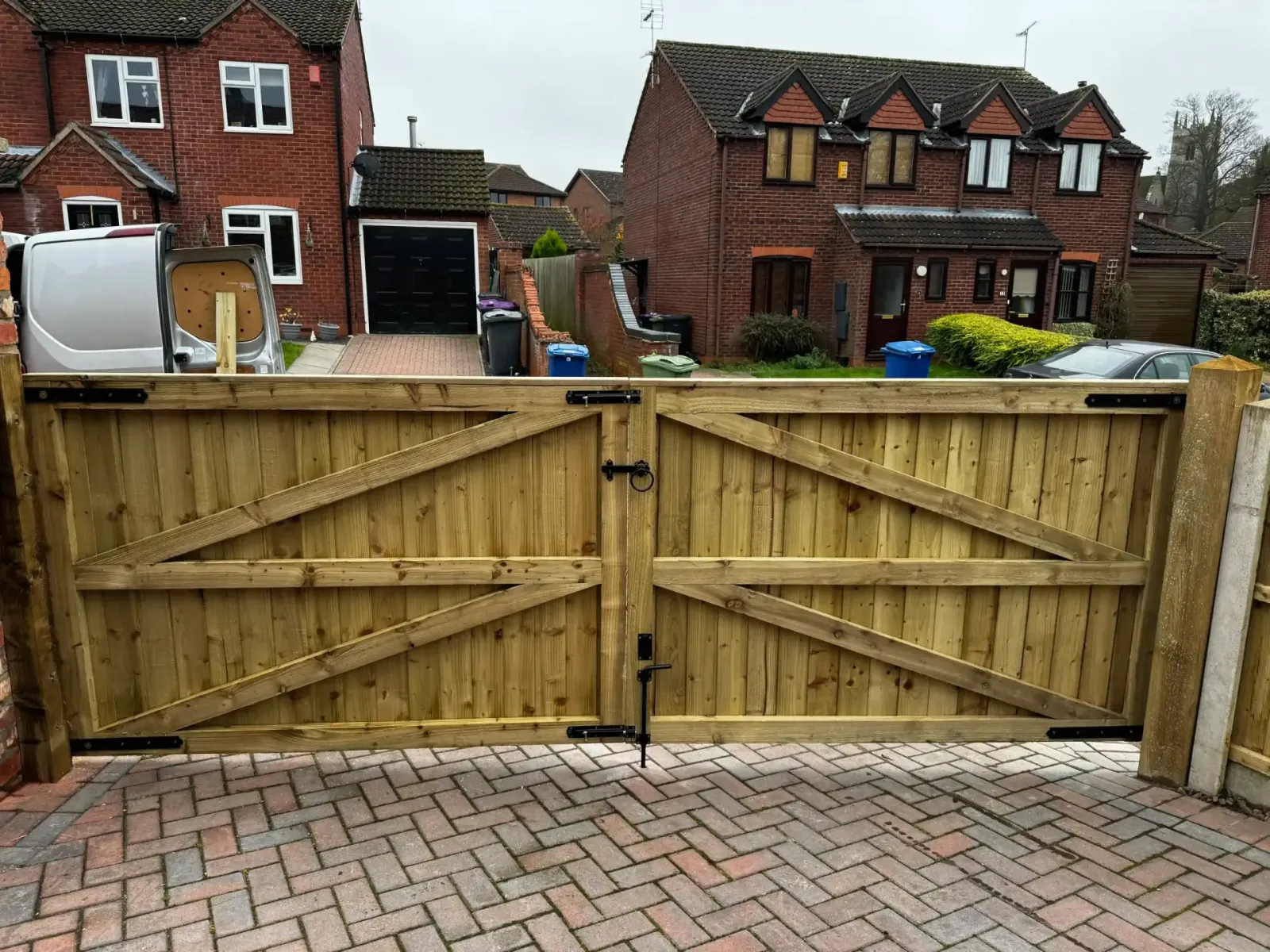
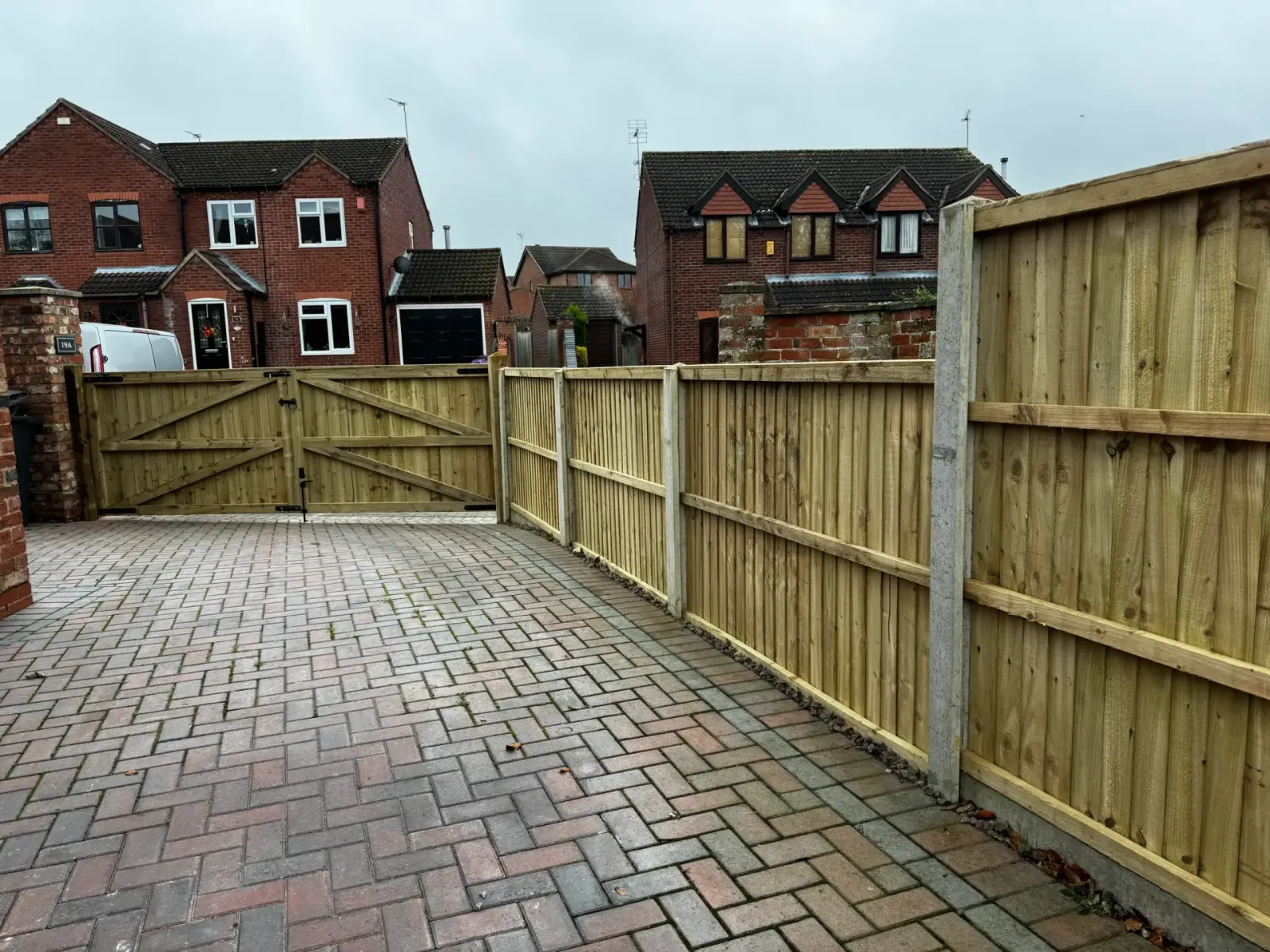
Fencing installation in Lincoln with close-boarded timber fencing on concrete posts and matching driveway gates

Fence Panels and Fencing We Fit

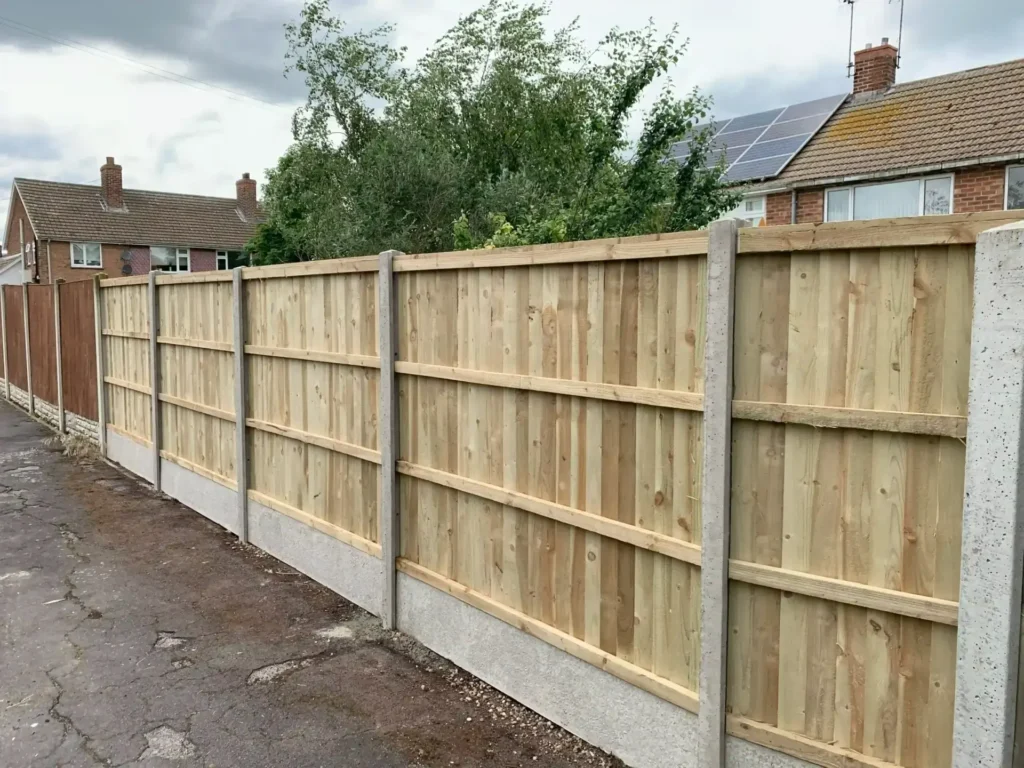
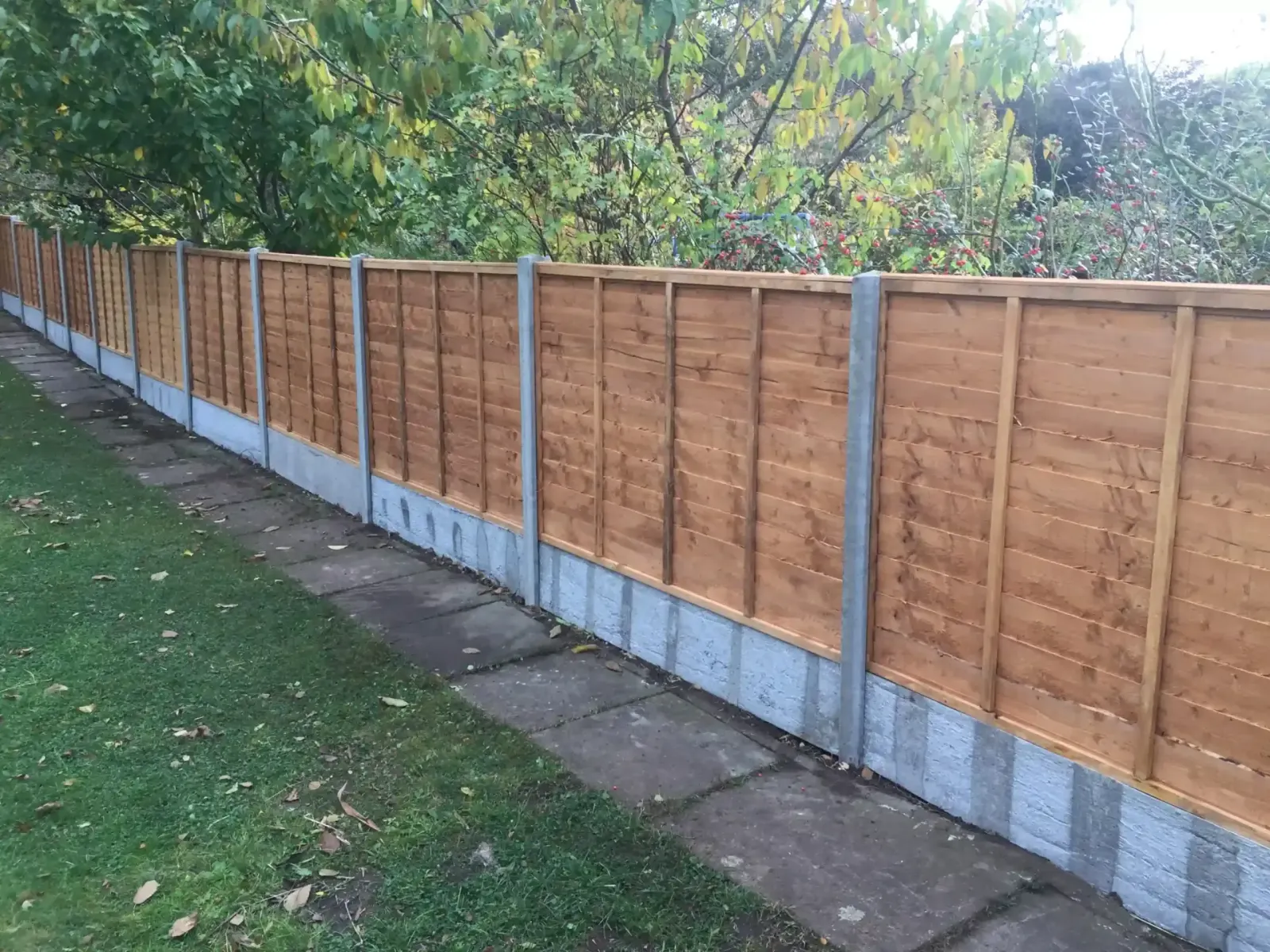
Timber fence panels on slotted concrete posts with concrete gravel boards along a lawn edge in Lincoln
CLOSE-BOARDEDClose-Boarded Fencing

We replace close-boarded runs and fence panels in Lincoln more than any other fencing, and both suit concrete posts and gravel boards. Close-boarded runs are built in place from vertical boards on rails, so they are the stronger choice on exposed boundaries.
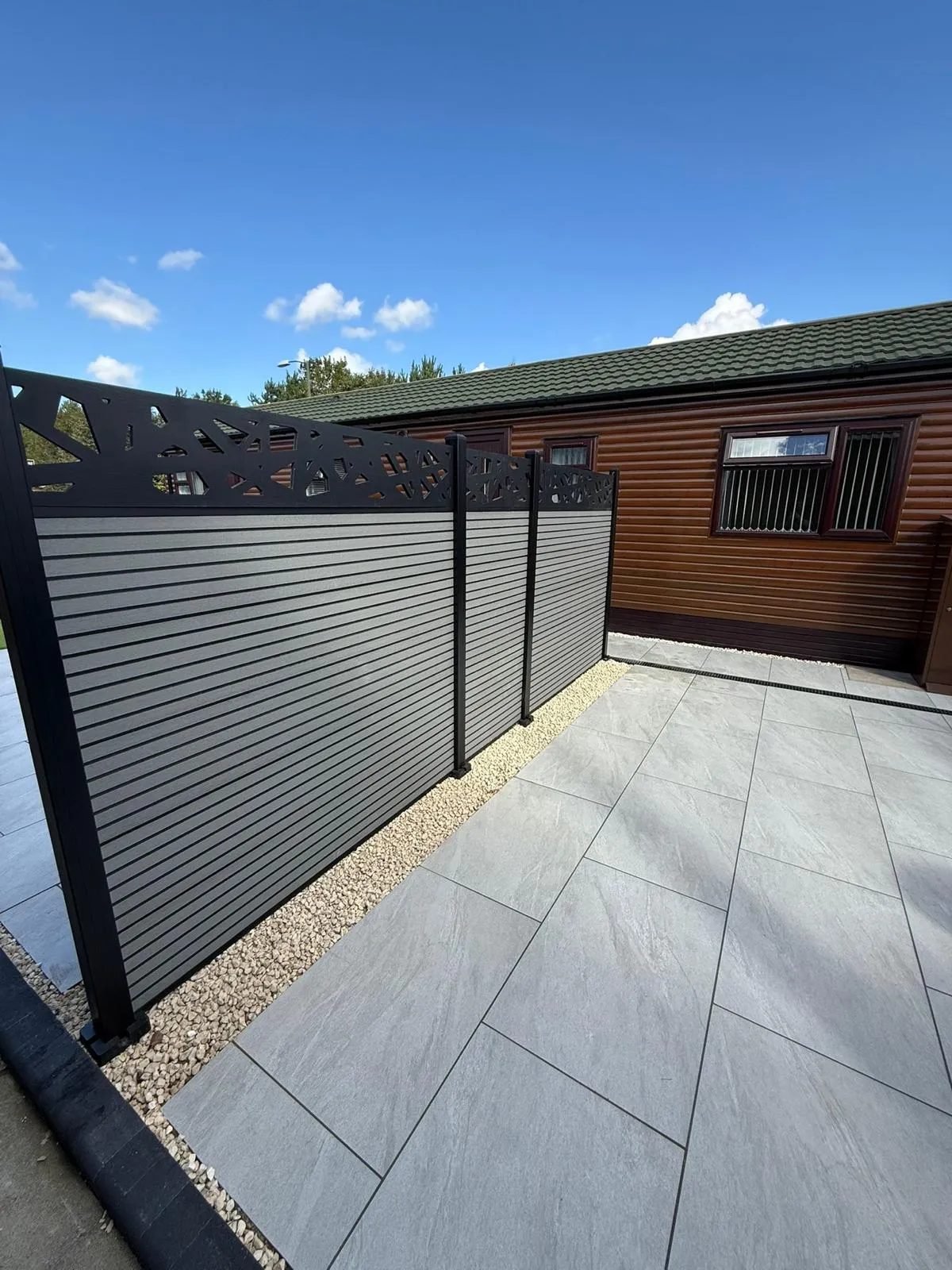
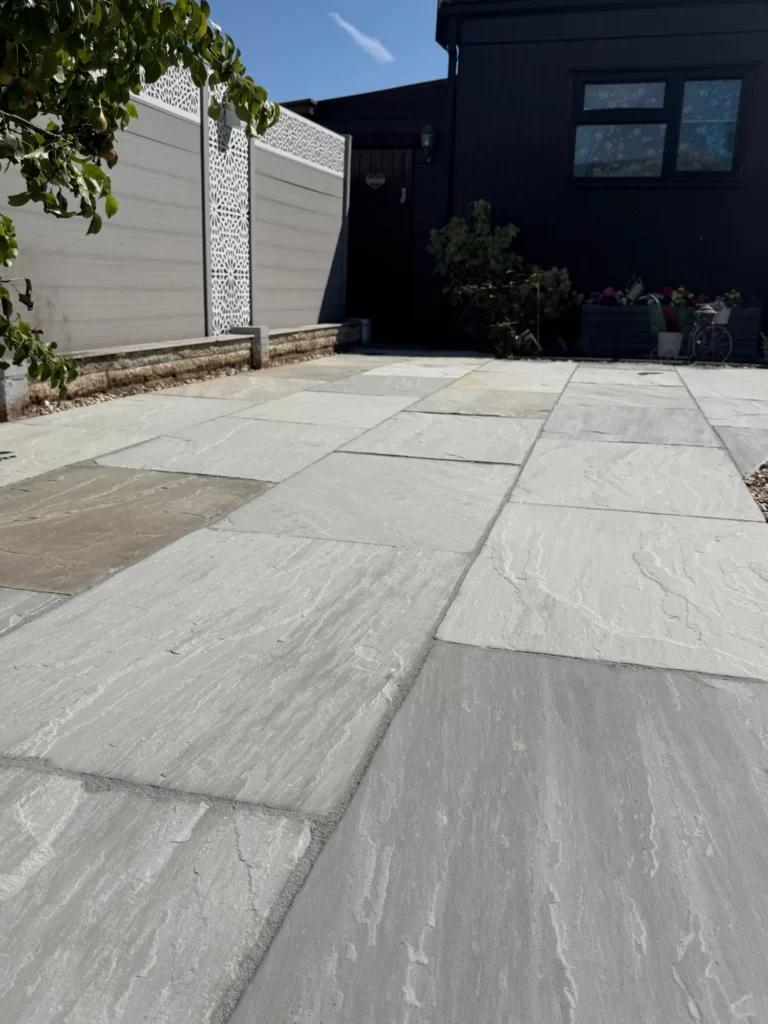
Grey slatted fence panels with a decorative screen top beside a porcelain patio, fitted by Reshape Landscaping Ltd in Lincolnshire
COMPOSITE AND METALComposite and Metal

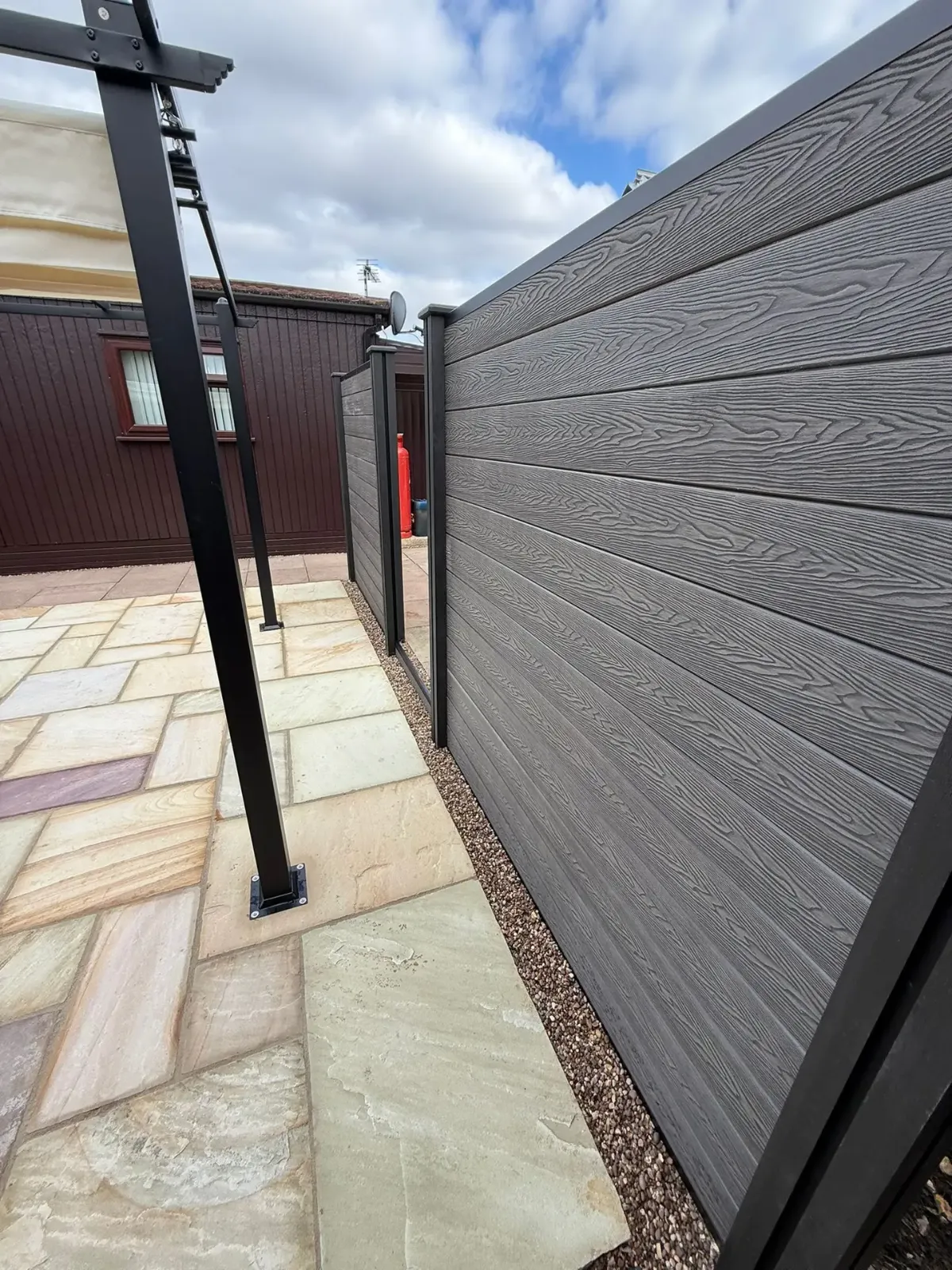
Composite fencing and metal fencing systems need no painting or staining, and they hold their colour. We follow the same stages for composite fencing installation as for timber, but with posts made for the system. We fit both across Lincolnshire, including the Charles & Ivy range.
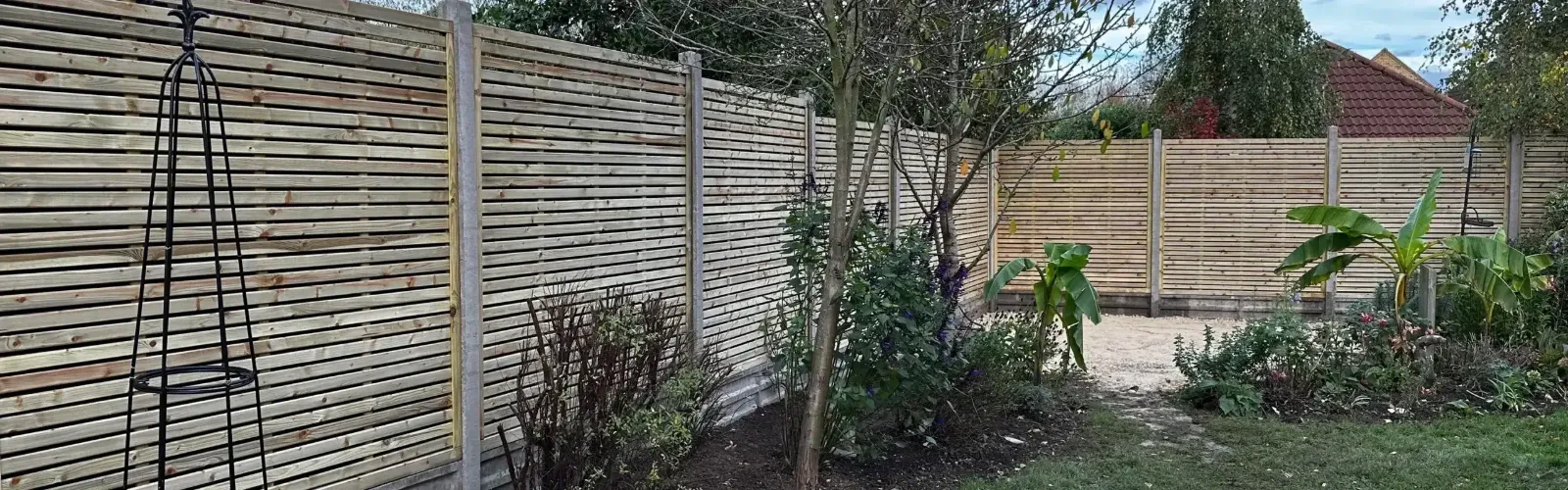
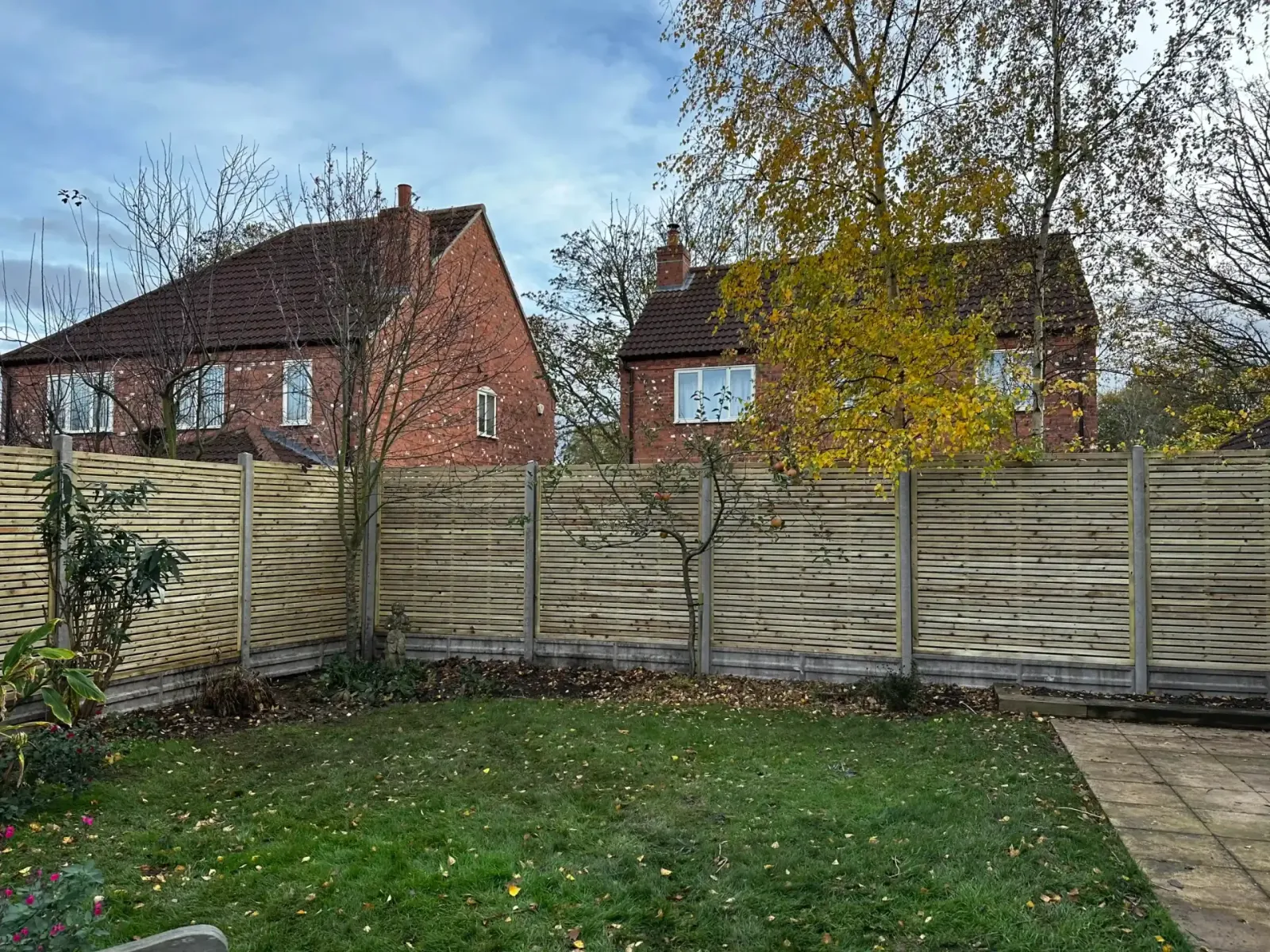
Decorative slatted timber fence panels on concrete posts behind planted borders in a Lincolnshire garden
DECORATIVEDecorative and Picket

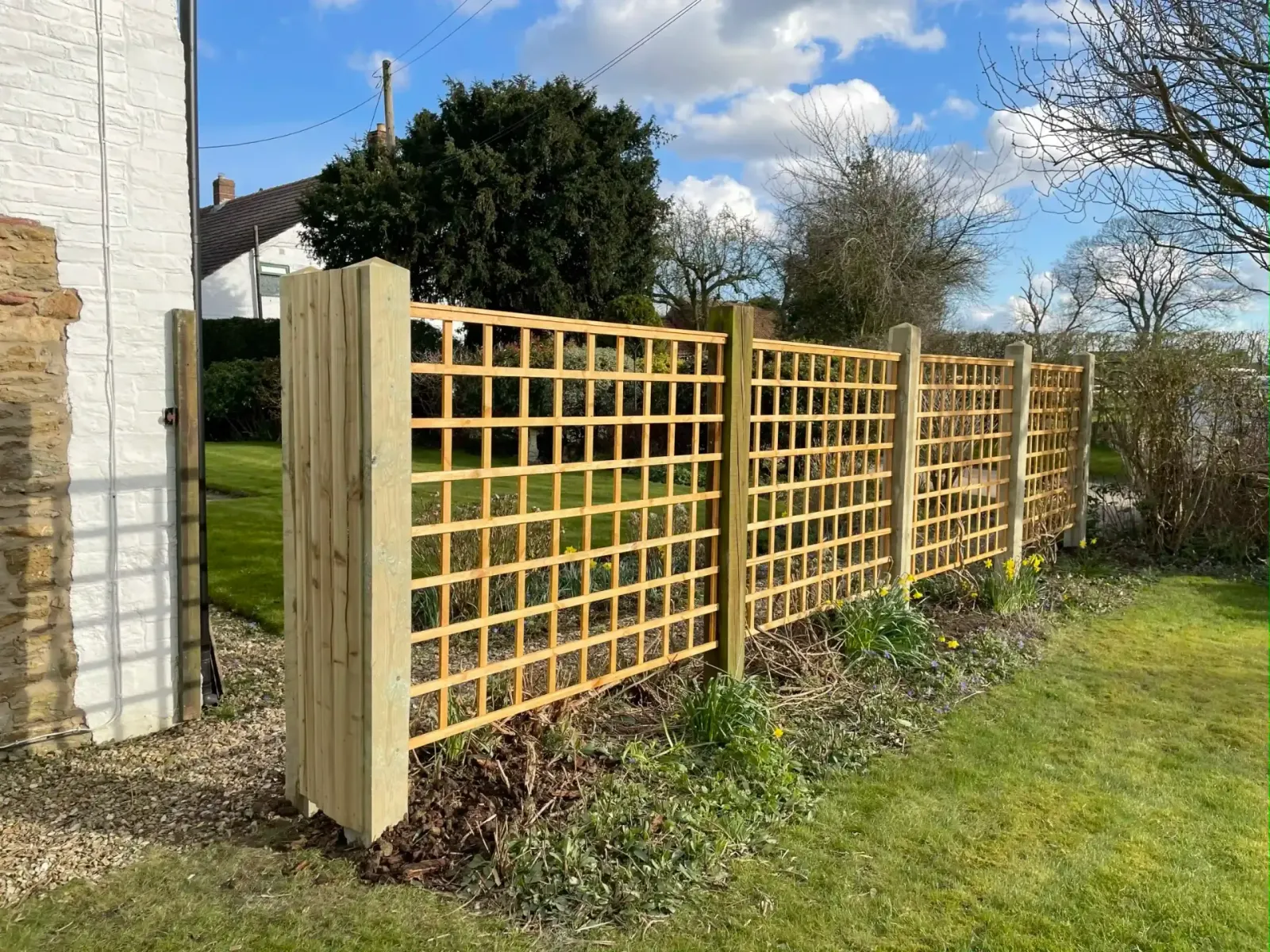
Decorative timber panels, trellis, decorative screens and picket fencing suit front gardens and dividers within a garden. We fit decorative fencing in Lincoln and build bespoke fencing in Lincolnshire to a design, with gates made to match.
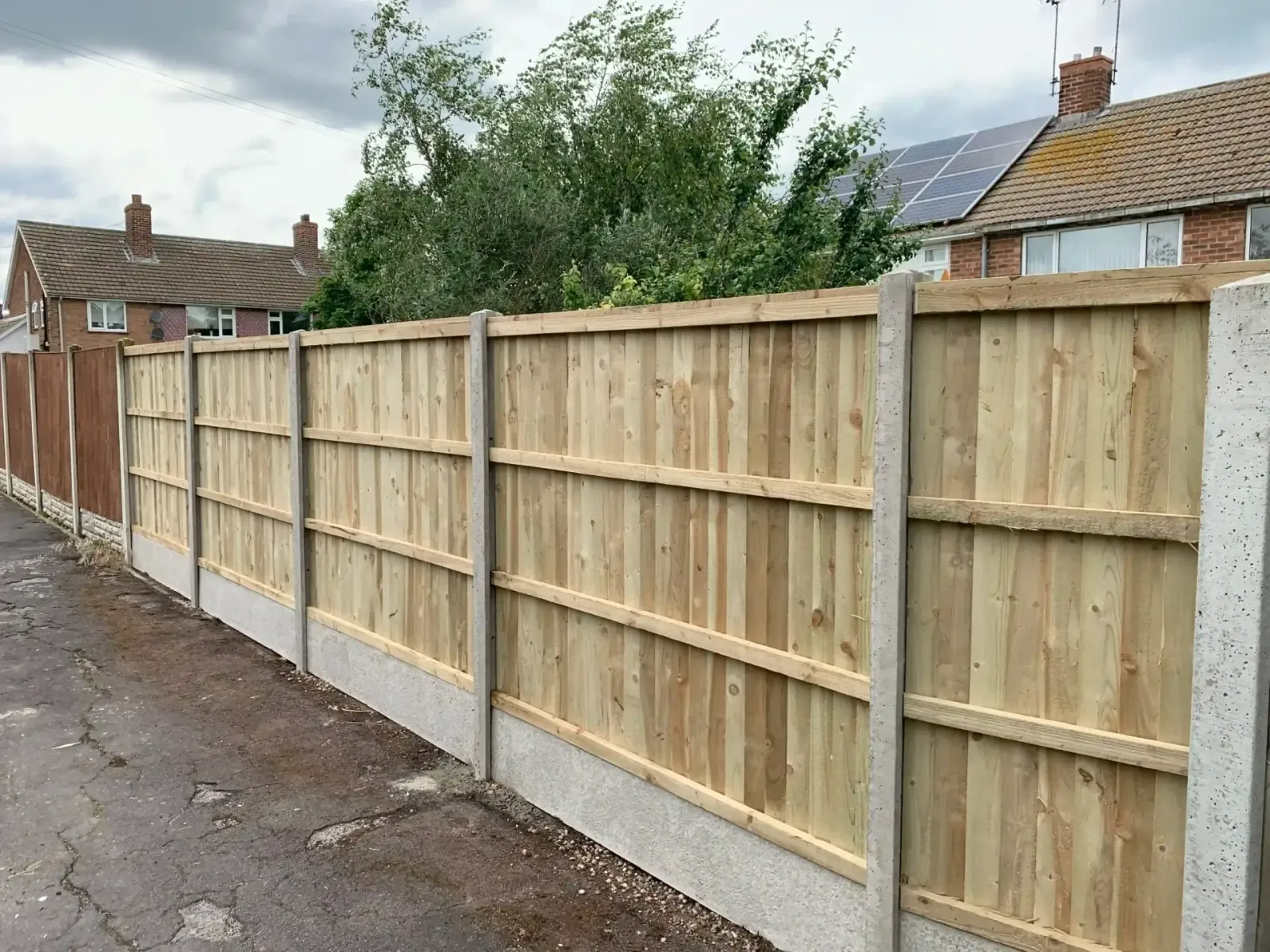
New close-boarded fence on concrete posts and gravel boards, part of a fencing installation in Lincoln

Not sure if your fence needs replacing?

We check the posts, the panels and the boundary on a free site visit, and tell you if a repair will hold or the run needs replacing.

How High Can a Garden Fence Be?

Height limits for garden fences are set out in planning rules, and the limit is lower where a fence runs beside a road or footpath. Before a taller fence goes up, check with the local council, and ask if trellis fixed to the top counts toward the height.

Listed buildings and conservation areas have their own rules. Some new-build developments also carry covenants on front garden fencing, which are written into the deeds. Garden fence installers should raise all of this before work starts, so check that any quote states the finished height.

Most fences that come down in the wind fail at the posts, long before the panels give out.

Reshape Landscaping Ltd, Lincoln

Recent projects

RECENT FENCING WORK

Grey composite fencing beside a sandstone patio and pergola posts, fitted by Reshape Landscaping Ltd in Lincolnshire
Square trellis fence panels on concrete posts along a garden boundary, fitted by landscapers in Lincoln
Pair of timber driveway gates hung on heavy posts across a front driveway in Lincolnshire
Decorative timber fence panels with concrete posts and gravel boards along a rear garden in Lincoln
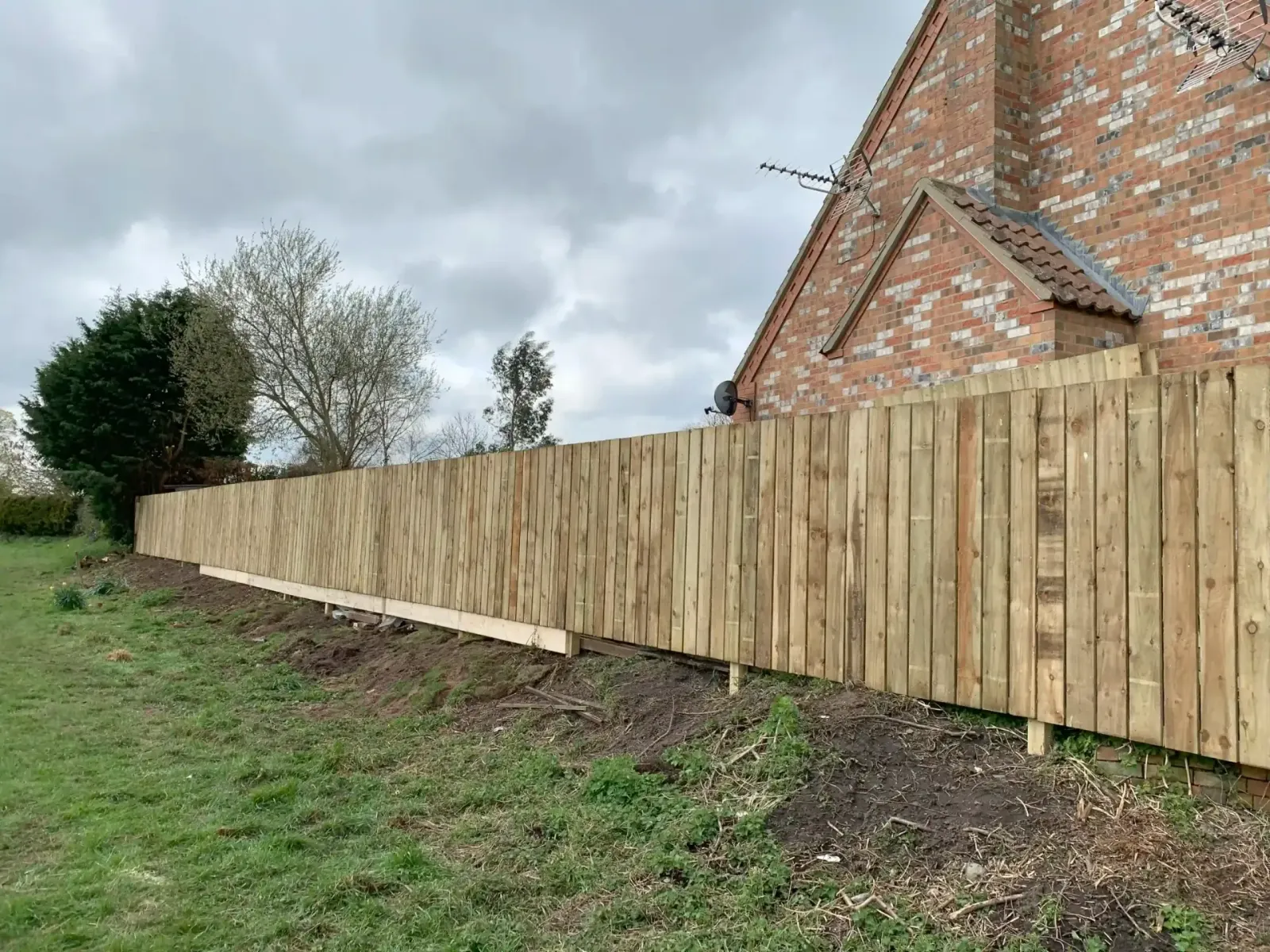
Long run of close-boarded timber fencing on concrete posts along a garden boundary in Lincolnshire

Repair or Replace the Fence

When the posts are sound and only one or two panels are broken, the fence can usually be repaired. However, where the posts have rotted at ground level, or the run leans along its length, replacing the whole run makes more sense than repairing it panel by panel. Our guide to storm-damaged fences covers that choice in full, and the fencing projects page shows recent runs we have put up.

Explore the rest of what we do

What to Ask a Fencing Contractor in Lincoln

Before work starts, ask fencing contractors in Lincoln how deep the posts will go and what they will be set in. Check too if the old fence, posts and concrete footings leave site, and what goes along the bottom of the panels. Fence contractors should also confirm the finished height and who has checked the boundary.

Fencing installers should also say how gates will be hung and what the posts either side are set in. If a contractor skips any of these stages, ask what they are leaving out and why. To arrange a site visit with fence installers in Lincoln, contact us.

WHY HOMEOWNERS PICK US

We are a British-owned and run landscaping company based in Lincoln, covering the city, Gainsborough, Scunthorpe, Sleaford and the surrounding areas.

  • Established in 2010, with over 400 completed projects.
  • Prestige Awards 2026 – Landscaper of the Year, Lincolnshire.
  • Houzz 2026 Best of Service award, judged on customer feedback.
  • Midlands Enterprise Awards 2026 – Best Bespoke Garden Landscaping Service, Lincolnshire.
  • Approved installers for Talasey Landscaping Solutions and Select Living Group.
  • Helped design and build a Japanese-inspired garden featured on ITV’s Garden of the Year.
  • Qualified through the National Design Academy.
  • Insured, including public liability.

Fence Ownership: Frequently Asked Questions

Check the title plan and deeds first, because a T mark shows the owner and an H mark shows it is shared.

Neither, because the left-hand rule has no legal basis. The title plan and deeds decide it instead.

First, order the title plan from HM Land Registry. The seller’s property information form may also say who maintains it.

About a quarter of the post length, while gate posts go deeper and every post is set in concrete.

Planning rules set the limit, which is lower when the fence runs beside a road or footpath. Check with the council first.

No law says so, but the posts usually go on the owner’s side, so the smooth side faces the neighbour.

Areas We Cover

We carry out fencing installation in Lincoln, Gainsborough, Scunthorpe, Sleaford and the surrounding areas. Our fencing in Lincoln covers timber, composite and metal fencing systems, with concrete posts, gravel boards and gates. We also fit fencing in Gainsborough, fencing in Scunthorpe and fencing in Sleaford, and Lincolnshire fencing of every type in between.

Book Your Free Site Visit

If a fence is leaning, has lost panels or the boundary needs agreeing, use the quote form or call us to arrange a site visit. Our fencing page covers the full service, and the Reshape blog has more guides on looking after a garden through the year. We reply to every enquiry within 48 hours.

Keep reading

Share: