
Six jobs keep a lawn green through the summer.
Mowing, watering, weeding, aerating, edging and feeding through the summer, from landscape gardeners in Lincoln.
As summer arrives, keeping your lawn healthy and green is more important than ever.
At Reshape Landscaping Ltd, based in Lincolnshire, we know how essential it is to stay on top of your lawn care Lincoln routine, especially as temperatures rise and your outdoor space gets more use.
Below, we’ve listed six tips for lawn care in Lincoln every homeowner should follow to make sure their grass stays healthy this summer.
THE SHORT VERSION
- Mow weekly in summer, on dry days, with sharp blades.
- Water deeply and less often, early morning or late evening.
- Pull weeds early and scarify once or twice a year.
- Aerate compacted areas so water and air reach the roots.
- Edge after every mow and feed with a summer fertiliser.
ON THIS PAGE
- The Quick Answer
- Mow Your Lawn Regularly
- Water Deeply and Consistently
- Control Weeds Early
- Aerate Compact Soil
- Edge for a Neat Finish
- Feed Your Lawn with Fertiliser
- Summer Lawn Care in a Heatwave
- Lawn Care in a Hosepipe Ban
- Looking After New Turf in Summer
- Lawn Care, Turfing and Lawn Restoration in Lincolnshire
- What to Ask Before Booking Lawn Care
- Frequently Asked Questions
- Areas We Cover
- Book Your Free Site Visit
The Quick Answer
A lawn stays healthy through summer when it is mown weekly on dry days with sharp blades, watered deeply and less often, weeded early, aerated where the ground is compacted, edged after every mow and fed with a summer fertiliser. In a heatwave, raise the mower, cut less often and hold off feeding until the rain returns. We carry out lawn care, lawn treatment and turfing in Lincoln, Gainsborough, Scunthorpe, Sleaford and the surrounding areas.
Mow Your Lawn Regularly
You should aim to mow your lawn once a week during the summer months and once every two weeks in spring. Regular mowing encourages root spread, which helps your lawn become denser and more weed-resistant.
Tip: Always mow on a dry day with sharp blades to avoid damaging the grass.
Water Deeply and Consistently
Water is the main thing. Give your lawn a deep, less frequent watering, ideally in the early morning or late evening. Avoid overwatering, as saturated soil can lead to root rot and slow down healthy grass growth.
Tip: If your lawn springs back when you walk on it, it’s hydrated enough.
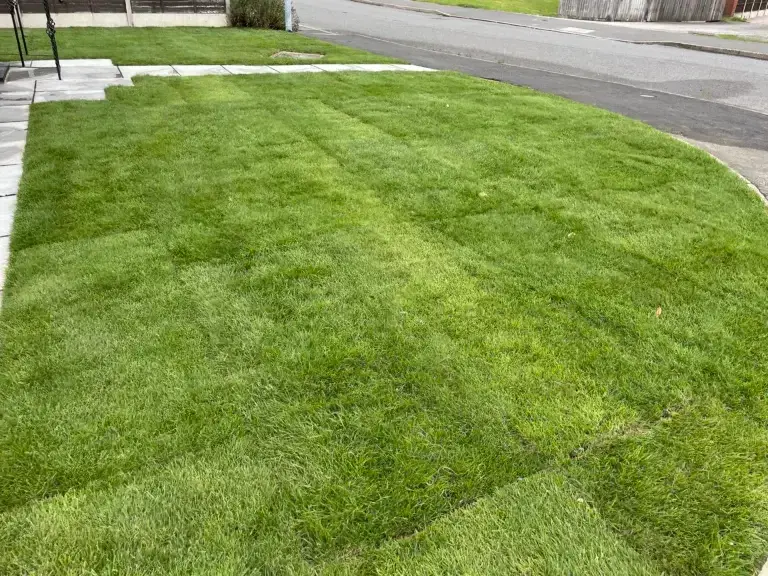
Lawn struggling despite the routine?
We look at the grass, the soil and the drainage and recommend lawn treatment or new turf where it is needed. It is all part of the free site visit.
Control Weeds Early
Weeds like dandelions, buttercups, and clovers can take over quickly and stunt grass growth. Use a hand trowel or rake to remove them before mowing and scarify once or twice a year to keep moss and thatch under control.
Tip: Avoid using chemical weed killers unless necessary, they can harm surrounding healthy grass.
Aerate Compact Soil
Compacted lawns often suffer from bare patches and poor drainage. Use a garden fork or aerator tool to spike holes every 15cm across the lawn. Gently rock the fork to open the soil up, improving airflow and water absorption.
Reshape Tip: Lawn aeration is especially important in high-traffic areas of your garden.
Most summer lawn problems we see come from cutting too short and watering too little, too often.
Reshape Landscaping Ltd, LincolnEdge for a Neat Finish
Use long-handled edging shears to trim the sides of your lawn. This stops grass from growing into your borders and gives your garden a professional, well-maintained finish.
Tip: Edging after every mow will keep the lines crisp and stop creeping growth.
Feed Your Lawn with Fertiliser
To keep your lawn thick and green, apply a quality lawn feed every few weeks. Look for a fertiliser suited for summer use and spread it evenly across your lawn when rain is expected, or water it in yourself.
Tip: A well-fed lawn is not only greener, but it’s also more resistant to drought, disease, and foot traffic.
| Job | How often | Best time | Avoid | What it does |
|---|---|---|---|---|
| MowingWeekly | Once a week in summer, every two weeks in spring. | Dry days, with sharp blades. | Cutting short in a dry spell. | Thickens the lawn and keeps weeds down. |
| WateringDeep, less often | Deeply, rather than a little each day. | Early morning or late evening. | Overwatering into saturated soil. | Sends the roots deeper. |
| FeedingEvery few weeks | Every few weeks through summer. | When rain is expected, or watered in. | Feeding during a heatwave. | Keeps the grass thick and green. |
| AeratingWhere compacted | On the areas that get the most use. | When the ground is moist, not baked hard. | Aerating in a drought. | Lets air and water reach the roots. |

Summer Lawn Care in a Heatwave
In long dry spells, an established lawn will brown off and go dormant to protect its roots. Raise the mower, cut less often, hold off feeding and keep foot traffic down until the rain returns. Our guide to bringing a lawn back to life covers what to do once it does.
WHAT WE ARE FINDING ON SITE
Lawn Care in a Hosepipe Ban
An established lawn can be left to go dormant in a hosepipe ban. It browns off, but the roots survive and the grass recovers once the rain returns.
Raise the mower, cut less often and keep off the lawn. New turf is the exception, so we avoid laying turf in the height of summer where a ban is likely.
Looking After New Turf in Summer
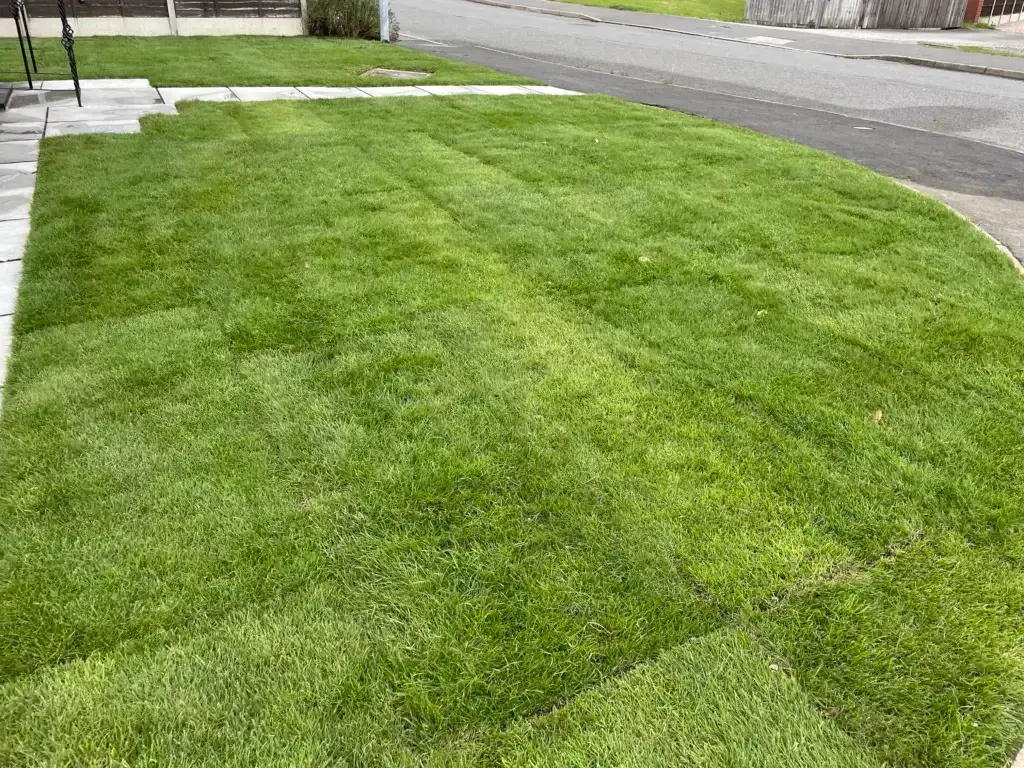
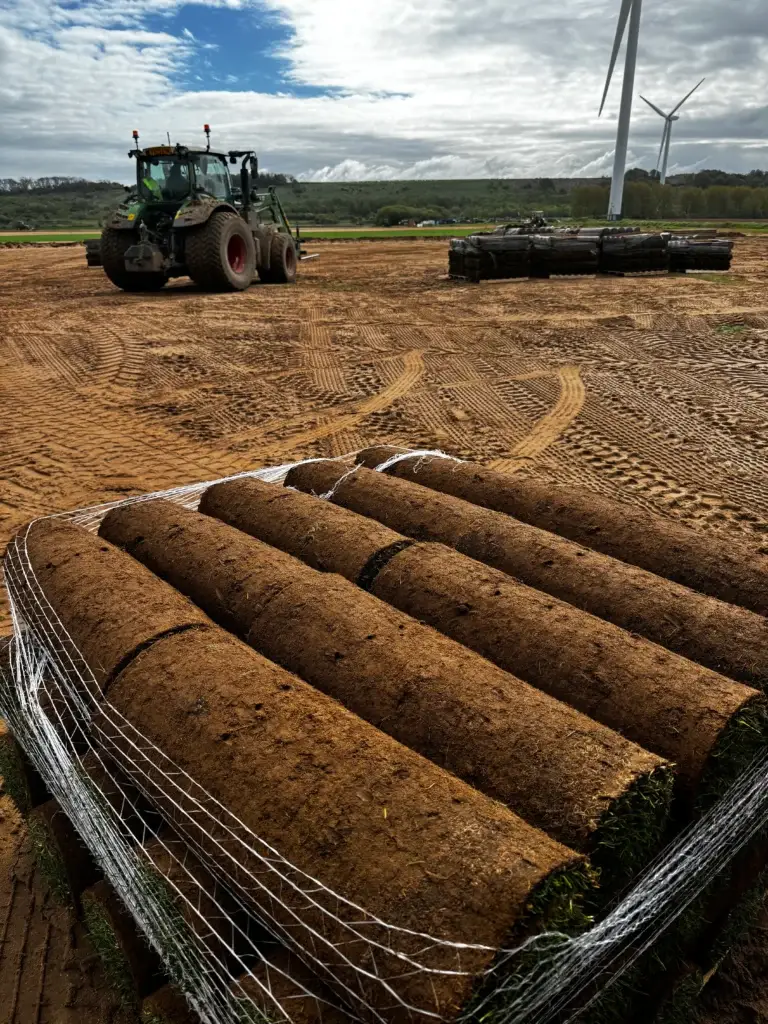
Turf laid in late spring or summer needs watering every day in dry weather until it roots, ideally in the early morning or evening. After a couple of weeks, lift a corner. If the roots have taken into the soil, the watering can be eased back and the first cut can go ahead with the mower set high.
New turf goes in through seven stages, in this order. Our page on turfing in Lincoln covers the service itself.
Site visit
We check the levels, the drainage and the condition of the old lawn.
Strip
The old lawn and weeds are stripped off and taken away.
Cultivate
The ground is cultivated and any compaction is broken up.
Level
The soil is raked to a fine, firm finish at the correct height against paths and borders.
Lay
The rolls are laid tight together in a staggered pattern.
Water in
The new lawn is watered in well on the day it is laid.
First cut
Once the roots have taken, the first cut goes ahead with the mower set high.
Recent projects
RECENT LAWN AND TURF WORK
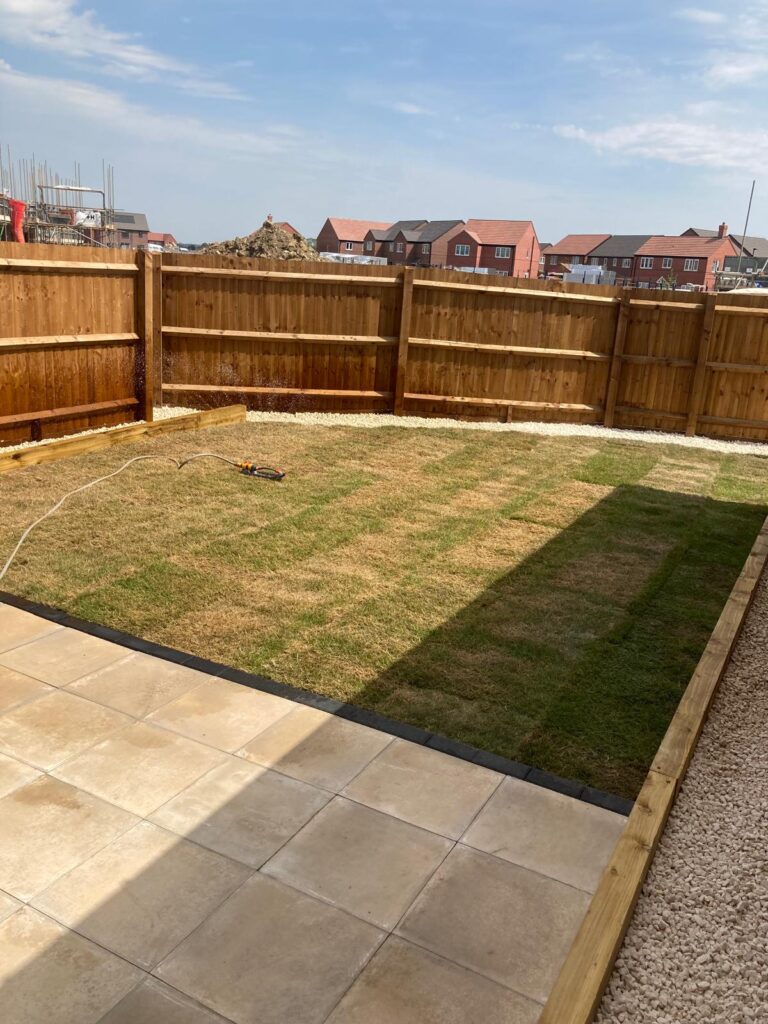
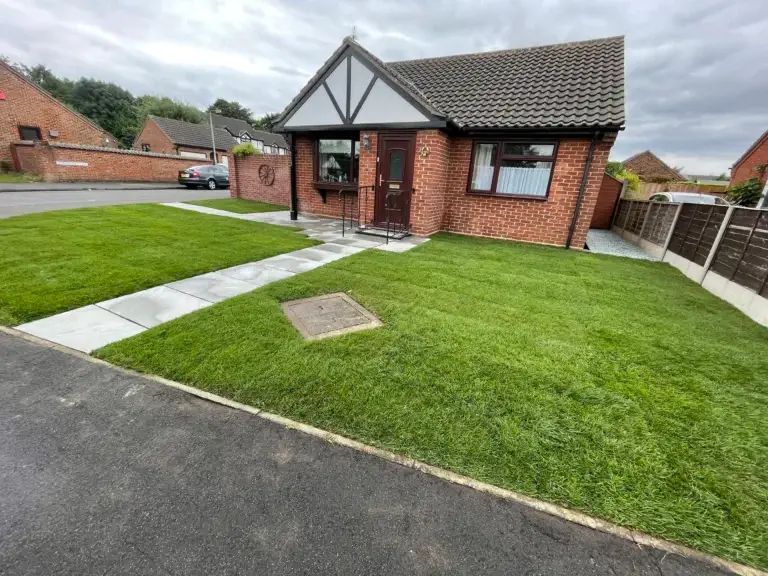
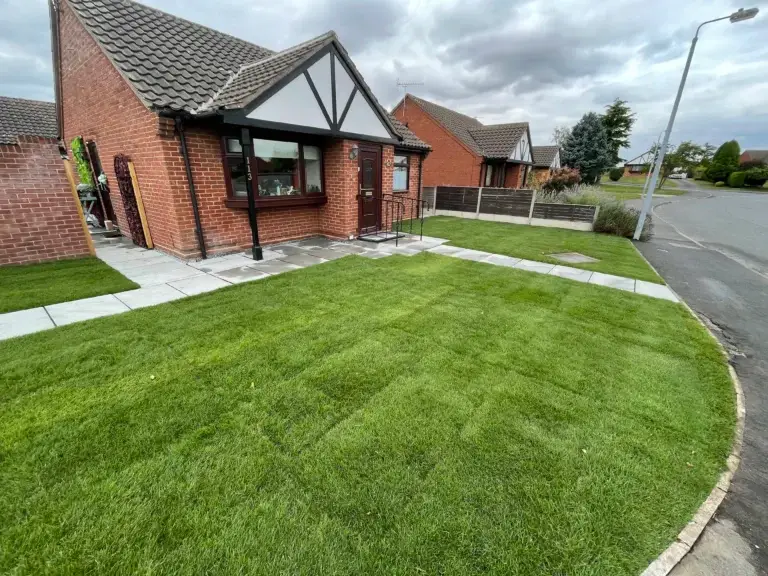
Lawn Care, Turfing and Lawn Restoration in Lincolnshire
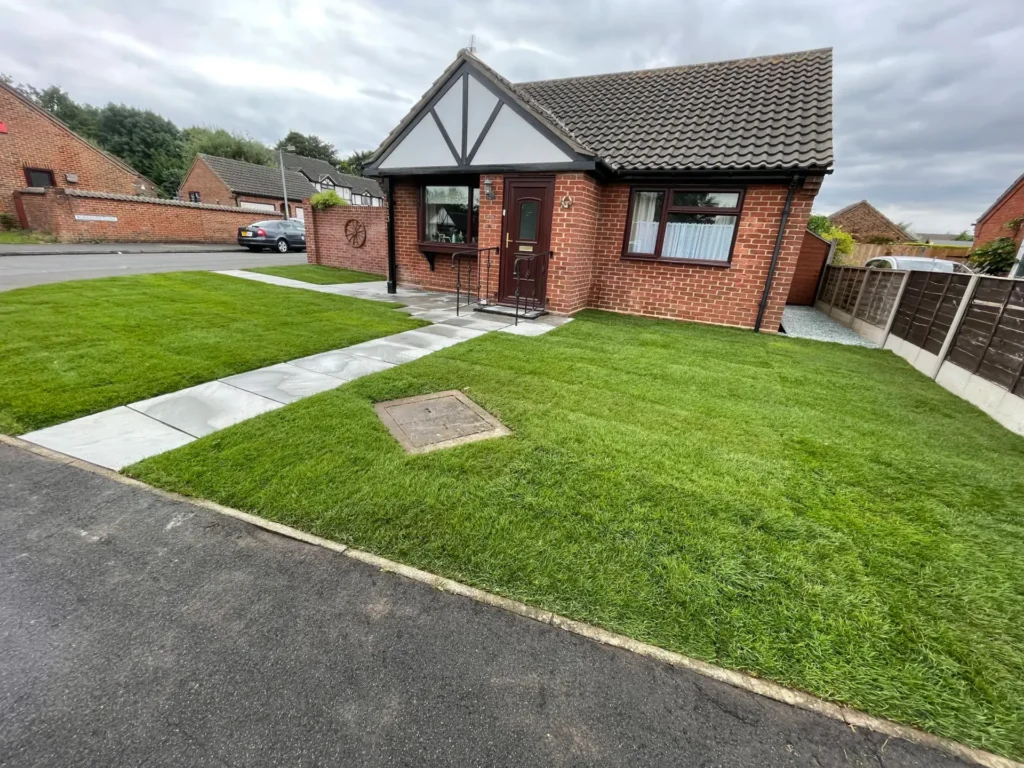
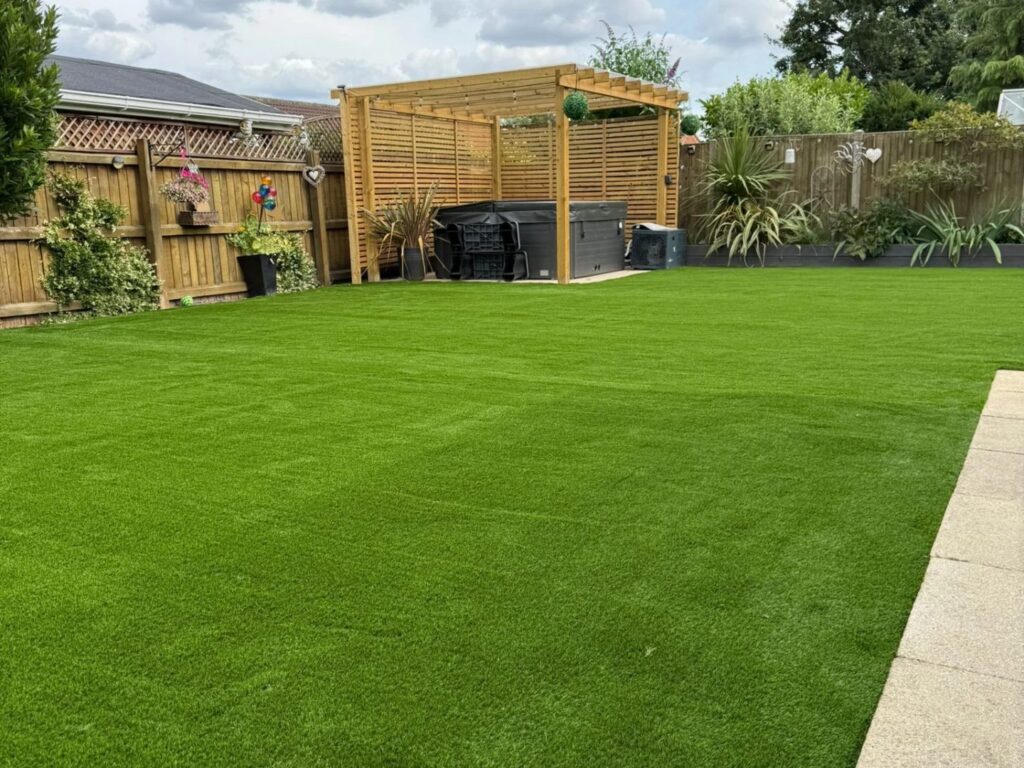
Some lawns need more than routine mowing, watering and feeding. We carry out lawn treatment, lawn restoration and lawn renovation on tired or damaged lawns, and where a lawn is beyond repair we lay new turf at the correct height on correctly prepared ground. Our turf laying and lawn care services cover Lincoln, Gainsborough, Scunthorpe, Sleaford, and the surrounding areas across Lincolnshire. Our turf and lawn care page sets out each service in more detail.
Explore the rest of what we do
What to Ask Before Booking Lawn Care or New Turf
Before booking lawn care, ask what is causing the bare or brown patches. A lawn that has gone dormant in a dry spell usually recovers once the rain returns.
Before booking new turf, ask how the ground will be prepared and how the lawn will be watered until it roots.
If a company skips any of the stages above, ask what they are leaving out and why.
It is also worth asking to see finished lawns. Our recent projects and the lawns gallery show completed work from across Lincolnshire.
WHY HOMEOWNERS PICK US
We are a British-owned and run landscaping company based in Lincoln, covering the city, Gainsborough, Scunthorpe, Sleaford and the surrounding areas.
- Established in 2010, with over 400 completed projects.
- Prestige Awards 2026 – Landscaper of the Year, Lincolnshire.
- Houzz 2026 Best of Service award, judged on customer feedback.
- Midlands Enterprise Awards 2026 – Best Bespoke Garden Landscaping Service, Lincolnshire.
- Approved installers for Talasey Landscaping Solutions and Select Living Group.
- Helped design and build a Japanese-inspired garden featured on ITV’s Garden of the Year.
- Insured, including public liability.
Summer Lawn Care: Frequently Asked Questions
How often should I water my lawn in summer?
An established lawn needs a deep watering once a week in a dry spell rather than a light sprinkle every day. Deep watering sends the roots down, while light watering keeps them near the surface.
When should I feed my lawn in summer?
Use a summer lawn feed every few weeks while the lawn is growing well, applied when rain is due or watered in. Hold off while the lawn is brown and dormant in a drought.
Can you lay turf in summer?
Yes, as long as it can be watered every day until it roots. Spring and early autumn are easier, because the weather does more of the watering.
Do you carry out lawn care in Lincoln?
Yes. We carry out lawn treatment, lawn restoration and lawn renovation in Lincoln, Gainsborough, Scunthorpe, Sleaford and throughout Lincolnshire, and lay new turf where a lawn is past repair.
Will a brown lawn recover after a dry summer?
An established lawn usually recovers once the rain returns, because the grass goes dormant to protect its roots. Check the base of the grass for green shoots before deciding to replace it.
How often should you water a lawn in summer?
Water deeply and less often, ideally early in the morning or late in the evening, rather than a little every day. Deep watering sends the roots down where the soil stays moist.
Areas We Cover
We carry out lawn care, lawn treatment and turfing in Lincoln, Gainsborough, Scunthorpe and Sleaford, and throughout the surrounding areas, including Cherry Willingham, Nettleham, Welton, Saxilby, Skellingthorpe, North Hykeham, Waddington, Branston, Washingborough and Heighington.
Book Your Free Site Visit
We are Lincoln based landscapers and winners of the Prestige Awards 2026 Landscaper of the Year for Lincolnshire. We carry out lawn treatment and lawn care and lay new turf in Lincoln, Gainsborough, Scunthorpe and Sleaford, and throughout Lincolnshire. Our turf and lawn care page sets out each service.
Every project starts with a consultation and a site visit, and we then send a written quote setting out each stage of the work. Fill in the form with your address and a few details of the garden so we can come back to you, or use our contact page to get in touch.
We reply to every enquiry within 48 hours.
Keep reading