
A new lawn laid this autumn is ready by spring.
The lawns that failed this year are best replaced now, on ground that has been prepared correctly.
Turfing work has picked up throughout Lincolnshire this September. We have been replacing a lot of lawns in recent weeks, and chafer grubs are behind many of them. Autumn is when to put that right.
This guide covers why autumn suits new turf and how we prepare the ground and lay it. It also covers how to choose the right turf and when lawn treatment is still the better option.
THE SHORT VERSION
- Mid-autumn is the best time of year to lay new turf.
- A lawn that has mostly died is better returfed than treated.
- Most of the work happens in the ground, before any turf arrives.
- Pick the turf to suit the light and the wear the lawn will get.
- Autumn turf needs less watering than turf laid in spring.
ON THIS PAGE
- The quick answer
- Why turfing work picks up in autumn
- How we lay new lawn turf
- Turf, seed, treatment or artificial grass
- Why new turf roots best in autumn
- Choosing the right turf
- Turfing alongside paving and fencing
- What to ask a landscaping company
- Frequently asked questions
- Areas we cover
- Book your free site visit
The Quick Answer
Returf between September and November, once it is clear the old lawn is not coming back. New turf roots quickly while the soil is still warm and the rain is regular. A lawn laid in September or October has time to root before the first frosts. That applies across Lincolnshire, from Gainsborough down to Sleaford.
Why Turfing Work Picks Up in Autumn
Most of the lawns we are replacing this autumn have one or more of these problems.
WHAT WE ARE FINDING ON SITE
Chafer grubs and a new lawn
Chafer grubs are the larvae of chafer beetles, which lay their eggs in lawns in early summer. The grubs then feed on the grass roots through the autumn and winter. Where they have been a problem, a chafer grub treatment the following summer protects the new lawn from the next year’s grubs.
How We Lay New Lawn Turf, Stage by Stage
A new lawn goes through eight stages, in this order. Where a lawn has held water through past winters, land drains or a French drain go in at the cultivation stage, and our guide to garden drainage covers the options.
Site visit
We measure the lawn, check the levels against the paths and patio, and agree the finished shape with you.
Strip out
We strip the old lawn off completely, along with the weeds and moss. New turf never goes down over an old lawn.
Cultivate
We rotavate the ground to break up compaction, raking out stones and debris as it is worked.
Topsoil and levels
Topsoil goes on to depth where the ground is thin, then gets raked out to the finished levels.
Firm and feed
We firm the ground so it will not settle unevenly later. A pre-turf fertiliser then goes on to feed the new roots.
Fresh turf
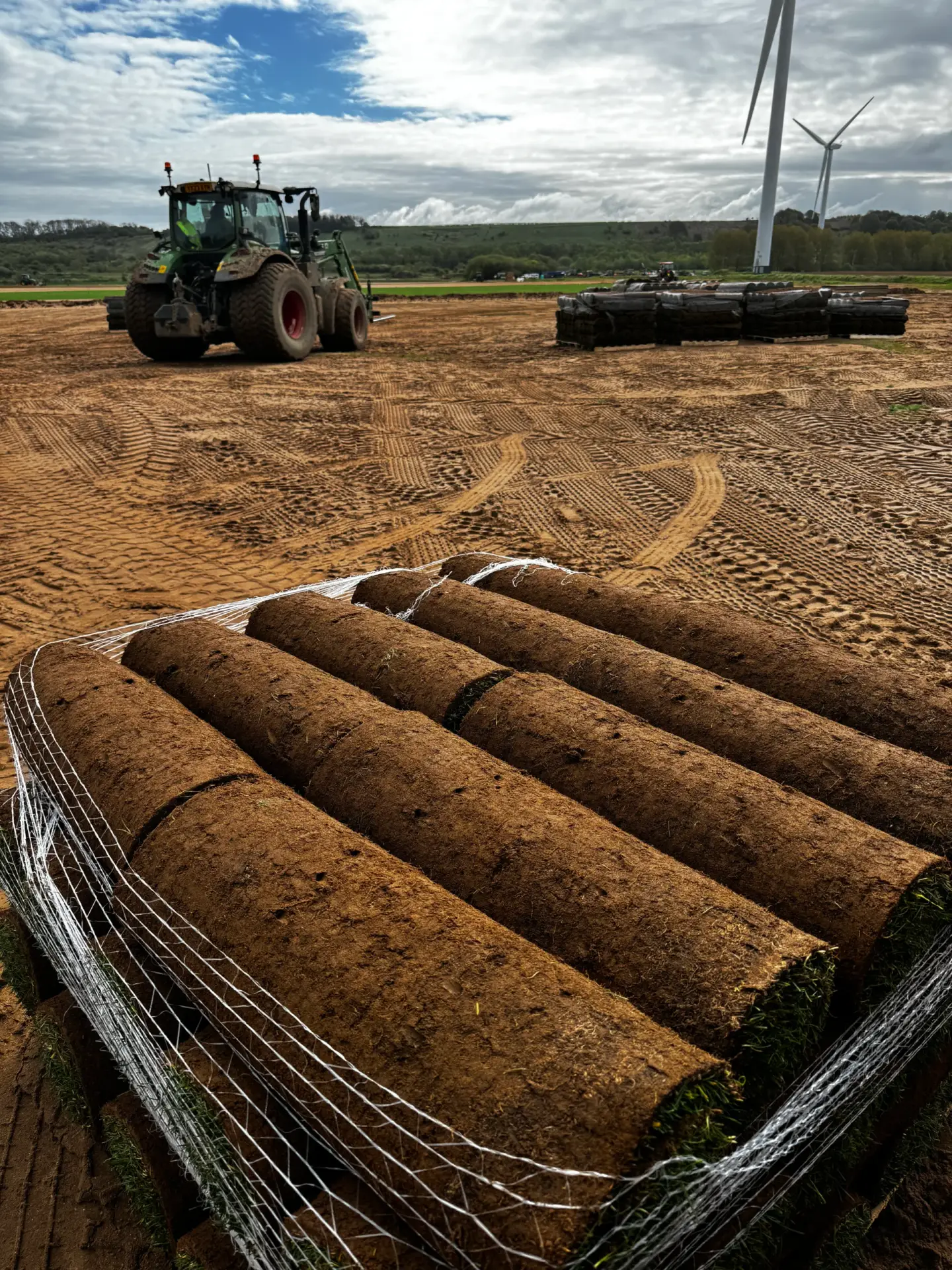
We source the turf from trusted local suppliers.
Laying
Turf laying starts the day the rolls arrive. We lay the rolls with staggered joints, butted up tight and cut neatly to the edges. Working off boards keeps the prepared ground level.
Watering in
We water the new lawn in on the day and go through the aftercare with you before we leave.
New Turf, Seed, Treatment or Artificial Grass
New turf is the option we recommend for most failing lawns this autumn, although all four have a place. It gives a usable lawn within weeks, where a treatment programme can take a full season or more to reach the same point.
Lawn treatment is still the better option on a lawn that is mostly healthy grass. Scarifying, aeration, overseeding and a seasonal feed can bring it back, and our August guide to lawn care in Lincoln covers that route. This is how the four options compare.
| Option | Finish | Upkeep | In autumn | Best suited to |
|---|---|---|---|---|
| New turfOur recommendation | An even, finished lawn from the day it goes down. | Mowing, feeding and edging after the first few weeks. | The main laying season. | Most sunny and part-shaded gardens. |
| SeedSlower to establish | Fine growth that thickens up over the first season. | Regular watering until the grass is established. | Needs sowing early in the autumn while the soil is warm. | Lawns where there is time to wait. |
| Lawn treatmentFor healthy lawns | Improves the grass that is already there. | Repeat applications through the year. | A good season for it, while the grass is still growing. | Lawns with more grass than moss and weeds. |
| Artificial grassLow maintenance | Green all year, with no mowing. | A brush and rinse now and then. | The base is best laid before the ground turns wet. | Low-maintenance gardens and heavy shade. |
Why New Turf Roots Best in Autumn
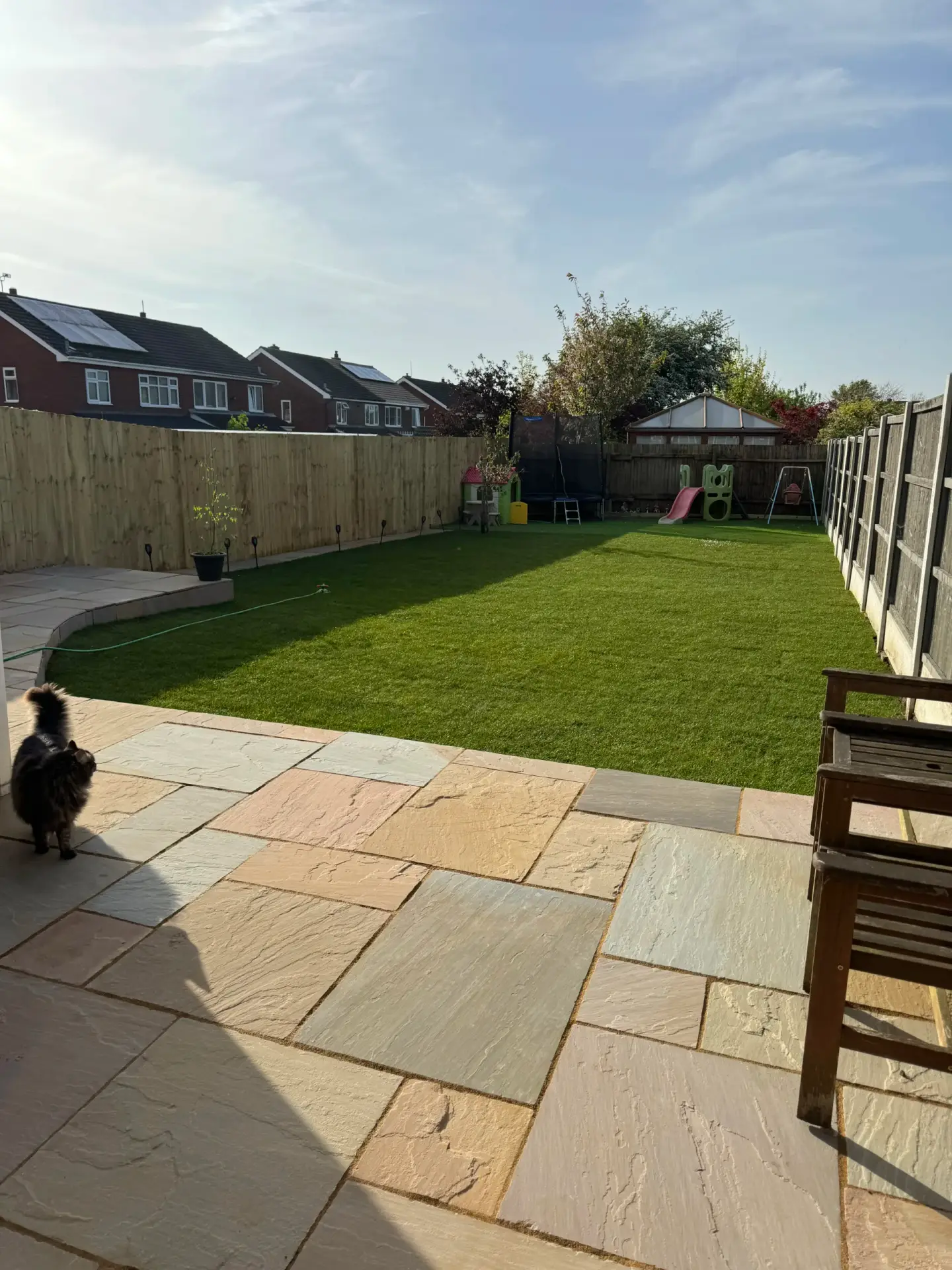
Turf needs warmth and moisture in the ground to root, and autumn has both. Across Lincolnshire the soil holds the summer’s warmth well into October. Cooler air also means far less moisture is lost from the surface. The RHS advises laying turf in mid-autumn.
Spring turf has a harder start. It roots into cold ground and then meets the first dry spell of the summer. If it has not fully established by then, the joints shrink open and the grass browns off.
Falling leaves and a new lawn
Leaves need clearing off a new lawn through the autumn. A wet layer left lying blocks the light and yellows the grass underneath. Clear them every week or so, with a leaf blower until the turf has rooted and a light rake after that.
Keeping off the new lawn
Keep off the new lawn until it has rooted, and for longer when the ground is wet. Footprints and wheel ruts made in soft autumn ground stay in the finished lawn.
Not sure if the lawn can be saved?
We check the grass, the roots and the ground underneath before recommending treatment or new turf. It is all part of the free site visit.
Choosing the Right Turf for a Lincoln Garden
We lay several types of lawn turf, and on most jobs the choice comes down to light and wear.
Hard-wearing stadium grade turf suits lawns that take a lot of foot traffic. Shade-tolerant turf is the one for lawns under trees or beside tall fences and buildings. Wildflower turf suits areas left to grow long, for flowers instead of a mown finish.
If a lawn has failed twice in the same place, there is usually something wrong with the ground underneath it.
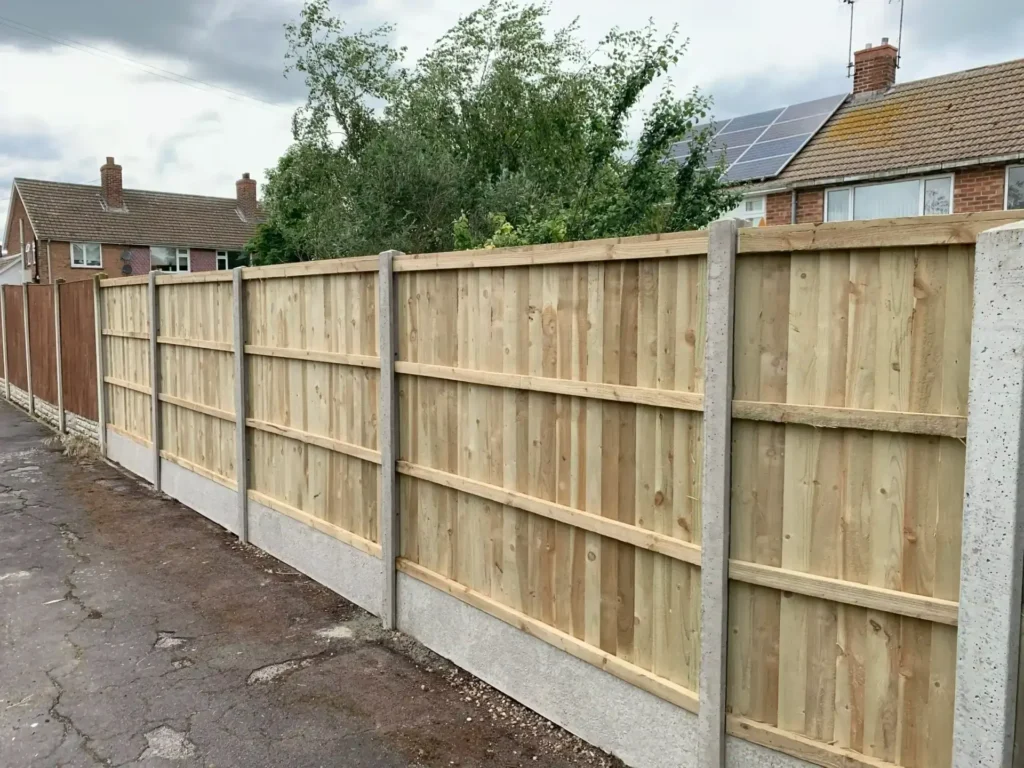
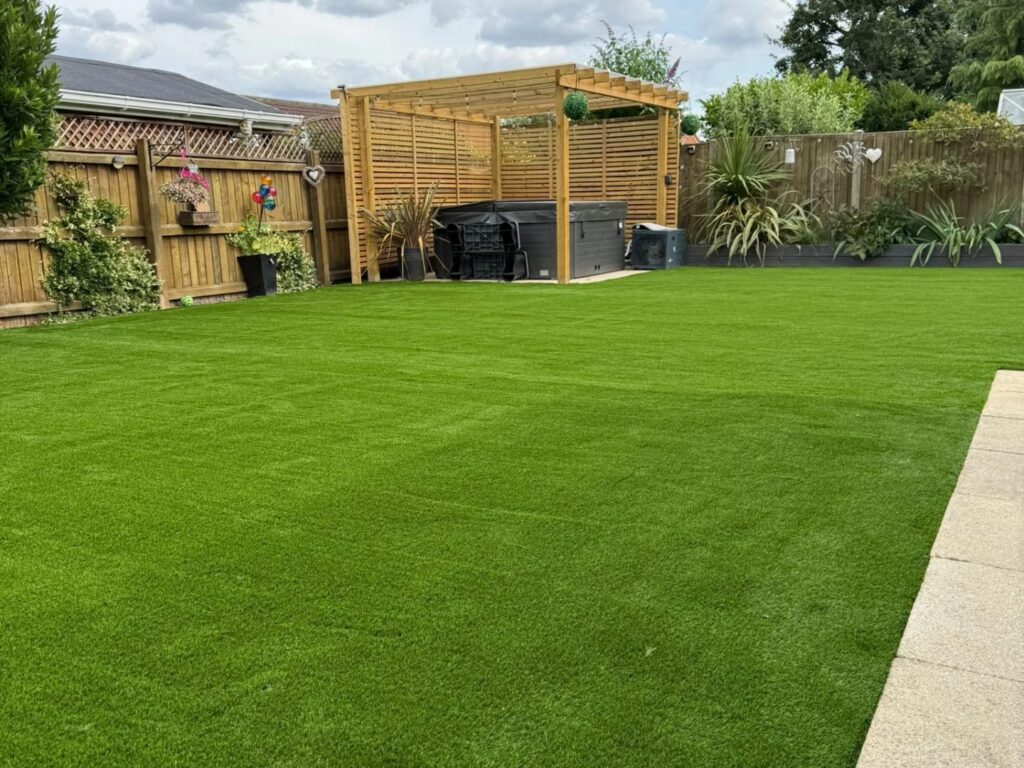
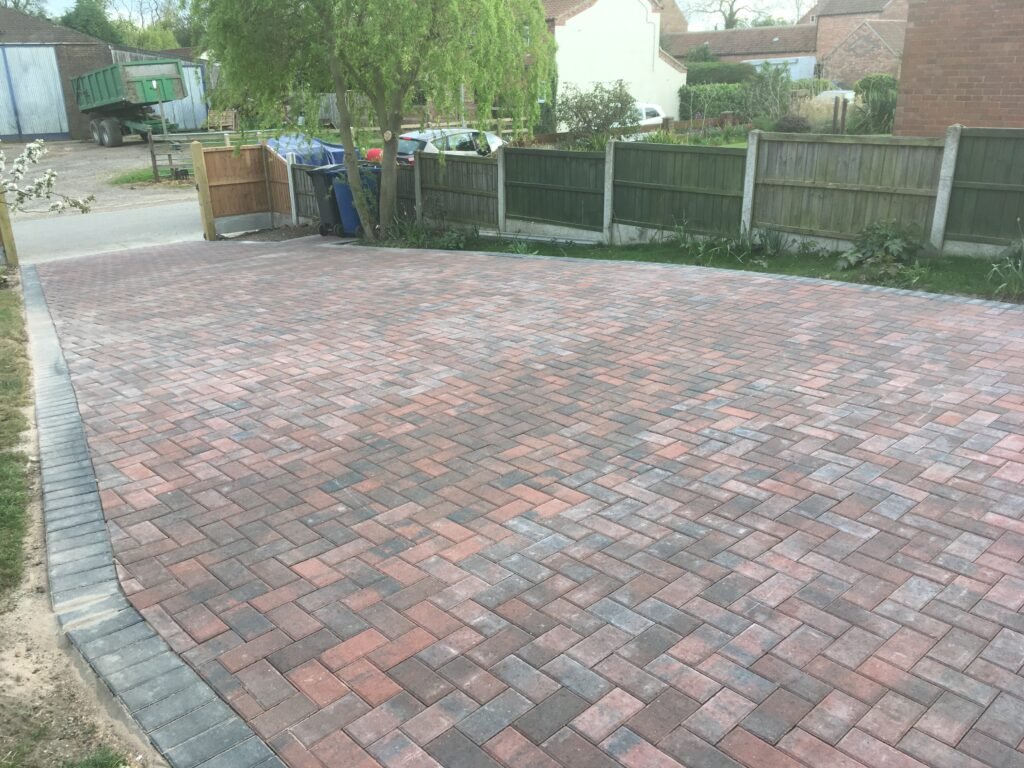
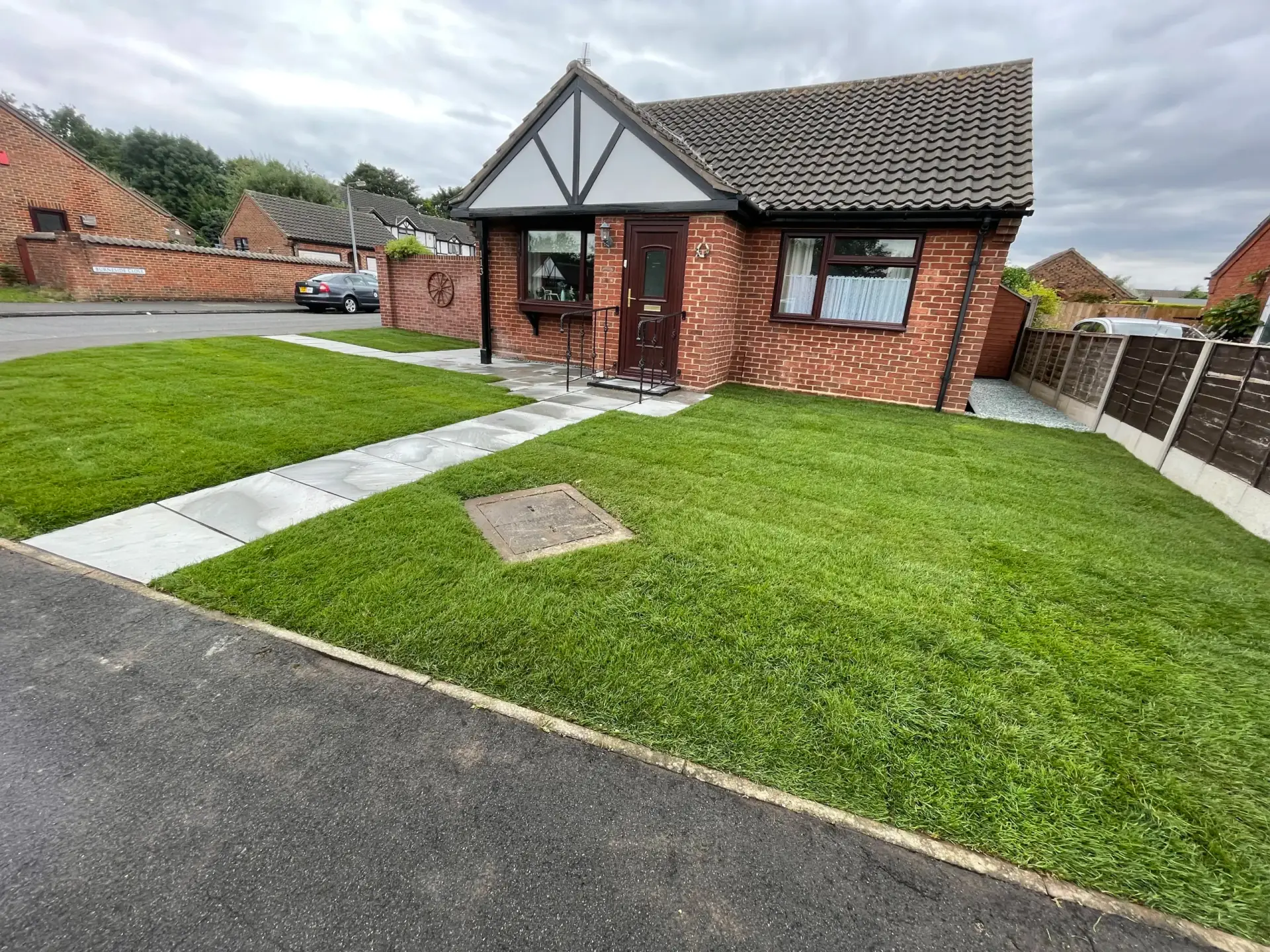
Reshape Landscaping, LincolnRecent projects
RECENT TURF AND LAWN WORK
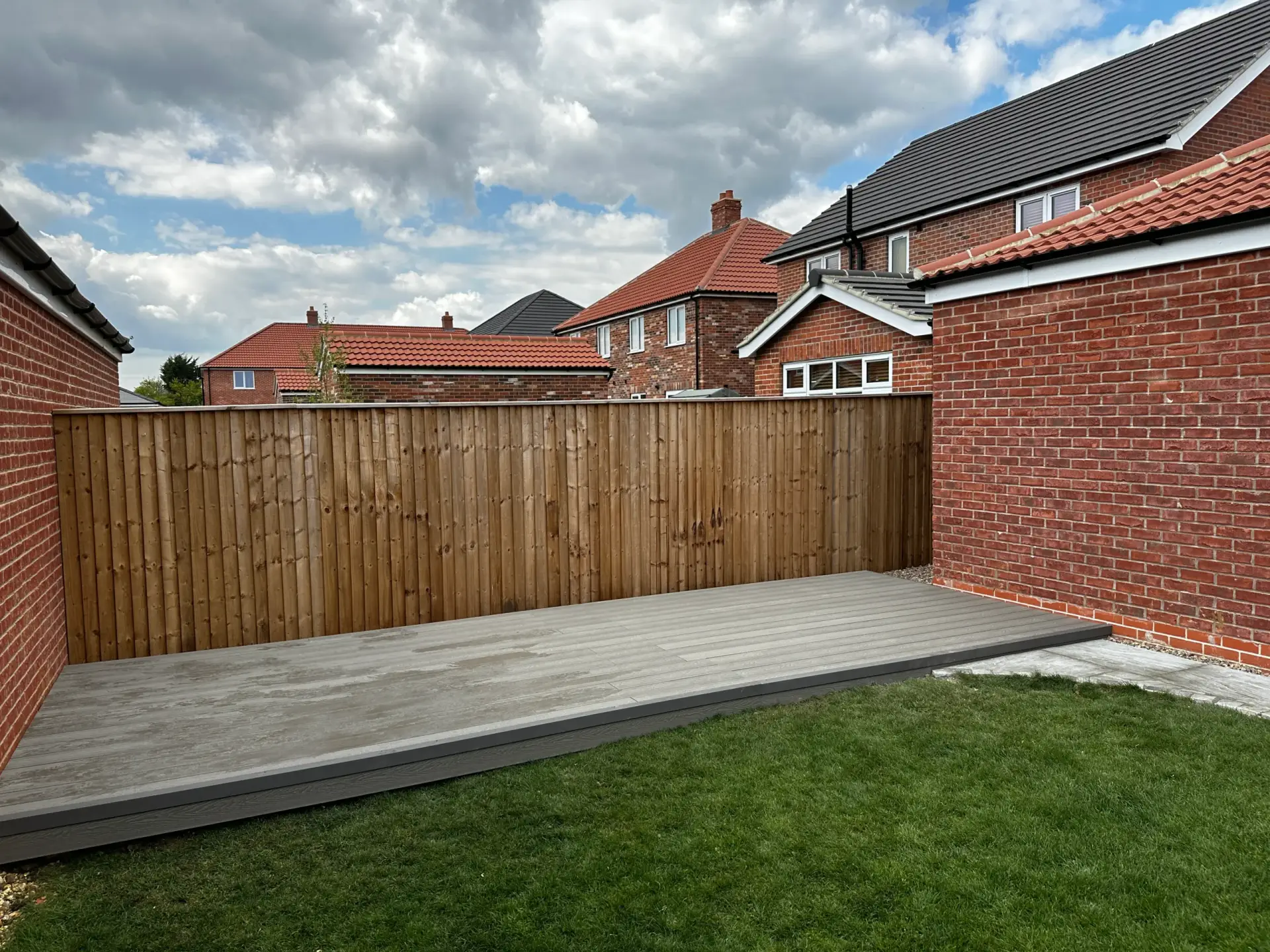
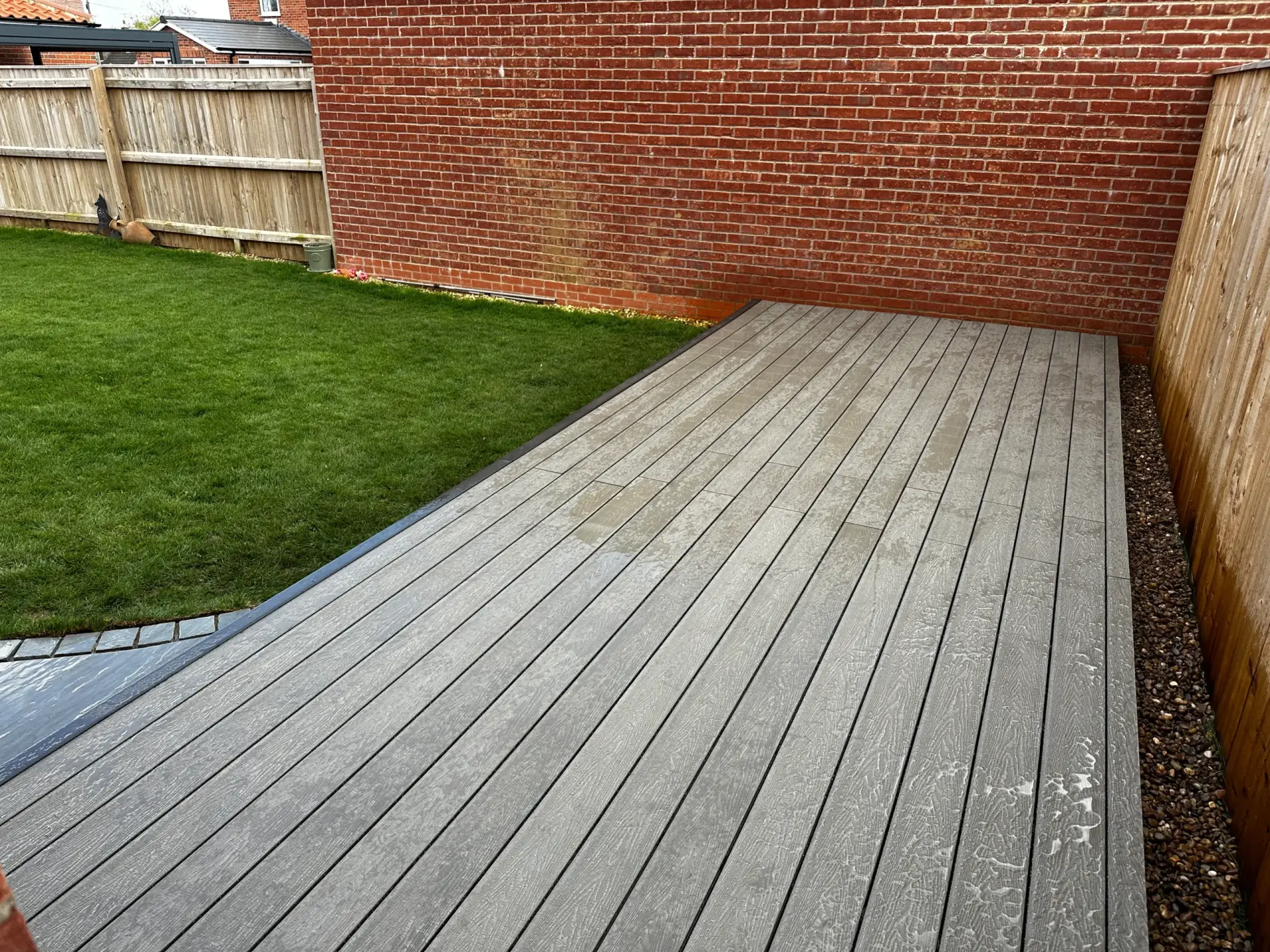
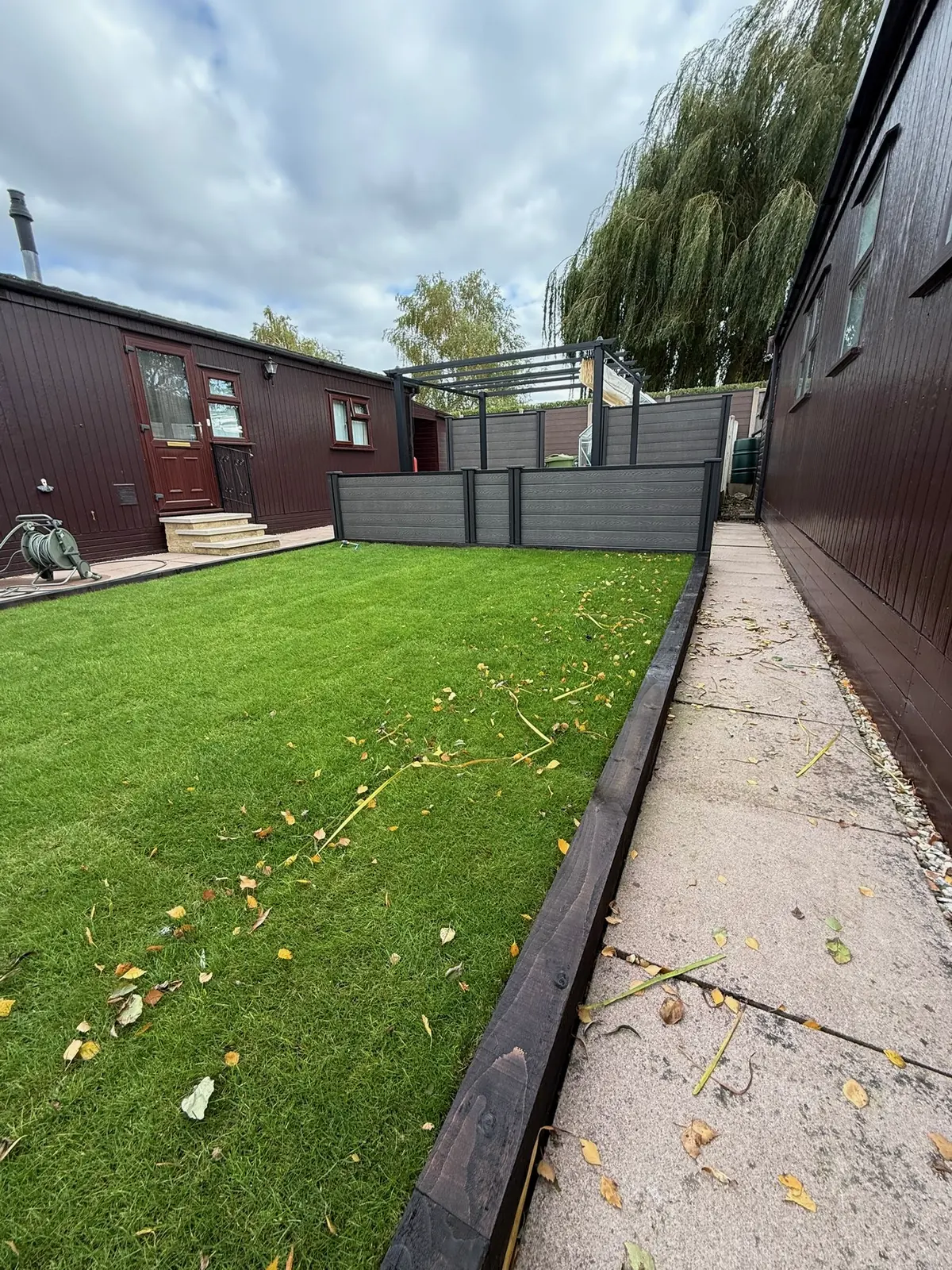
Turfing Alongside Paving and Fencing
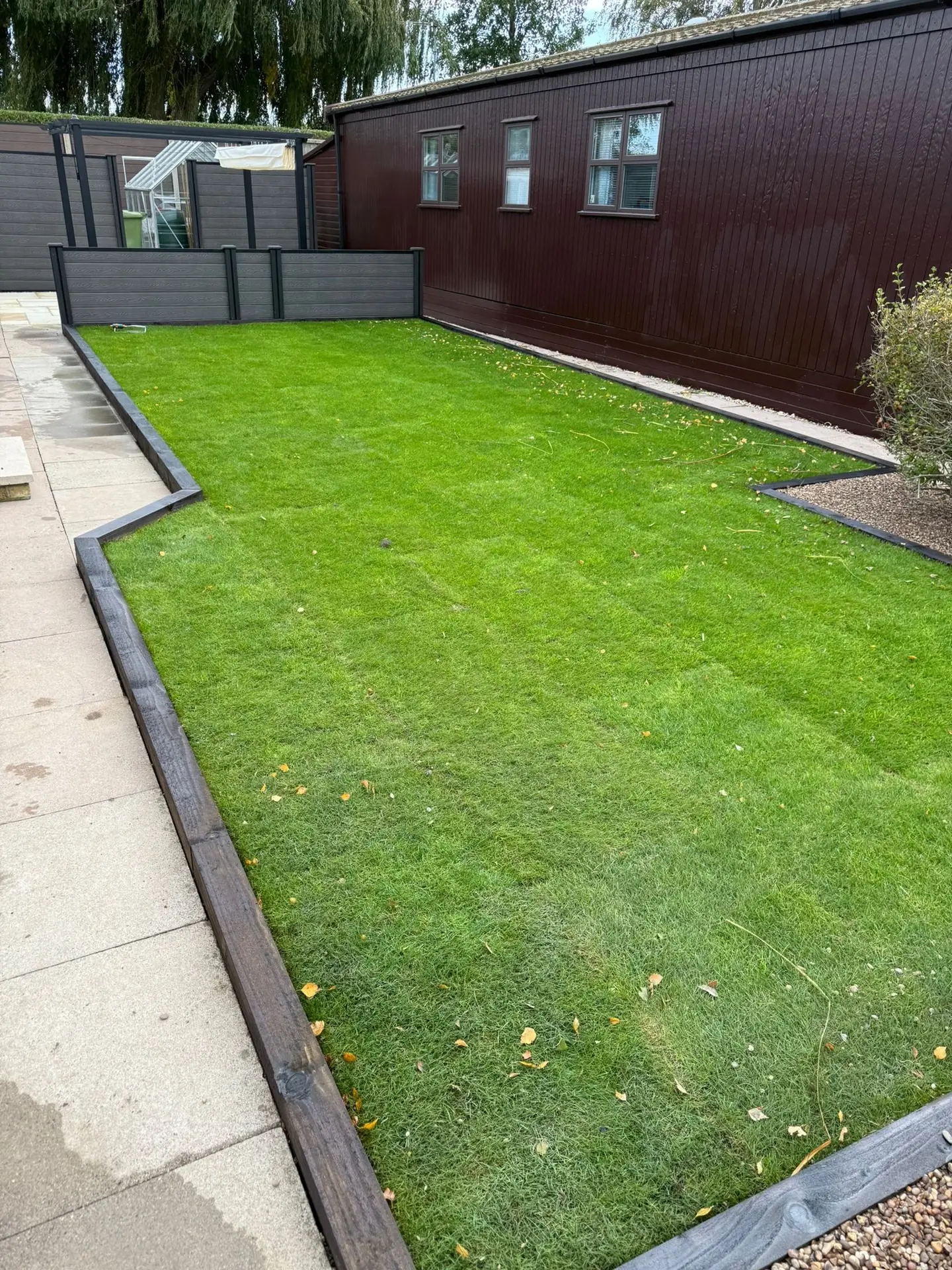
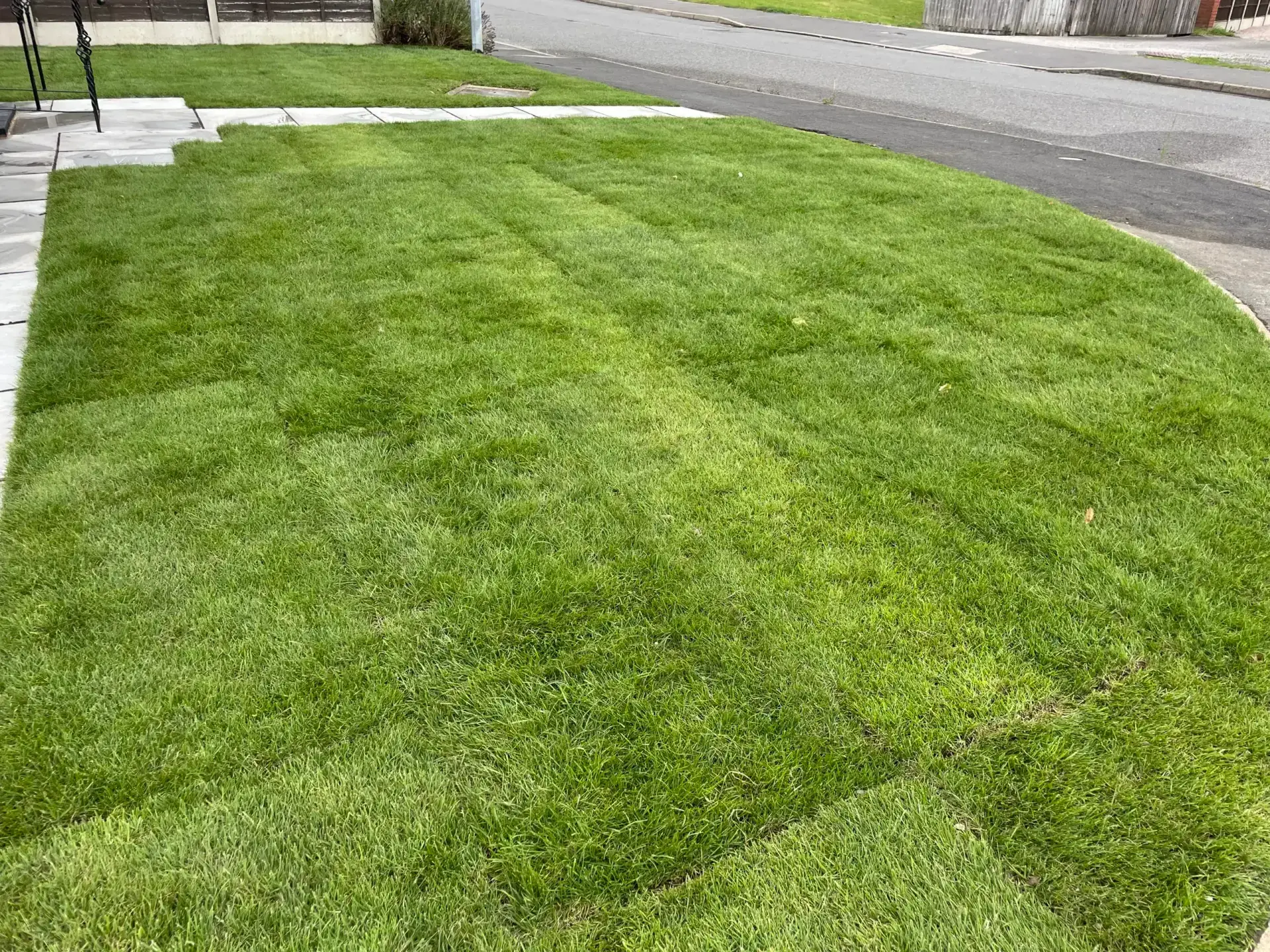
A new lawn often goes in as part of a bigger job. The turf is usually the last thing laid. By then the patio, paths, fencing and edging are finished and the heavy work is out of the way. Nothing gets barrowed across the new grass.
Turfing often runs alongside patio installation, fencing, composite decking and block paving paths. As landscape gardeners working across Lincoln and the surrounding areas, we plan the levels and edges together. We set the lawn so rain runs away from the house and patio. A lawn laid flush with the paving around it can also be mown straight over the edge, which saves trimming that edge by hand.
For the parts of a garden that need less upkeep, see our guide to a low maintenance garden in Lincoln.
Explore the rest of what we do
What to Ask a Landscaping Company in Lincoln
Before booking any turfing job in Lincolnshire, ask what the ground preparation involves and where the turf is coming from. Some quotes go straight from lifting the old lawn to laying the new one. If yours does, ask what is being left out and why.
Ask if topsoil is being brought in, or if the new turf is going onto the existing ground as it is. Ask too if the old turf and spoil are being taken away as part of the job.
It is also worth asking to see finished lawns. Our recent projects and the lawns gallery show completed work from across Lincolnshire.
WHY HOMEOWNERS PICK US
We are Lincoln based landscapers covering the city, Gainsborough and the surrounding areas.
- Established in 2010, with over 400 completed projects.
- Prestige Awards 2026 – Landscaper of the Year, Lincolnshire.
- Houzz 2026 Best of Service award, judged on customer feedback.
- Approved installers for Talasey Landscaping Solutions and Select Living Group.
- Helped design and build a Japanese-inspired garden featured on ITV’s Garden of the Year.
Turfing Lincoln: Frequently Asked Questions
Can turf be laid in October and November?
Yes. Turf can go down right through the autumn. Rooting slows as the weather cools, so a November lawn takes longer to settle than a September one.
When should turf not be laid?
Not on frozen or waterlogged ground. A long spell of hot, dry weather is also a bad time, because the rolls dry out before they can root.
How often does new turf need watering in autumn?
Water it in straight away, then daily for the first two weeks, keeping the soil moist but not waterlogged. After that, water less often but more deeply to encourage strong roots.
When can new turf be mown for the first time?
Once it has rooted and resists being lifted at the edges, usually around three weeks after laying. Keep the mower on a high setting for the first few cuts.
How fresh is the turf you lay?
We collect it on the day it is laid. Turf starts to yellow if it stays rolled up for more than a day or so. Ours goes straight down onto the prepared ground.
Do you look after the lawn once it is laid?
Yes. Once the new lawn is down, our lawn care programmes can take over. They cover mowing, feeding, aeration and weed control throughout Lincolnshire.
Areas We Cover
We lay lawns throughout Lincolnshire, including Lincoln, Gainsborough, Scunthorpe, Sleaford and the surrounding areas. That goes for new lawn turf, turf installation, lawn treatment and lawn care.
Book Your Free Site Visit
If the lawn is due for replacing, the next few weeks are the time to book it in. Use the form below or call us to arrange a site visit.
Our turf and lawn care page covers the full service. The Reshape blog has more guides on looking after a garden through the year.