
The panel you choose decides how the fence copes with the wind.
Closeboard, feather edge, slatted, composite and trellis panels compared, with the posts and gravel boards that hold them.
Most fences that come down in winter winds go at the posts, but the type of fence panel decides how much load those posts take. Fencing installation in Gainsborough, Lincoln and across Lincolnshire picks up as a result, and the first question is usually which panel to choose.
This blog compares closeboard, feather edge, lap, slatted, composite and trellis panels. It also covers gravel boards, concrete posts, broken fence posts and what to ask before a new fence goes up.
THE SHORT VERSION
- Solid fence panels catch the most wind, so the posts and footings carry the load.
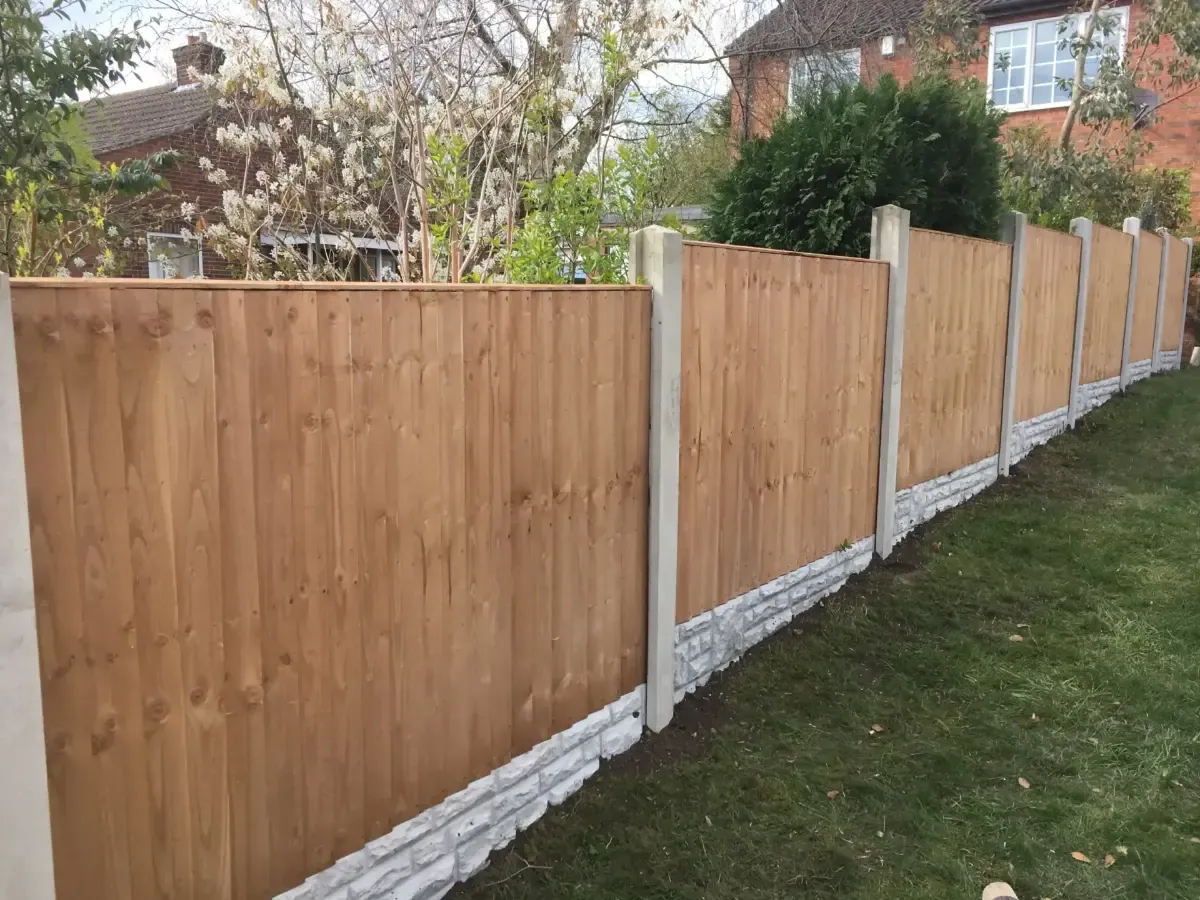
- Closeboard panels and feather edge boards on rails are the strongest timber choice for open boundaries.
- Slatted and trellis panels let some wind through, which takes load off the posts.
- Concrete gravel boards keep the panels off wet soil, because timber rots fastest at ground level.
- When a timber post snaps, it is best replaced with a concrete post set in concrete.
ON THIS PAGE
- The quick answer
- Which fence panels stand up to wind?
- What fencing installation in Gainsborough involves
- Closeboard, feather edge or lap panels
- Composite, slatted and trellis panels
- Gravel boards and concrete posts
- Fixing a broken fence post
- What to ask before new fence panels go in
- Frequently asked questions
- Areas we cover
- Book your free site visit
The Quick Answer
For an open boundary, closeboard panels or feather edge boards on rails stand up to winter winds best, as long as they sit between concrete posts with concrete gravel boards along the bottom. Slatted and trellis panels let some wind through, so they suit the most exposed front gardens and screens. For fencing installation in Gainsborough, Lincoln, Scunthorpe, Sleaford and across Lincolnshire, we set every post in concrete.
Which Fence Panels Stand Up to Wind?
A solid fence panel works like a sail, so the wind load passes straight into the posts and their footings. That applies to garden fence panels of every type, from wood fence panels to composite boards.
WHAT WE FIND AFTER HIGH WINDS
Should Fence Panels Move in the Wind?
A fence panel should sit snug in its posts without rattling. When a panel moves, the slot or the fixings have worn, and the next strong gust can lift it out.
Gaps in a fence take some load off the posts, because the wind passes through instead of pushing against a solid face. For that reason, slatted panels and trellis tops suit the most exposed boundaries, while closeboard suits gardens that need full privacy.
What Fencing Installation in Gainsborough Involves
These are the stages we follow on every fencing installation in Gainsborough, Lincoln and across the county, so each panel goes into a post that will hold it.
Check the boundary
We confirm the line of the fence and who owns it before the old panels come out.
Remove the old fence
Old panels, posts and concrete footings then come out, with spoil removal from site.
Choose the panels
The panel type is agreed against how exposed the boundary is and how much privacy is needed.
Set the posts
Concrete posts go in plumb and in line, set in concrete to suit the height of the fence.
Fit the gravel boards
Concrete gravel boards then slot in along the bottom, so no timber touches the soil.
Fit the panels
Panels slide into the slotted posts until they sit level along the top and tight at each end.
Caps and trellis
Post caps go on, and trellis is fitted to the top when the design calls for it.
Gates and clearing up
Gates are hung on posts set to carry their weight, and the old fence leaves site with us.
Closeboard, Feather Edge or Lap Panels
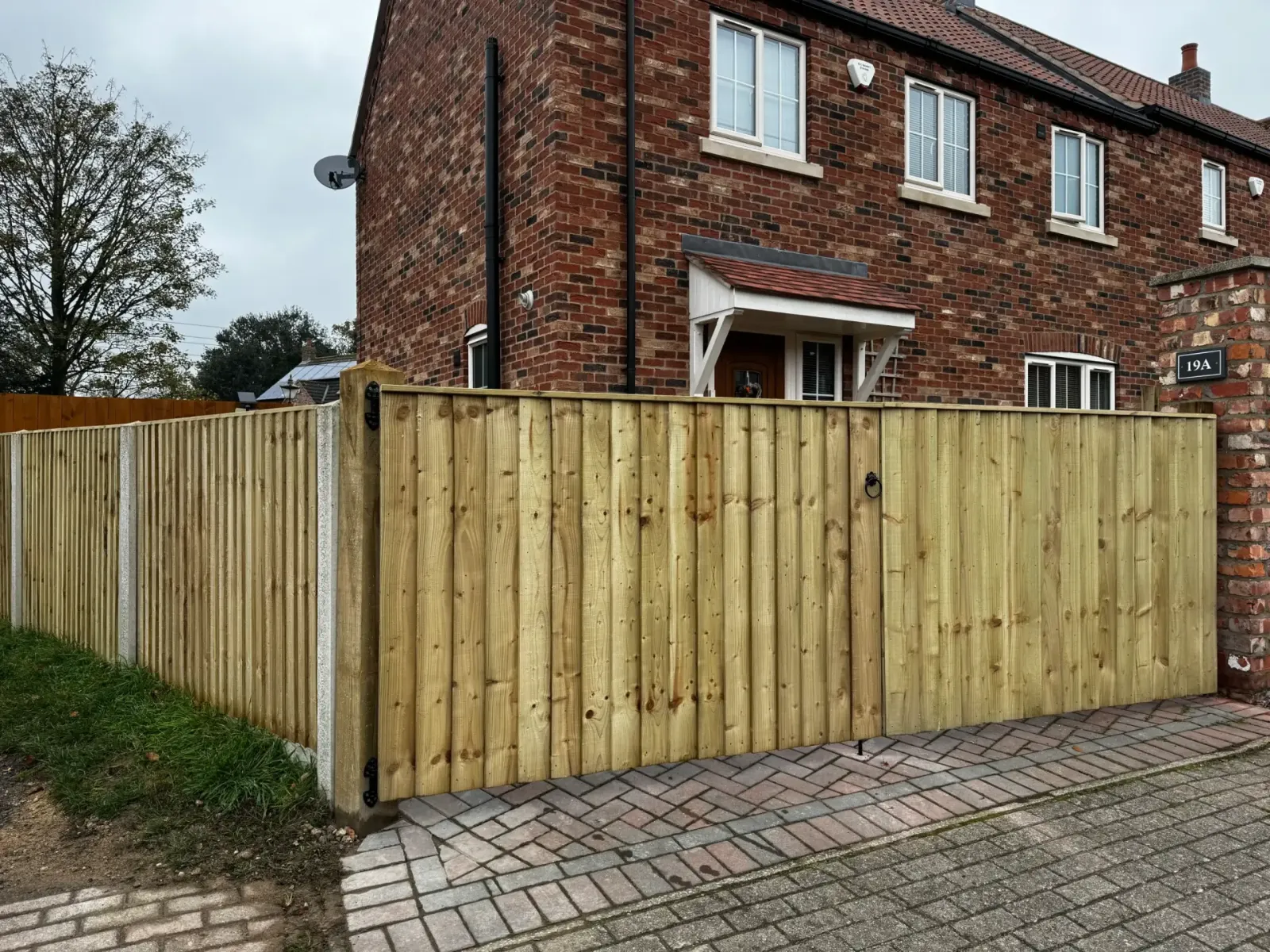
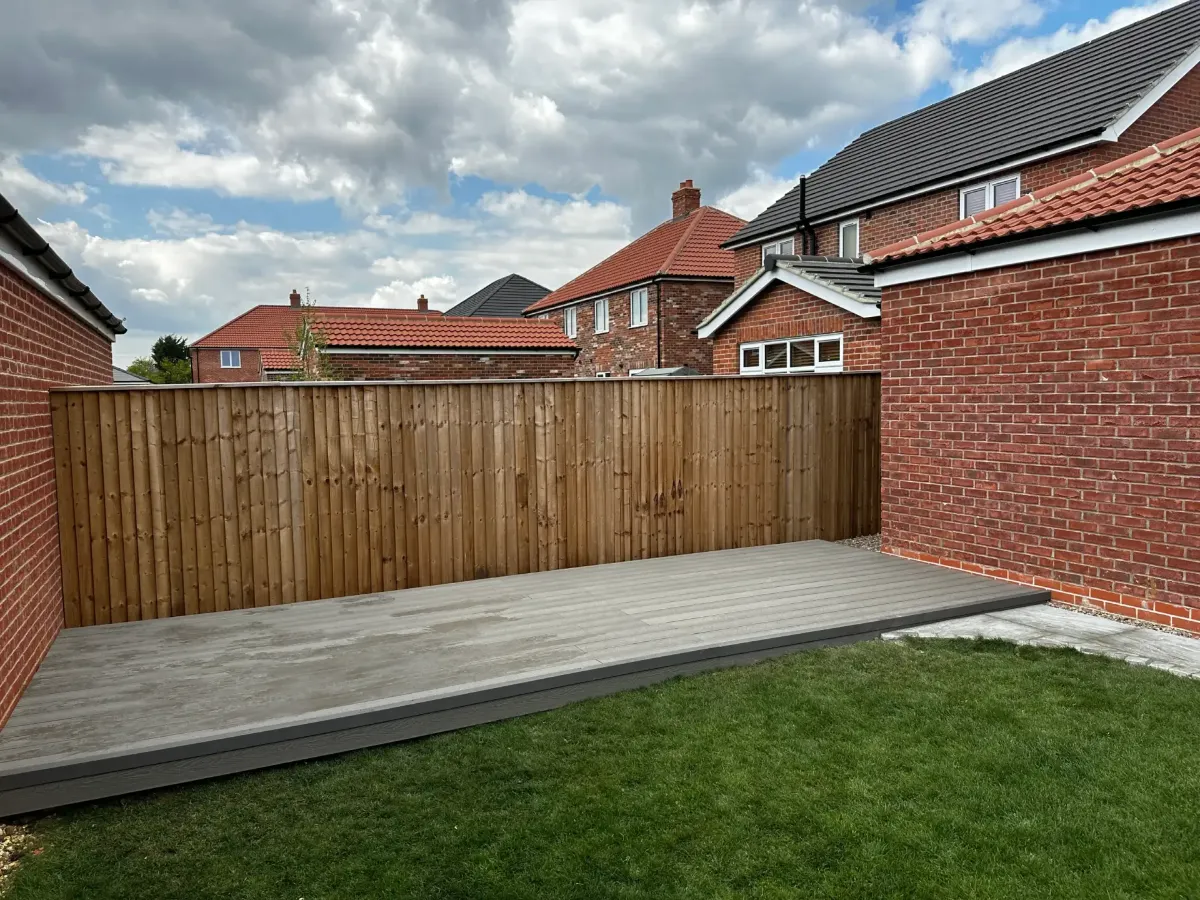
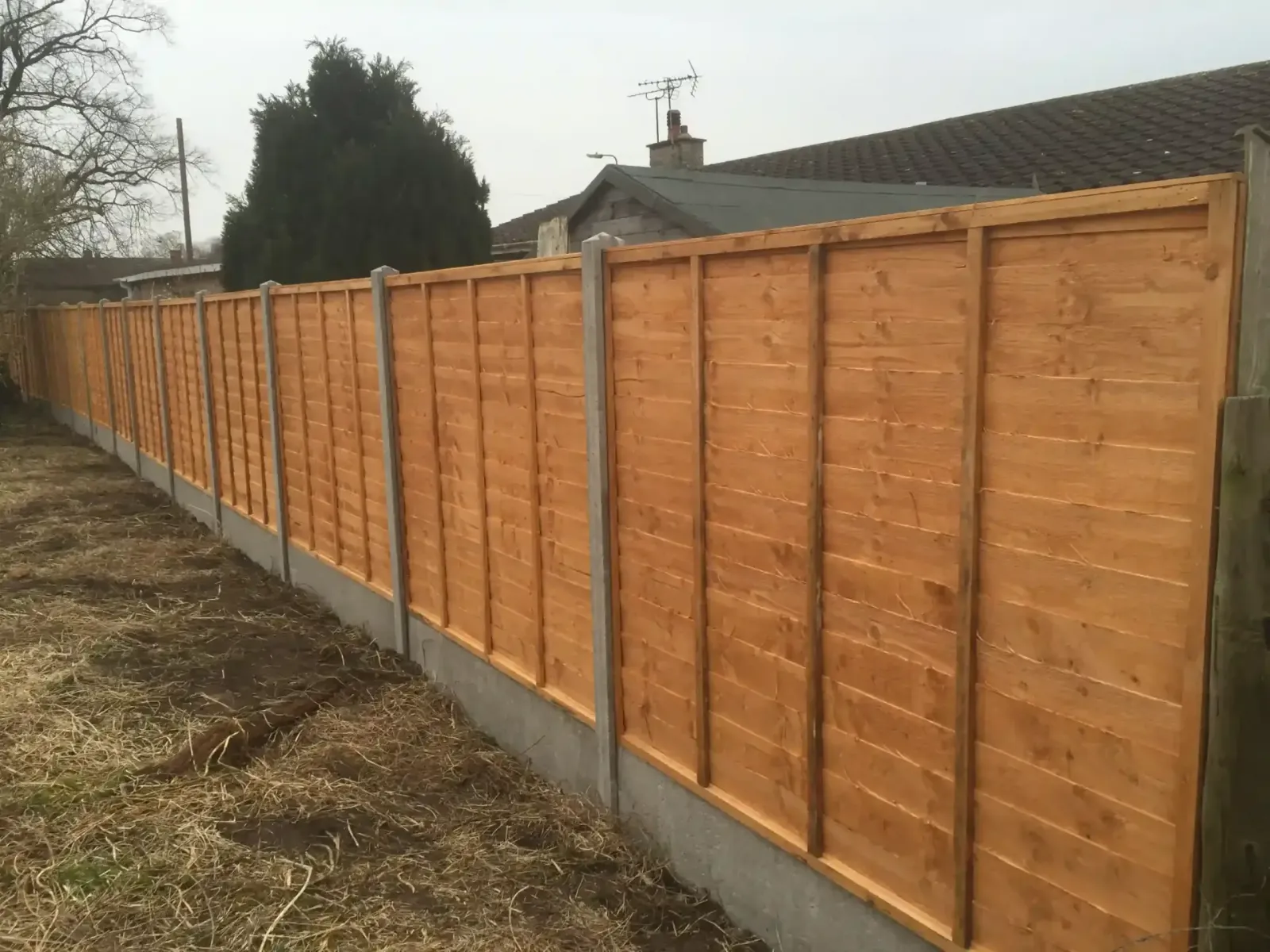
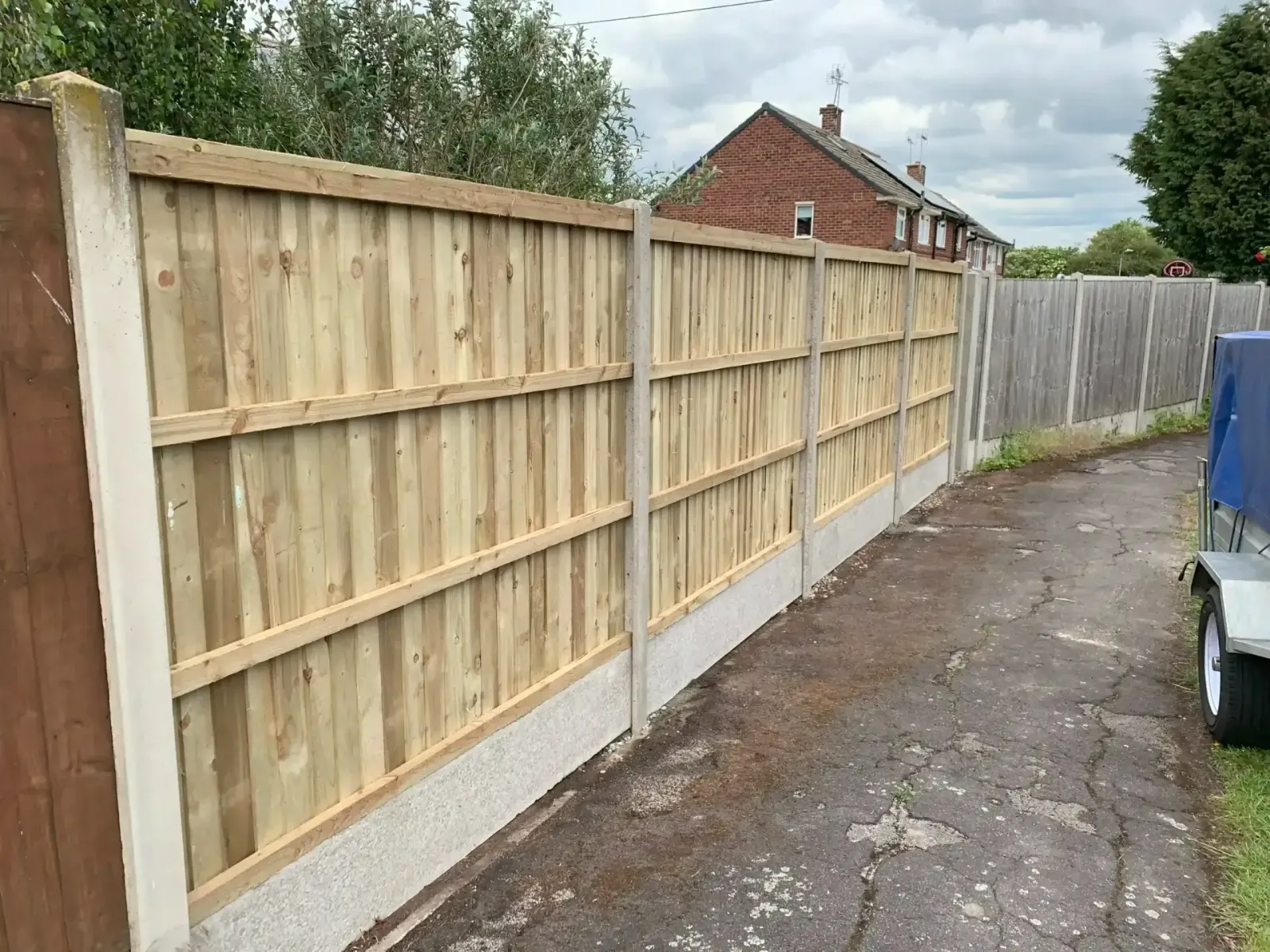
Closeboard and feather edge are what we recommend for most garden fencing in Gainsborough and Lincoln, because the boards are fixed to rails rather than held in a thin frame. Lap panels are lighter, so they are usually the first to blow out in a gale.
| Option | What it involves | Strengths | Upkeep after | Best suited to |
|---|---|---|---|---|
| Closeboard panelsOur recommendation | Vertical feather edge boards fixed to rails inside a heavy frame. | Strong in the wind and private on both sides. | Posts and gravel boards checked now and again. | Rear boundaries and exposed gardens. |
| Feather edge on railsBuilt on site | Boards nailed to rails between the posts, built in place. | Follows slopes and suits long or uneven runs. | Very little beyond checking the rails. | Long boundaries and sloping gardens. |
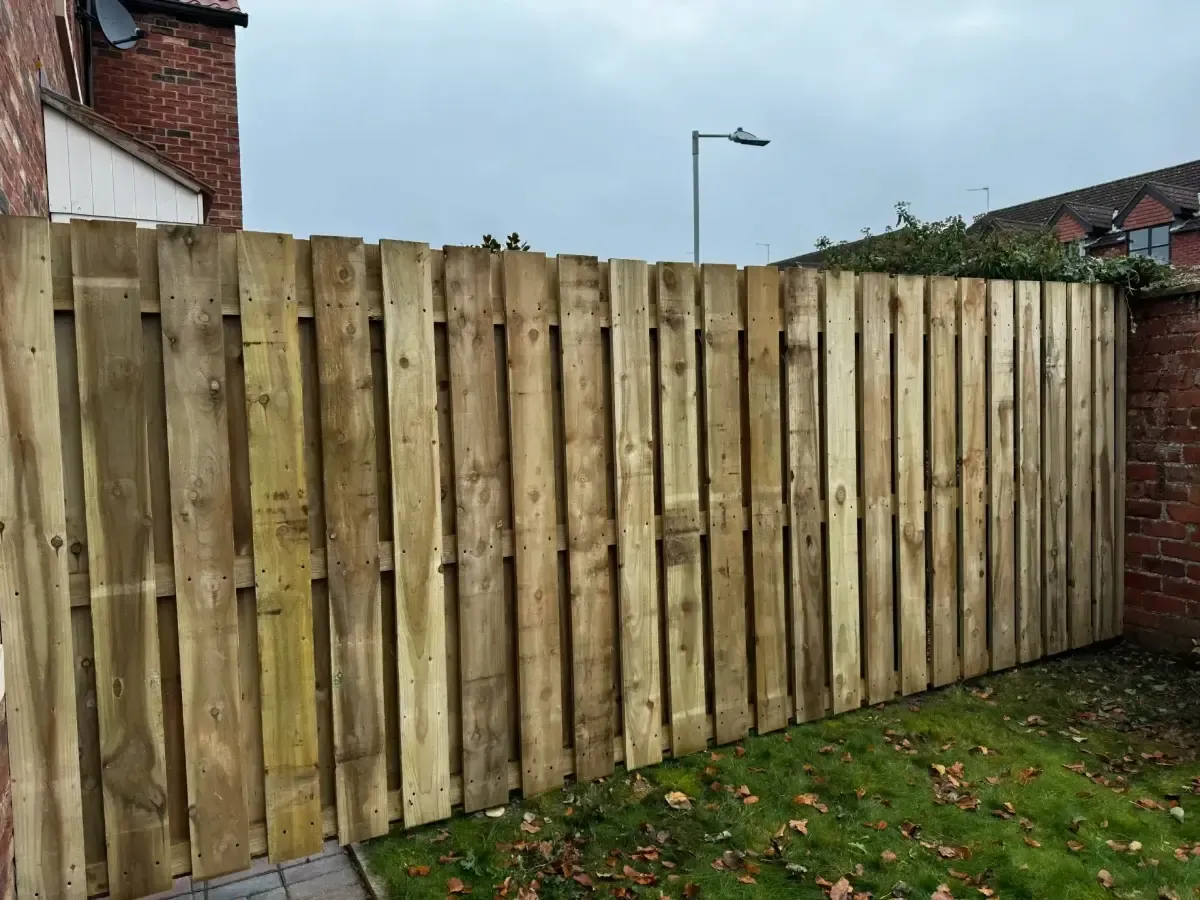
| Lap panelsLightweight | Thin overlapping boards in a light frame. | Light to handle and quick to fit. | Panels checked after high winds. | Sheltered gardens and short runs. |
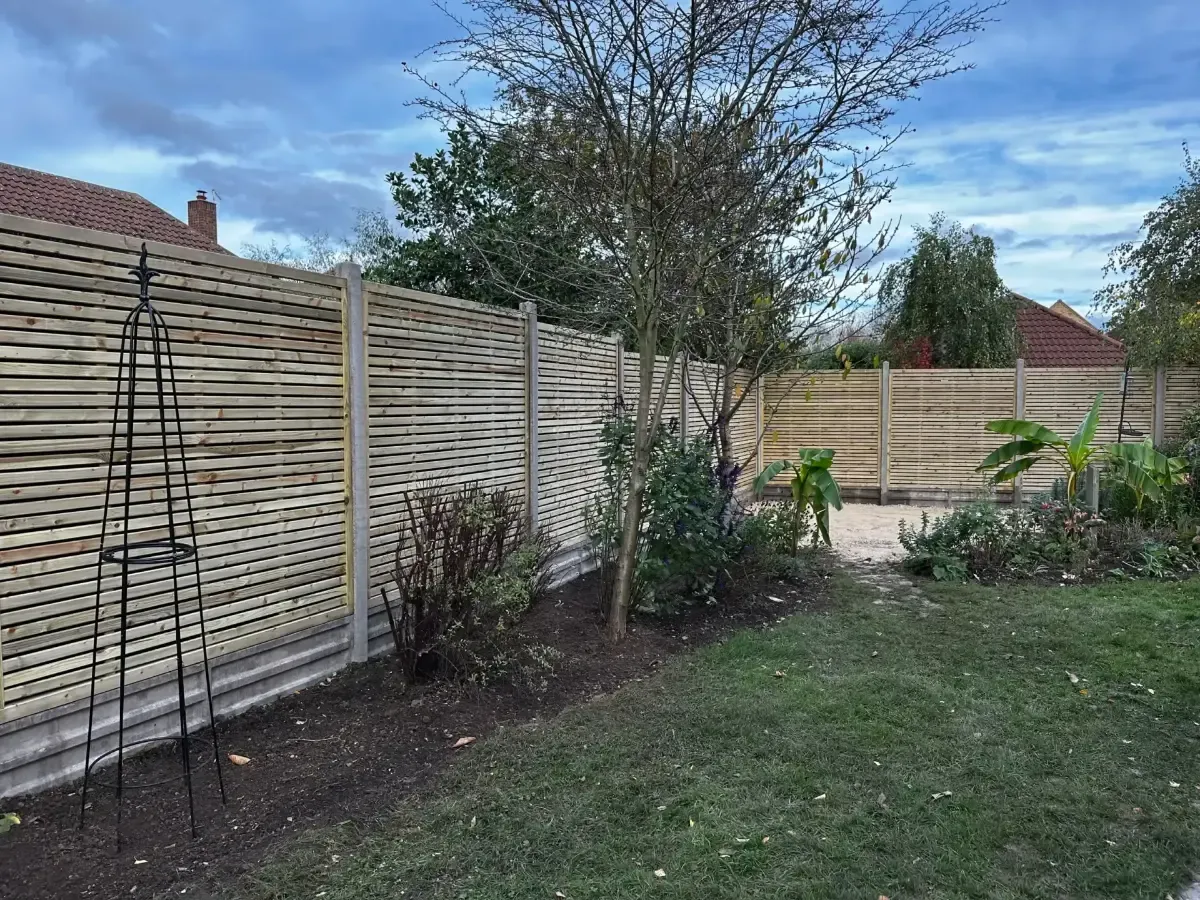
| Slatted panelsModern | Horizontal slats with small gaps between them. | Lets some wind through, with a modern look. | A wash down and a check of the fixings. | Exposed front gardens and screens. |
Composite, Slatted and Trellis Panels

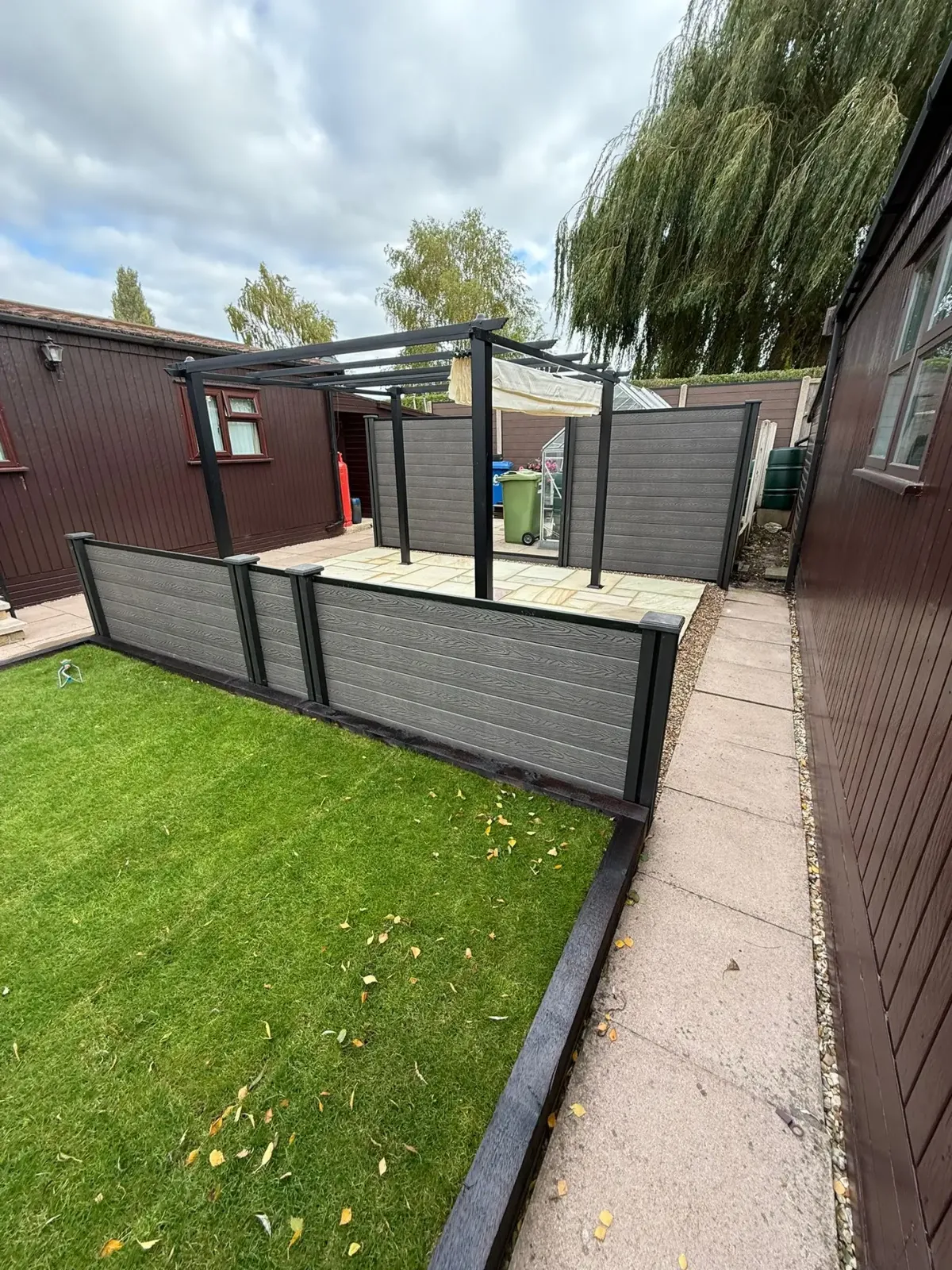
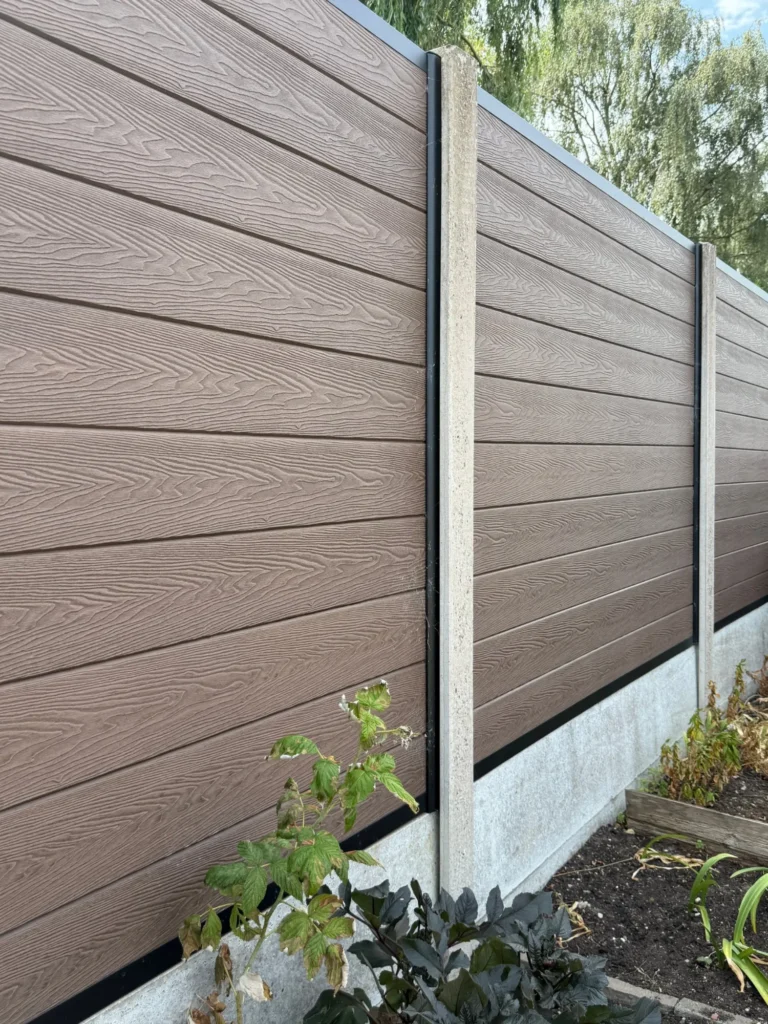
Composite fence panels slot between posts made for the system and need no painting or staining. The boards hold their colour, and we fit them in Lincoln, Gainsborough and across Lincolnshire, including the Charles & Ivy range.
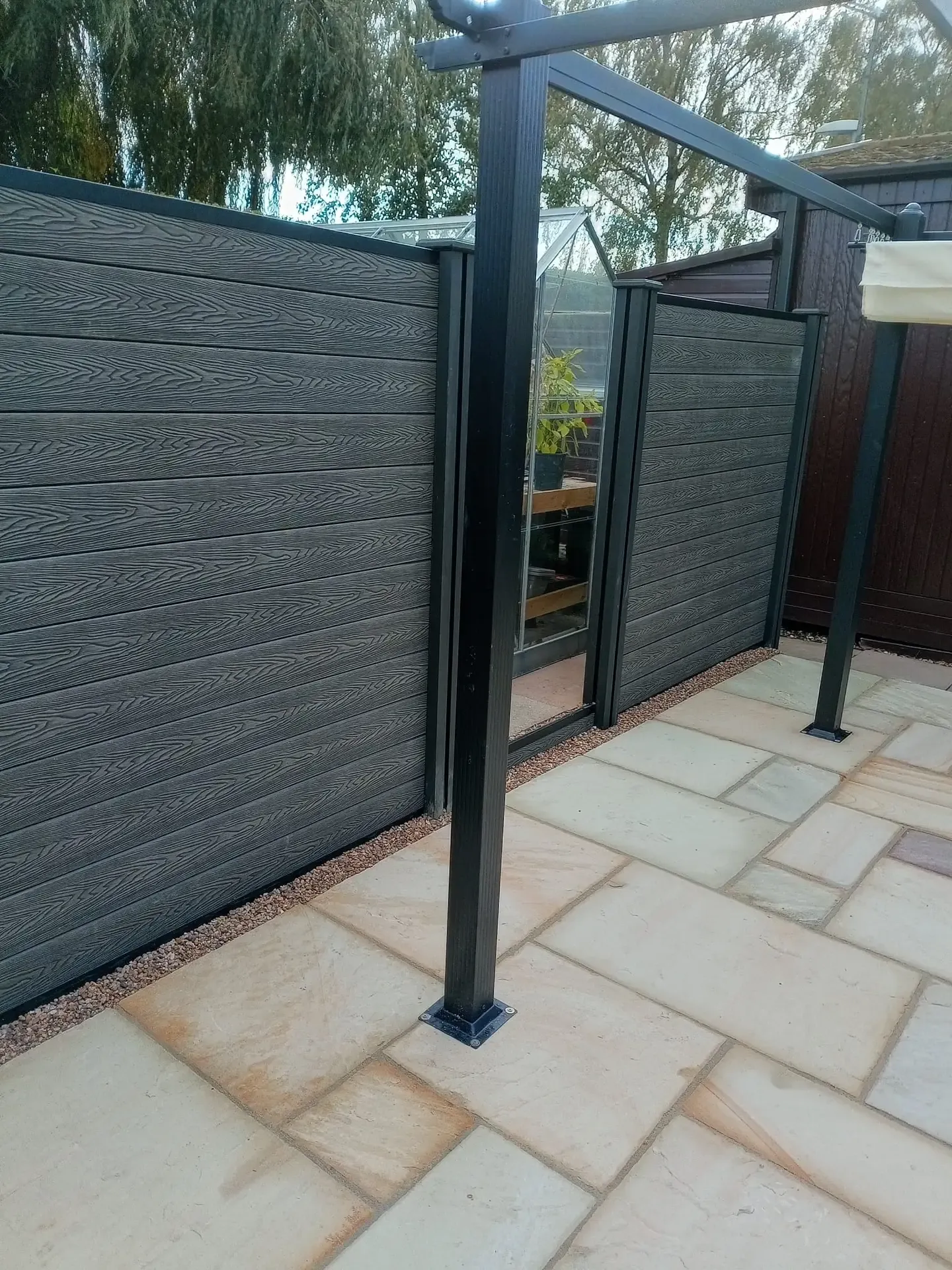
Slatted fence panels and metal fence panels leave small gaps between the slats, so the wind load on each post is lower. They suit modern gardens, especially boundaries that face open ground.
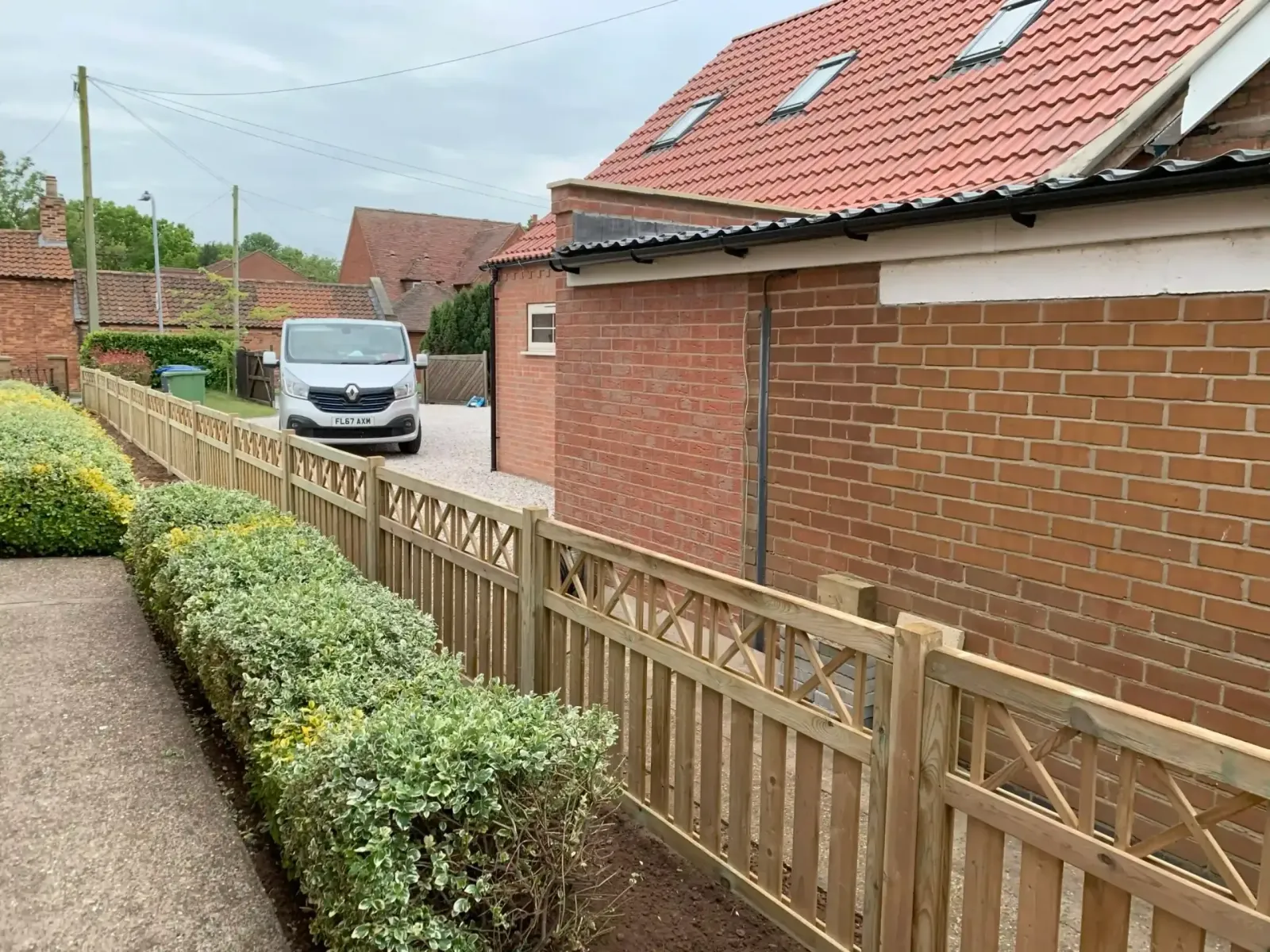
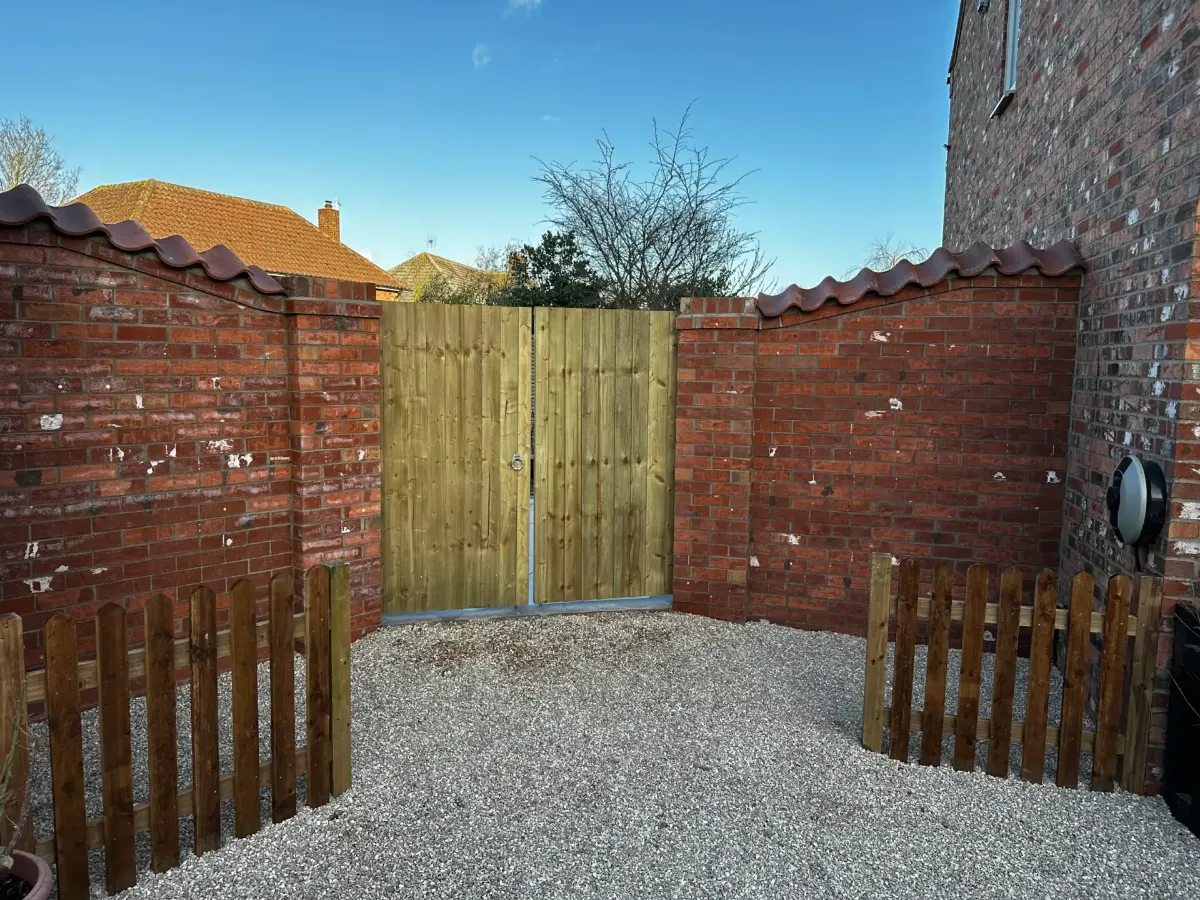
Trellis panels add height above a solid fence without adding much wind load, while decorative fence panels and picket fencing suit front gardens. We fit both, and we build bespoke fencing in Lincolnshire to a design, with gates made to match.
Not sure which fence panels suit your garden?
We look at the boundary, how exposed it is and the state of the posts on a free site visit, then recommend the panels that will hold.
Gravel Boards and Concrete Posts
Concrete gravel boards sit along the bottom of the fence and keep the panels off wet soil, because timber rots fastest where it meets the ground. They hold back soil from a raised border too, and a damaged board slides out without the panel coming down.
Concrete posts do not rot, and because they are slotted, they hold the panels and gravel boards in one straight line. Timber posts and timber gravel boards suit an all-timber look, but they need checking at ground level every year.
After a storm, most of the fences we are called out to have snapped at a timber post or blown out of a worn slot.
Reshape Landscaping Ltd, LincolnRecent projects
RECENT FENCING WORK


Fixing a Broken Fence Post
When a timber post snaps at ground level, the panels either side lose their support and the run starts to lean. A repair spur bolted to the old post can hold it for a while, but a new concrete post is the lasting fix.
For a fence repair like this, we dig out the old footing, set the new post in concrete and refit the panels and gravel boards. Our blog on storm-damaged fences covers when a whole run should be replaced, and the fencing projects page shows recent work.
Explore the rest of what we do
What to Ask Before New Fence Panels Go In
Ask fencing contractors in Lincoln and Gainsborough which panel they are quoting for and why it suits the boundary. Check what the posts are made of, what they will be set in and if concrete gravel boards are included. The finished height should also sit within the Planning Portal guidance on fences, gates and garden walls.
Fence installers should also say how gates will be hung and if the old fence leaves site. If a contractor skips any of these points, ask what they are leaving out and why. To arrange a site visit with fence installers in Gainsborough or Lincoln, contact us.
WHY HOMEOWNERS PICK US
We are a British-owned and run landscaping company based in Lincoln, covering the city, Gainsborough, Scunthorpe, Sleaford and the surrounding areas.
- Established in 2010, with over 400 completed projects.
- Prestige Awards 2026 – Landscaper of the Year, Lincolnshire.
- Houzz 2026 Best of Service award, judged on customer feedback.
- Midlands Enterprise Awards 2026 – Best Bespoke Garden Landscaping Service, Lincolnshire.
- Approved installers for Talasey Landscaping Solutions and Select Living Group.
- Helped design and build a Japanese-inspired garden featured on ITV’s Best of Gardens.
- Qualified through the National Design Academy.
- Insured, including public liability.
Fence Panels: Frequently Asked Questions
What type of fence is most wind-resistant?
Closeboard or feather edge on rails between concrete posts stands up best. Slatted panels let wind through, so they take less load.
Should fence panels move in the wind?
A panel should sit firm. When it rattles, the slot or fixings have worn, so the next gust can lift it out.
Are gravel boards worth it?
Yes, because they keep timber off wet soil. A damaged board also slides out without the panel coming down.
Which is better, closeboard or feather edge?
Both use the same boards, but feather edge is built on site, so it follows slopes better.
How do you fix a broken fence post?
We dig out the old footing and set a new concrete post, because a repair spur only holds for a while.
Do you need gaps in a fence for wind?
Not always, but gaps take load off the posts. On every fencing installation in Gainsborough, we match the panel to the site.
Areas We Cover
We fit fence panels, gravel boards and concrete posts in Lincoln, Gainsborough, Scunthorpe, Sleaford and the surrounding areas. Fencing installation in Gainsborough is covered on our Gainsborough fencing page, and the fencing in Lincoln page covers the same panels and posts. We also fit fencing in Sleaford and fencing in Scunthorpe, and Lincolnshire fencing of every type in between.
Book Your Free Site Visit
If a fence panel has blown out, a post has snapped or the boundary needs new fencing, use the quote form or call us to arrange a site visit. Our fencing page covers the full service, and the Reshape blog has more on looking after a garden through the year. We reply to every enquiry within 48 hours.
Keep reading
Get a Free Quote
We install fencing, gates and full gardens in Lincoln, Gainsborough and across Lincolnshire.