
Composite and timber decking look alike on day one. They age very differently.
Lifespan, upkeep, appearance and structure of composite and timber decking, from approved installers in Lincolnshire.
Choosing between composite decking and timber decking is an important decision when planning a new outdoor space. Both can create a quality, practical area, but they behave very differently over time in terms of maintenance, structure, durability, and long-term appearance.
At Reshape Landscaping Ltd, we specialise in decking installation Lincolnshire homeowners trust, working across Lincoln, Gainsborough and the surrounding areas. We are also approved installers for Select Living Group and Talasey products, both leading suppliers of composite and landscaping products in the UK.
This guide focuses on how both materials perform in real-world conditions, not just how they look on installation day.
THE SHORT VERSION
- Composite decking lasts longer and needs less upkeep than timber.
- Timber has a natural look that weathers, and needs regular treatment.
- Both depend on the subframe, spacing and drainage beneath the boards.
- Decking is never laid straight onto a lawn.
- We are approved installers for Select Living Group and Talasey Landscaping Solutions.
ON THIS PAGE
- The Quick Answer
- What Is Composite Decking?
- How Composite Decking Performs Over Time
- What Is Timber Decking?
- Timber Decking Structure and Long-Term Behaviour
- Composite vs Timber Decking: Appearance Over Time
- Composite vs Timber Decking: Maintenance
- Composite vs Timber Decking: Durability and Structural Performance
- Common Issues With Each Material
- Which Decking Is Right for Your Garden?
- Millboard Decking
- Why Installation Quality Matters
- How We Lay Decking on Grass and Uneven Ground
- What Affects the Cost of New Decking
- Final Thoughts
- What to Ask a Decking Installer
- Frequently Asked Questions
- Areas We Cover
- Book Your Free Site Visit
The Quick Answer
Composite decking lasts longer and needs far less upkeep than timber, while timber has a lower upfront cost and a natural look that weathers over time. Composite boards do not rot, but they expand and contract with temperature, so the spacing and the subframe beneath them decide how well they perform. We are approved installers for Select Living Group and Talasey Landscaping Solutions, and we install composite and timber decking in Lincoln, Gainsborough, Scunthorpe, Sleaford and the surrounding areas.
What Is Composite Decking?
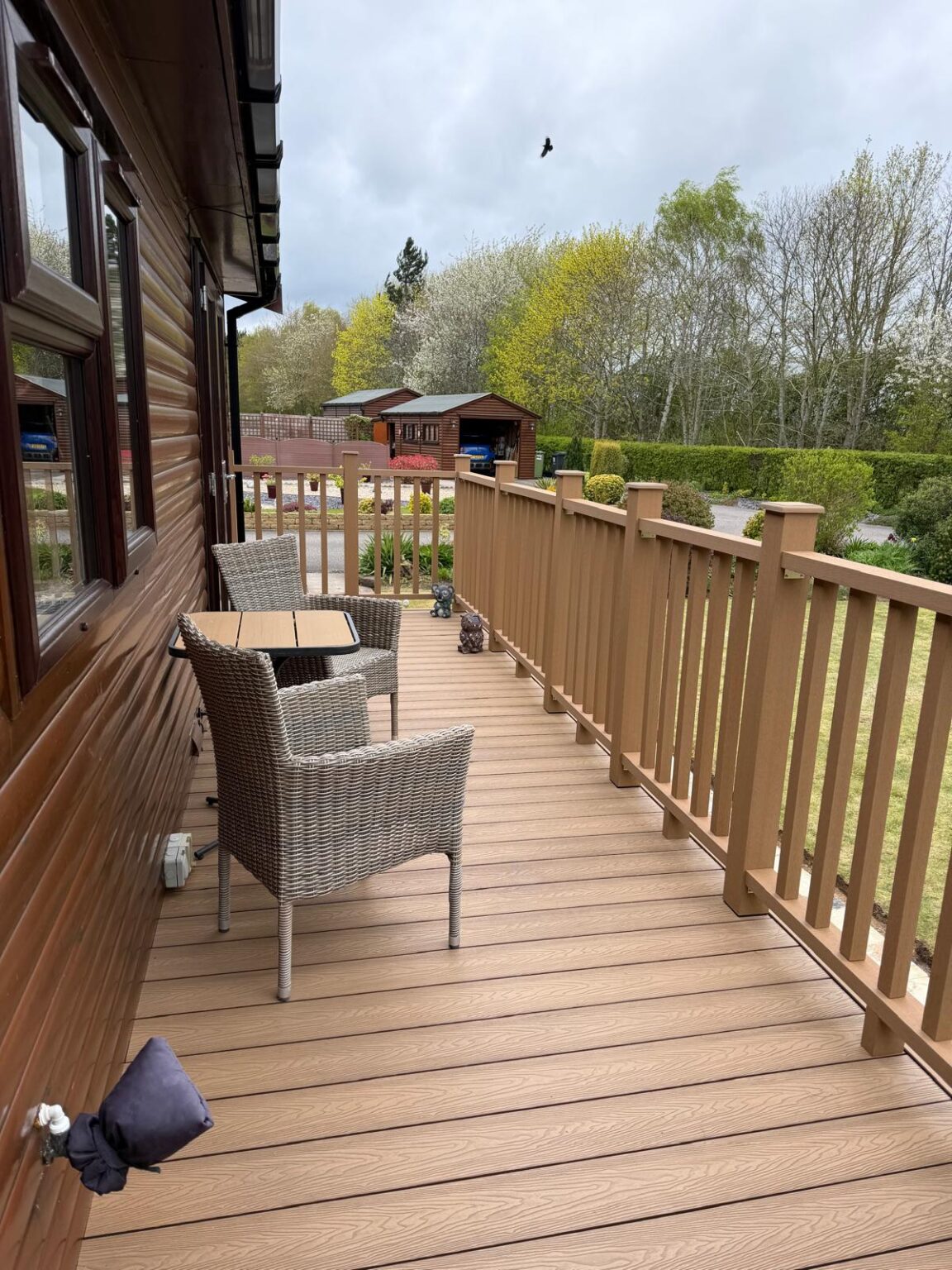
Composite decking is manufactured using a blend of recycled wood fibres and polymers, designed to replicate the appearance of natural timber while improving long-term durability. Most modern composite boards are capped, meaning they have a protective outer layer that helps reduce staining, moisture absorption, and surface wear. In recent years, composite decking has become increasingly popular in decking installation Lincolnshire projects because homeowners are prioritising low maintenance and long-term performance.
How Composite Decking Performs Over Time
One of the main reasons composite decking is widely chosen is its lifespan. In real terms, entry-level boards tend to last around 15–20 years, while mid-range products typically reach 20–25 years. Capped systems, such as those supplied by Select Living Group and Talasey, can exceed 25–30 years when installed correctly.
Unlike timber, composite does not rot or break down naturally. It is resistant to moisture absorption, insect damage, and structural decay. However, it does still experience thermal expansion, meaning it will slightly expand and contract with temperature changes. This is completely normal, but it does mean installation tolerances are critical for long-term performance.
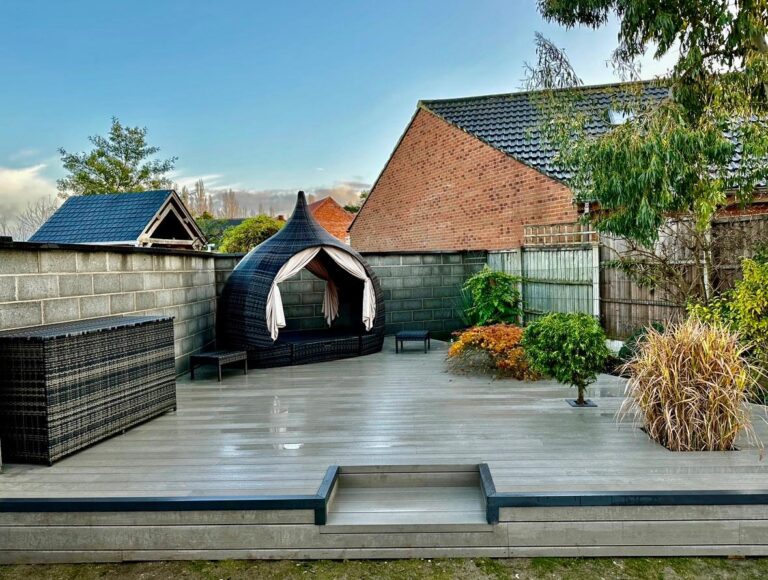
Choosing between composite and timber?
We bring samples of each range, look at the ground and the levels, and talk through which suits the garden. It is all part of the free site visit.
What Is Timber Decking?
Timber decking is the traditional option and is constructed from natural wood, usually pressure-treated softwood or hardwood species. It remains popular because of its natural appearance and ability to blend into almost any garden setting. However, timber is a reactive material, meaning it responds to moisture, temperature, and exposure over time. Timber decking is also a structural system, not just surface boards. Its performance depends heavily on the quality of the subframe beneath it, correct ventilation, and good drainage.
Timber Decking Structure and Long-Term Behaviour
Correctly built timber decking should always include a fully treated subframe, good airflow beneath the structure, and accurate spacing between boards to allow for movement and drainage. Over time, timber naturally changes. It will expand and contract with seasonal weather, and unless maintained, it will gradually fade in colour due to UV exposure. Many homeowners either accept the natural silvering effect or maintain the original finish with regular treatment. The most common structural issues in timber decking tend to develop in hidden areas, particularly where moisture becomes trapped within the subframe or around fixings. This is why installation quality plays such a significant role in overall lifespan, which is typically between 10 and 20 years, depending on maintenance.
WHAT WE ARE FINDING ON SITE
Composite vs Timber Decking: Appearance Over Time
Composite decking is designed for consistency. The colour remains stable for many years, with only gradual softening over time, depending on product quality. Timber decking behaves differently. It naturally weathers and develops a grey patina if left untreated, although this can be controlled through staining or oiling. Some homeowners prefer this natural ageing process, while others prefer the controlled finish of composite materials.
Composite vs Timber Decking: Maintenance
Maintenance is one of the clearest differences between the two materials.
Composite decking requires very little ongoing care. In most cases, occasional cleaning is enough to keep the surface looking good. Timber decking requires a more active approach. Regular cleaning is essential, along with periodic treatment such as oiling or staining to protect the surface and maintain appearance. Without this maintenance, timber will naturally degrade more quickly over time. For many homeowners considering decking installation in Lincolnshire, this difference is often the deciding factor.
| Option | Over time | Upkeep | Common issues | Best suited to |
|---|---|---|---|---|
| Capped compositeLowest upkeep | The colour stays stable, softening slowly. | Occasional cleaning. | Movement if the spacing is wrong. | Low maintenance gardens and a consistent finish. |
| Entry-level compositeLighter use | More colour softening than capped boards. | Occasional cleaning. | Surface scratching, depending on the grade. | Smaller areas with lighter use. |
| TimberNatural look | Weathers to a silver grey unless it is stained or oiled. | Cleaning, staining or oiling, and sanding. | Splitting, moss, algae and rot. | Natural gardens, where regular upkeep suits. |
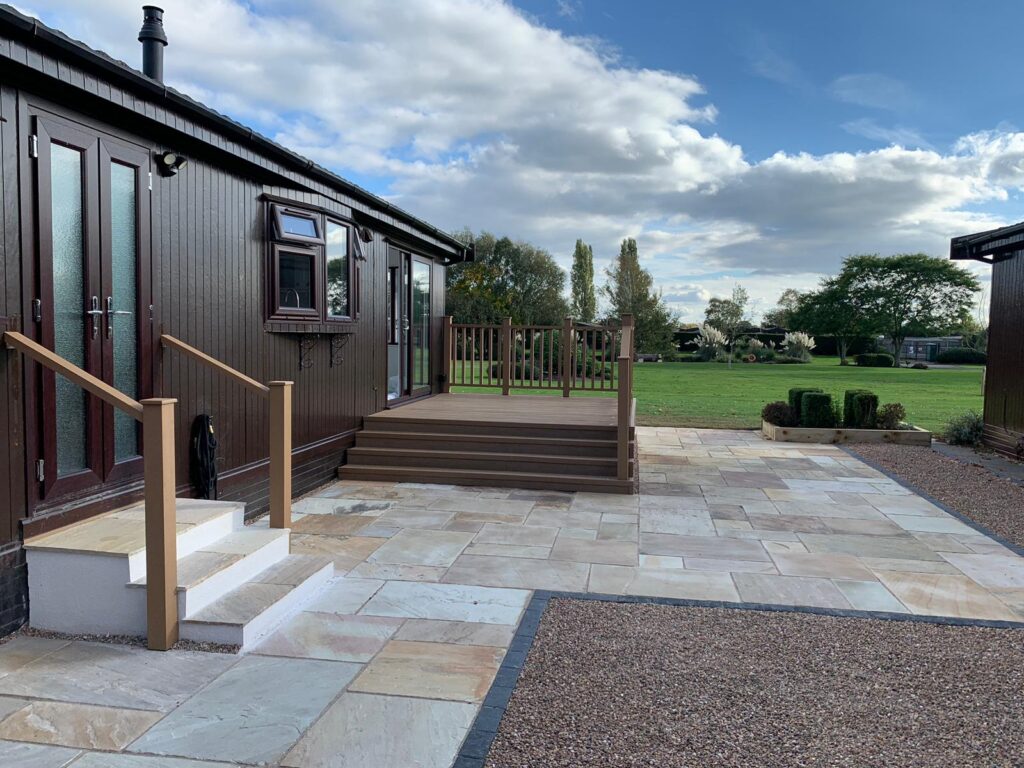
Composite vs Timber Decking: Durability and Structural Performance
Composite decking is engineered for stability. It is resistant to rot, decay, warping, and insect damage, and it is far less affected by environmental conditions once installed correctly. Timber decking is structurally strong when new, but its long-term performance depends heavily on maintenance and exposure. Moisture is the biggest factor affecting durability, particularly where ventilation is limited or drainage is poor.
Common Issues With Each Material
Composite decking issues are generally minimal but can include movement if installation spacing is incorrect, surface scratching depending on product grade, and gradual colour softening over long periods.
Timber decking is more reactive. Common issues include moisture-related movement, surface splitting, moss or algae growth in shaded areas, and degradation of fixings over time if not correctly maintained.
Which Decking Is Right for Your Garden?
Composite decking is usually best suited to homeowners who want a long-term, low-maintenance solution with a consistent modern finish. It performs particularly well where durability and ease of upkeep are priorities. Timber decking is often preferred by those who value natural aesthetics and are comfortable with regular maintenance to preserve appearance and condition.
At Reshape Landscaping Ltd, we help homeowners across Lincoln and Gainsborough choose the right material based on how they actually use their outdoor space, not just how it looks initially.
Millboard Decking
Millboard boards are moulded from real oak and made without wood, so they do not rot, swell or splinter. They are fitted on a subframe with the joist centres the manufacturer sets.
We install Millboard decking alongside composite and timber decking in Lincoln, Gainsborough, Scunthorpe, Sleaford and throughout Lincolnshire, and samples can be brought to the site visit.
Recent projects
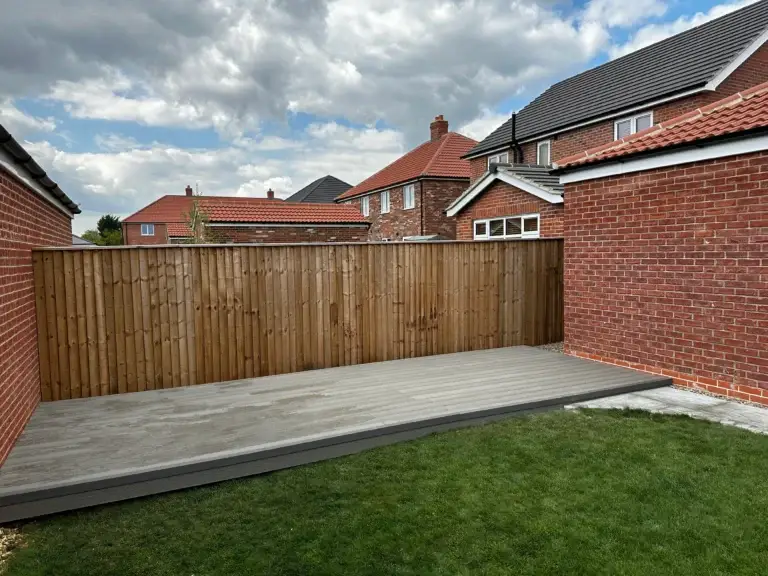
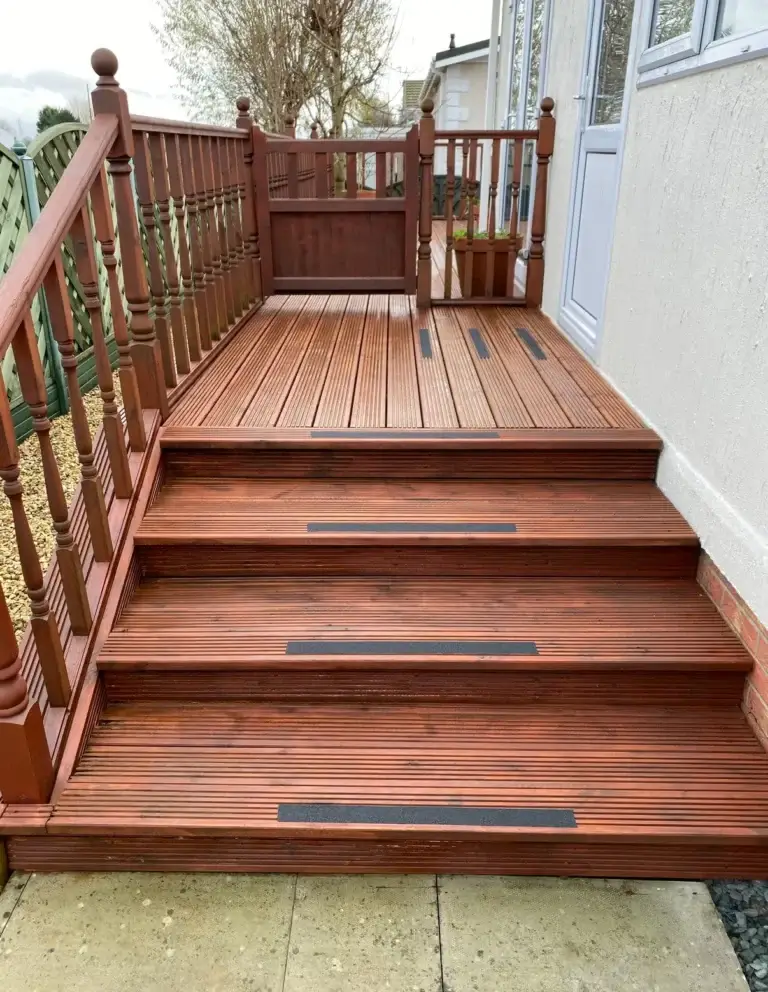
RECENT DECKING WORK
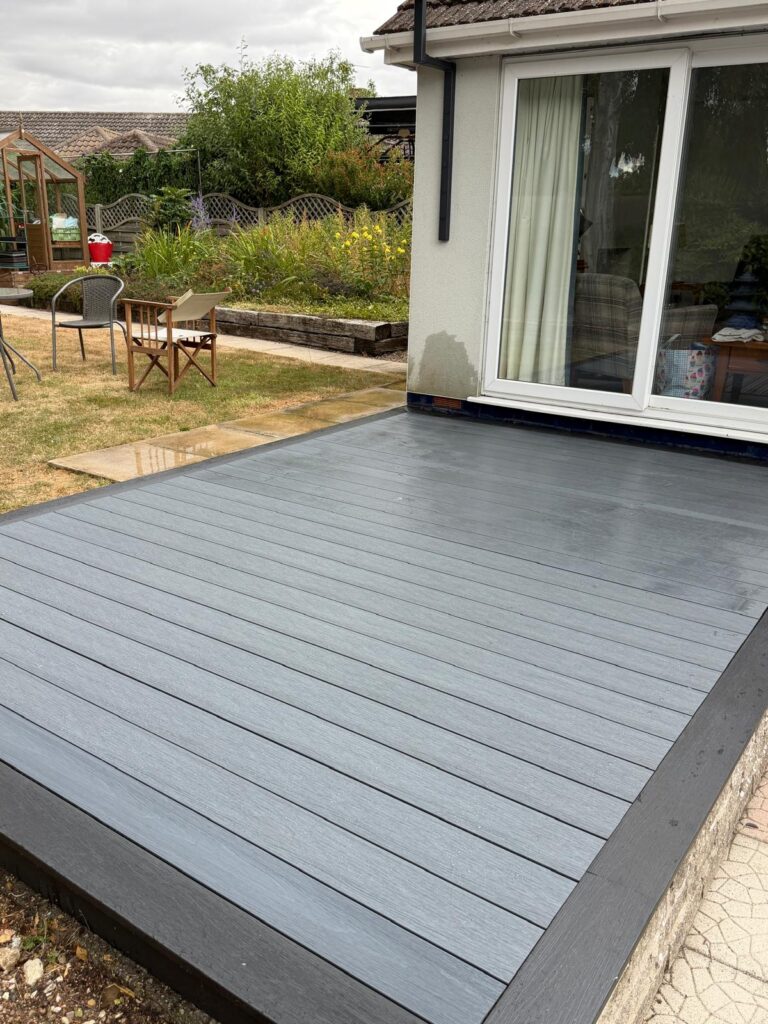
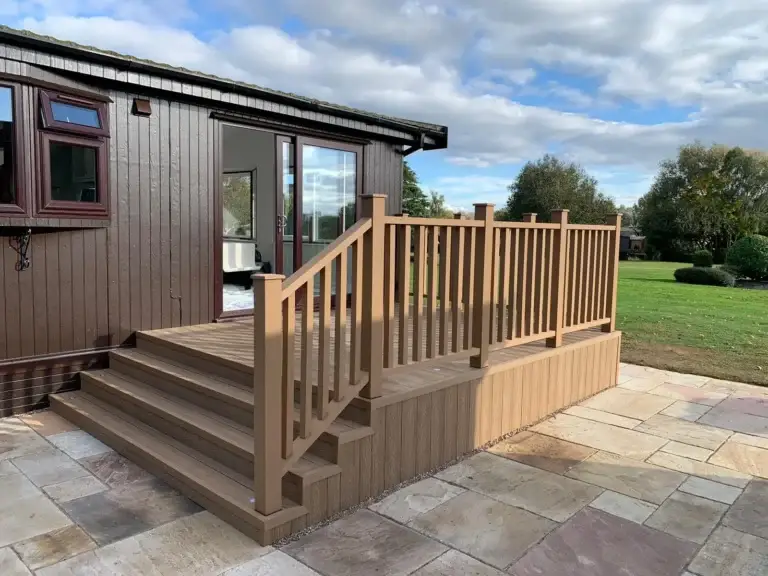
Why Installation Quality Matters
Regardless of material choice, the performance of any decking system depends heavily on the structure beneath it. Correctly installed decking requires correct subframe design, accurate spacing for movement, effective drainage planning, and the use of appropriate fixings for long-term outdoor exposure.
As an experienced landscaping company Lincoln homeowners rely on, we ensure every decking installation is built with long-term performance in mind, whether composite or timber is chosen.
We never lay decking straight onto a lawn, whatever the boards are made of.
Reshape Landscaping Ltd, LincolnHow We Lay Decking on Grass and Uneven Ground
We never lay decking straight onto a lawn. The turf and topsoil are cleared, the ground is levelled, and a weed membrane goes down with gravel over it so water drains away beneath the boards.
The subframe is then set out on posts or supports, levelled and fixed. On sloping or uneven ground the supports are set at different heights, so the finished decking sits level.
Raised decking is built the same way on taller posts, with steps and balustrades added where the height calls for them. If a quote does not mention ground preparation or the subframe, ask what is being left out and why.
New decking goes in through seven stages, in this order. Our page on decking in Lincoln covers the service itself.
Site visit
We check the levels, the drainage and how the decking will meet the house and garden.
Clear
The turf and topsoil are cleared and the ground is levelled.
Membrane and gravel
A weed membrane goes down with gravel over it, so water drains away beneath the boards.
Supports
Posts or supports are set out, with the heights adjusted on sloping ground.
Subframe
The subframe is levelled and fixed, with the joist centres set to suit the boards.
Boards
The boards are fixed with the spacing the manufacturer sets for movement.
Steps and finishing
Steps, balustrades, edging and lighting are fitted, and the site is cleared.
What Affects the Cost of New Decking
The boards chosen make the biggest difference, as timber, composite and Millboard each cost a different amount. The size and shape of the area, the ground preparation and the height of the subframe come next.
Steps, balustrades and integrated lighting add to the cost, as does difficult access to the garden. Every decking quote we send is written and sets out each stage of the work, from ground preparation to the finished boards.
Final Thoughts
Composite and timber decking both offer strong benefits, but they perform very differently over time. Composite decking provides long-term stability and low maintenance, particularly in higher-grade systems such as Select Living Group and Talasey products. Timber decking offers natural character and flexibility but requires ongoing care to maintain its condition.
If you’re planning decking installation in Lincolnshire, Reshape Landscaping Ltd can help you design and install a decking solution that suits your property and long-term expectations across Lincoln, Gainsborough and the surrounding areas.
Explore the rest of what we do
What to Ask a Decking Installer in Lincoln
Before booking new decking, ask how the ground under it will be prepared and how water will drain away beneath the boards.
Ask what the subframe is made of, how far apart the joists will be and what gap will be left between the boards.
If a contractor skips any of the stages above, ask what they are leaving out and why.
It is also worth asking to see finished decking. Our recent projects and the decking gallery show completed work from across Lincolnshire.
WHY HOMEOWNERS PICK US
We are a British-owned and run landscaping company based in Lincoln, covering the city, Gainsborough, Scunthorpe, Sleaford and the surrounding areas.
- Established in 2010, with over 400 completed projects.
- Prestige Awards 2026 – Landscaper of the Year, Lincolnshire.
- Houzz 2026 Best of Service award, judged on customer feedback.
- Midlands Enterprise Awards 2026 – Best Bespoke Garden Landscaping Service, Lincolnshire.
- Approved installers for Talasey Landscaping Solutions and Select Living Group.
- Helped design and build a Japanese-inspired garden featured on ITV’s Garden of the Year.
- Insured, including public liability.
Composite vs Timber Decking: Frequently Asked Questions
How long does composite decking last compared with timber?
Composite decking typically lasts 25–30 years, depending on product quality and installation standards, while timber decking typically lasts 10–20 years, depending on maintenance and environmental exposure.
Does composite decking expand and contract?
Composite decking does expand and contract slightly with temperature changes, which is why correct installation spacing is essential.
Does timber decking rot?
Timber decking does not rot automatically, but it can deteriorate over time if moisture becomes trapped or maintenance is neglected.
Is composite or timber decking better?
Neither option is universally better. Composite is generally more durable and lower maintenance, while timber offers a natural appearance and traditional character.
Do you install composite decking in Lincoln?
Yes. We are approved installers for Select Living Group and Talasey Landscaping Solutions, and we install composite, Millboard and timber decking in Lincoln, Gainsborough, Scunthorpe, Sleaford and throughout Lincolnshire.
Can decking be installed in winter?
Yes. Decking can be built through most of the winter. The ground preparation and the frame need workable conditions, so the work is planned around frozen or waterlogged ground.
How long does composite decking last?
Quality capped composite decking lasts many years longer than timber when it is installed on a correct subframe with the right spacing. Most quality ranges come with a long manufacturer’s guarantee.
Is timber decking cheaper than composite?
Timber costs less to install, but it needs treating, sanding and cleaning every year. Composite costs more at the start and far less to keep looking right.
Areas We Cover
We install composite and timber decking in Lincoln, Gainsborough, Scunthorpe and Sleaford, and throughout the surrounding areas, including Nettleham, Saxilby, Waddington, Cherry Willingham, Skellingthorpe, North Hykeham, Bracebridge Heath, Market Rasen, Reepham and Caistor.
Book Your Free Site Visit
We are Lincoln based landscapers and winners of the Prestige Awards 2026 Landscaper of the Year for Lincolnshire. We install composite, Millboard and timber decking in Lincoln, Gainsborough, Scunthorpe and Sleaford, and throughout Lincolnshire, as approved installers for Select Living Group and Talasey Landscaping Solutions. Our decking page covers each range.
Every project starts with a consultation and a site visit, and we then send a written quote setting out each stage of the work. Fill in the form with your address and a few details of the garden so we can come back to you, or use our contact page to get in touch.
We reply to every enquiry within 48 hours.
Keep reading