
Reshape Landscaping Ltd

How to Keep Your Patio Looking Like New This Winter

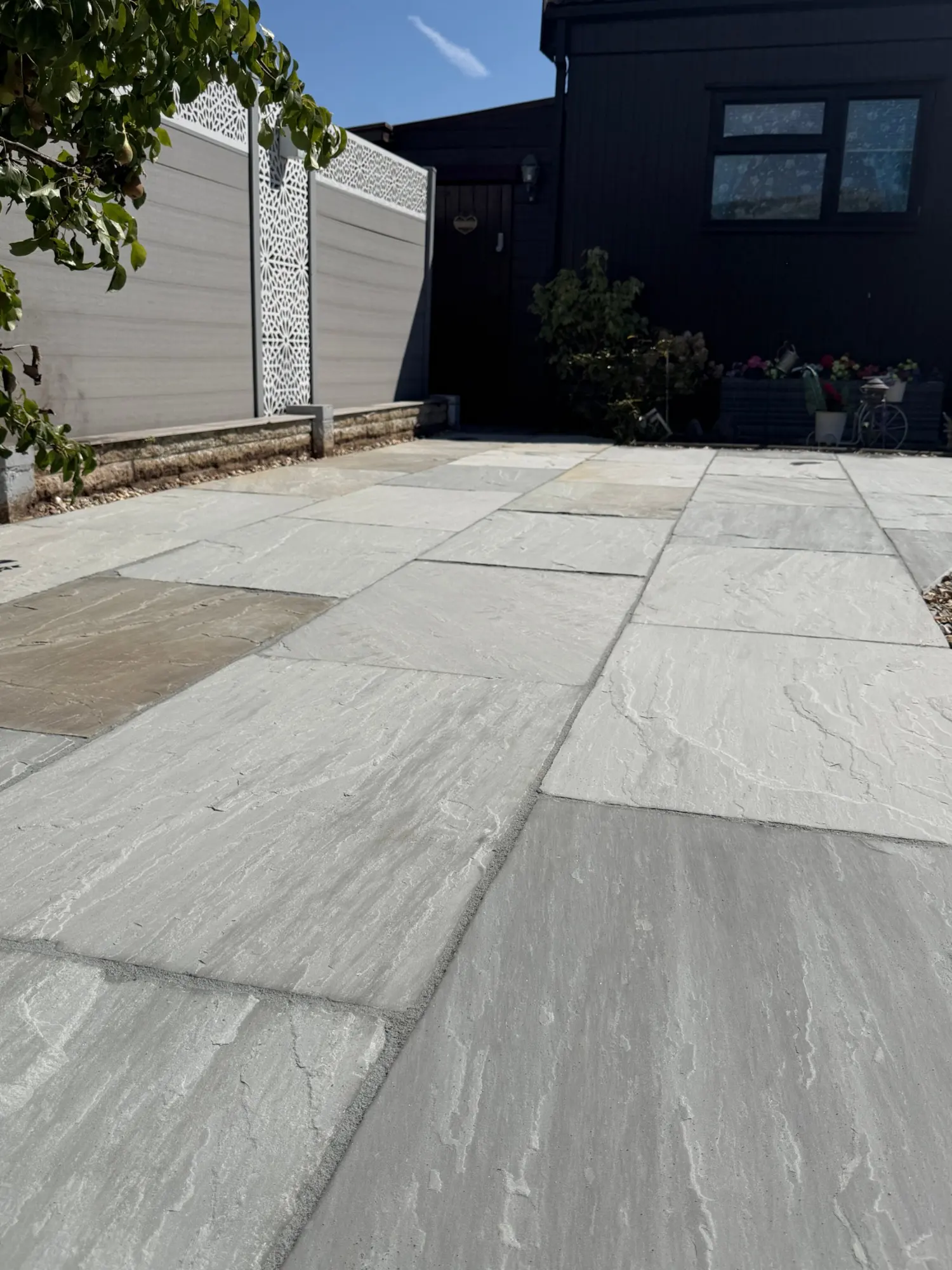
Grey natural stone paving in Lincolnshire laid as a rear patio beside composite fencing with decorative screen panels
Est. 2010 · Lincoln400+ projectsNational Design Academy qualified
PATIO CLEANING · LINCOLNSHIRE

Most winter patio staining starts with wet leaves and damp shade.

How to clean patio slabs through winter, remove black spots and keep your paving looking like new.
Reshape Landscaping Ltd10 min readUpdated October 2026
Prestige Awards 2026Landscaper of the Year, Lincolnshire
Houzz 2026Best of Service
Midlands Enterprise Awards 2026Best Bespoke Garden Landscaping Service, Lincolnshire

Paving in Lincolnshire picks up most of its staining between autumn and spring, when wet leaves, damp shade and short days stop a patio drying out. Green algae, black spots and leaf marks that were hard to see in summer show up clearly once the paving stays wet.

This guide covers why patios stain over the colder months, how to clean each type of paving and keep it looking like new, and the signs that the problem is in the laying. It also covers what to ask patio installers before any relaying goes ahead.

THE SHORT VERSION

  • Algae, black spots and leaf marks build up where paving stays wet and shaded through the colder months.
  • Brushing leaves and debris off every week does more to keep a patio clean than any product.
  • Porcelain needs only warm water and a mild detergent. Sandstone and limestone need a cleaner made for natural stone.
  • Keep a pressure washer on a low setting and off the joints, or the jointing will wash out.
  • A patio that turns green again within weeks of cleaning is holding water and needs relaying to the correct falls.

The Quick Answer

To clean paving in Lincolnshire through autumn and winter, clear leaves every week, brush the surface dry, then use a cleaner made for the paving type and rinse at low pressure. Porcelain cleans with warm water and a mild detergent, whereas natural stone needs a stone cleaner. Black spots, however, need a black spot remover, usually over several treatments. Where a patio stays wet or goes green again quickly, the falls or the joints are at fault. We lay and relay patios in Lincoln, Gainsborough, Scunthorpe, Sleaford and the surrounding areas.

Why Patios Stain Over Autumn and Winter

Most of the staining we find on patios over the colder months comes from four sources.

WHAT WE ARE FINDING ON SITE

Green algae filmA thin green layer on shaded paving that turns slippery once it is wet, most often beside fences, walls and trees.
Black spots on natural stoneSmall black dots on sandstone and limestone. These are lichens fixed into the surface of the stone, so brushing and pressure washing do not shift them. To remove black spots from a patio, a black spot remover made for natural stone is applied, usually over several treatments.
Leaf and tannin marksBrown outlines are left where wet leaves have sat on porous paving, so they show most on light sandstone and limestone.
Moss and weeds in the jointsGrowth in joints that have opened up or washed out, which lets more water into the bed below the paving.

Shade, Falls and Open Joints

Two patios laid with the same paving can stain very differently. A patio in shade dries slowly, and the RHS advice on algae and moss on hard surfaces notes that growth is fastest where light and air movement are poor.

Falls also matter as much as shade. Paving laid with a slight fall sheds rain to a drain or soakaway, and our guide to garden drainage covers the options. A flat or back-falling patio holds water in the same places every winter.

Open joints are the third factor, because once the jointing has cracked or washed out, water and seed settle in the gaps. The slab edges then stay damp long after the surface has dried.

How to Clean a Patio, Stage by Stage

Cleaning in this order clears the surface without damaging the joints or marking the paving. It suits the colder months, and our patio maintenance tips cover care through the rest of the year.

1

Clear the surface

Lift leaves, pots and furniture so the whole patio can dry and be cleaned evenly.

2

Brush it dry

A stiff outdoor broom removes loose dirt, moss and seed heads before any water goes on.

3

Check the joints

Note any joints that are open, cracked or washed out, as these need refilling once the patio is clean.

4

Test the cleaner

Try the product on a small hidden area first, as some cleaners mark or lighten natural stone.

5

Apply the cleaner

Wet the paving and apply a cleaner made for that paving type, at the strength given on the label.

6

Leave it to work

Give the product the contact time on the label, and keep it off lawns and planting.

7

Rinse at low pressure

Rinse with a hose, or a pressure washer on a low setting with the jet kept off the joints.

8

Refill and clear drains

Refill washed-out joints with a jointing compound that suits the paving, and clear leaves from drains and channels.

Brush, Pressure Washer or Relaying

Routine brushing with a cleaner made for the paving is the approach we recommend for most patios. Pressure washing and black spot removers both have a place. However, each has limits worth knowing before work starts.

OptionWhat it involvesWhat it fixesUpkeep afterBest suited to
Brush and a paving cleanerOur recommendationA weekly brush through leaf fall, with a cleaner made for the paving type when it is needed.Algae, dirt and fresh leaf marks.Brushing through the colder months, and a clean when marks appear.Most patios laid to the correct falls.
Low-pressure washingUse with careA pressure washer on a low setting, used after brushing.Surface grime that brushing has not shifted.Joints checked and refilled where any have washed out.Porcelain and harder stone, and sandstone only on a low setting.
Black spot removerFor black spotsA remover made for black spots, applied as the label states.Lichen spots on natural stone, usually over several treatments.A further treatment if new spots appear.Sandstone and limestone patios.
Relaying the patioLong-term fixPaving lifted, the bed and sub-base corrected, then relaid to the correct falls and rejointed.Standing water, rocking slabs and algae that keeps coming back.A brush and an occasional clean.Patios that hold water or move underfoot.
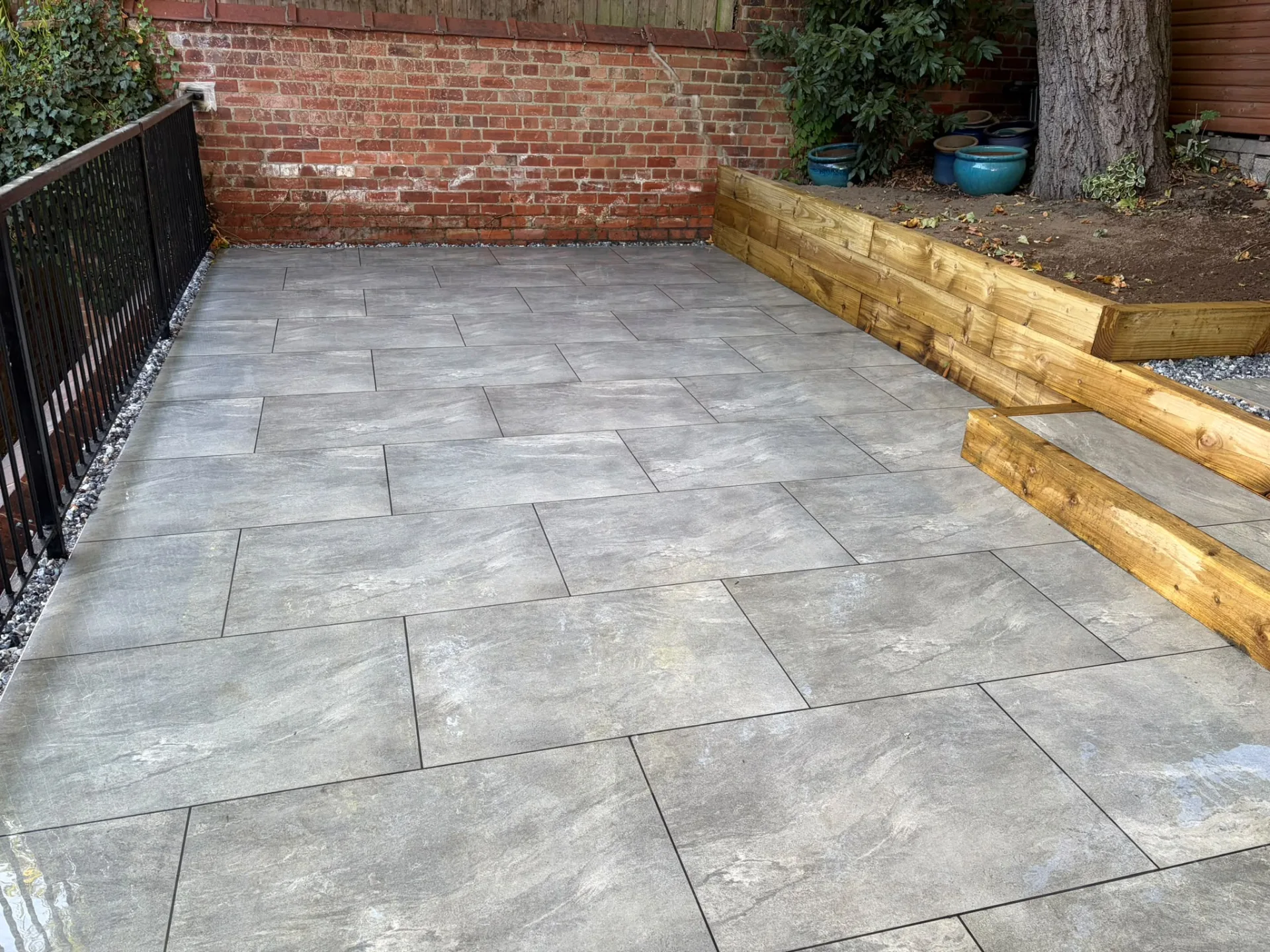
Large format grey porcelain patio laid in a staggered pattern beside timber sleeper steps by landscapers in Lincoln

Cleaning Each Type of Paving in Lincolnshire

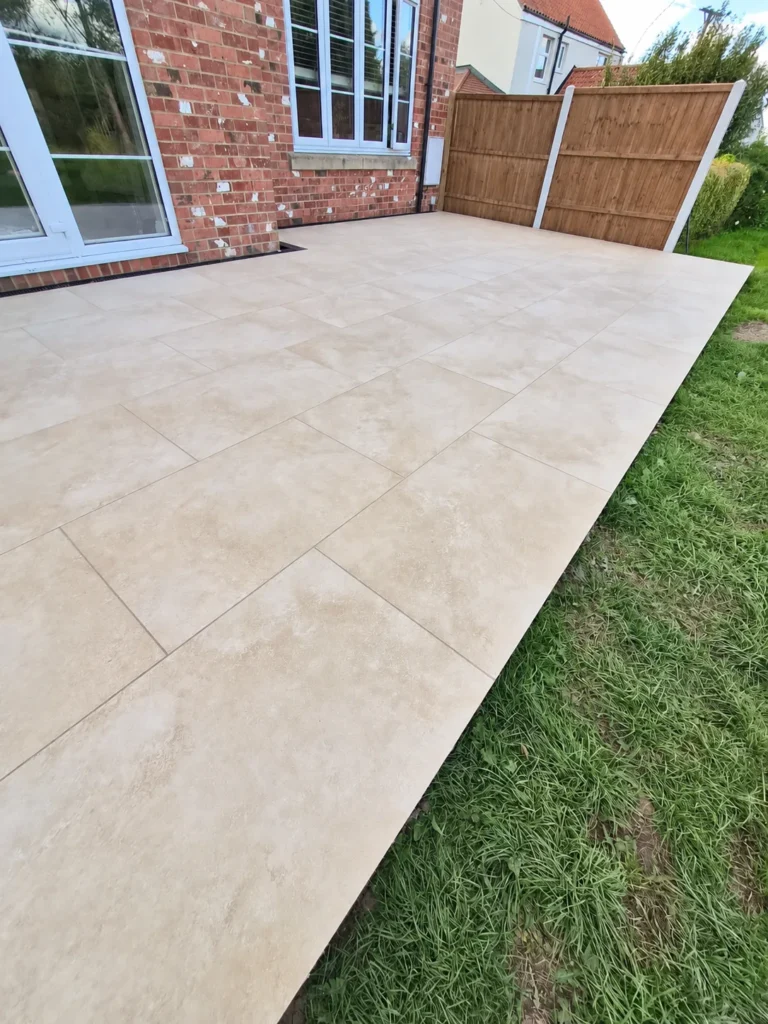
Porcelain patio with a lawn edge and fencing in a Lincoln garden
PORCELAINPorcelain Paving

To clean porcelain patio slabs, warm water, a mild detergent and a stiff brush clear most marks, as porcelain absorbs very little water. Avoid wax and oil-based products, which leave a film that turns slippery in the wet. Our guide to porcelain paving covers why it suits shaded gardens.
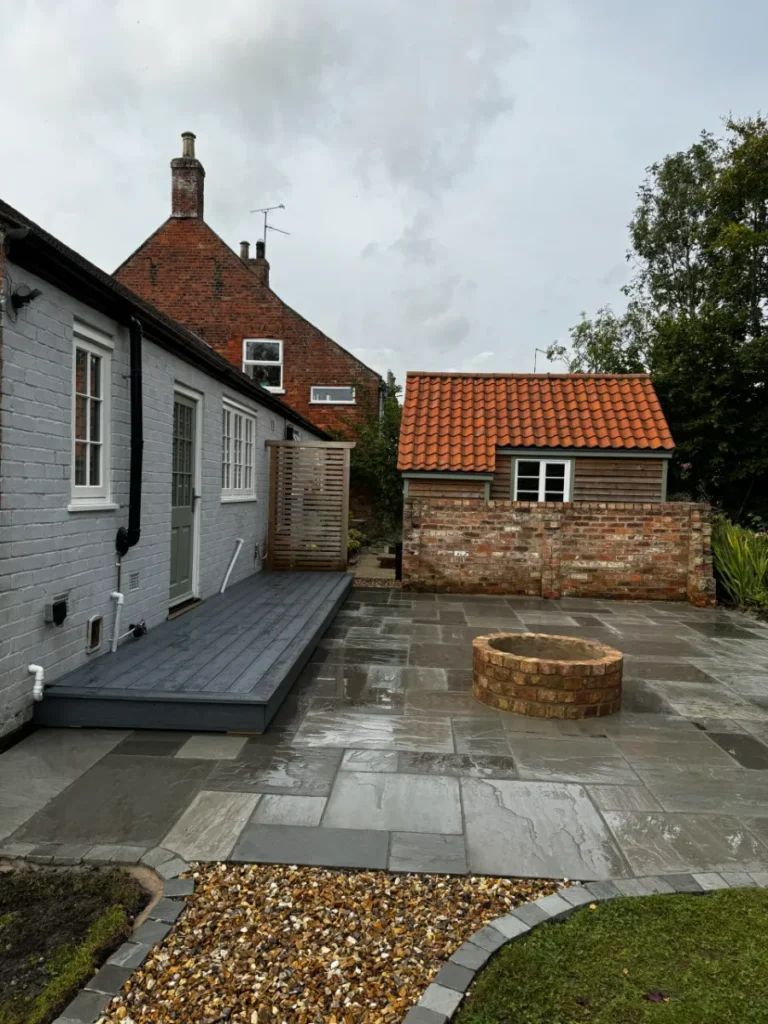
Sandstone patio beside composite decking in a Lincoln garden
NATURAL STONESandstone and Limestone

Sandstone and limestone, on the other hand, are softer and more porous. Use a cleaner made for natural stone, and keep acid-based products off limestone altogether, as they etch the surface.
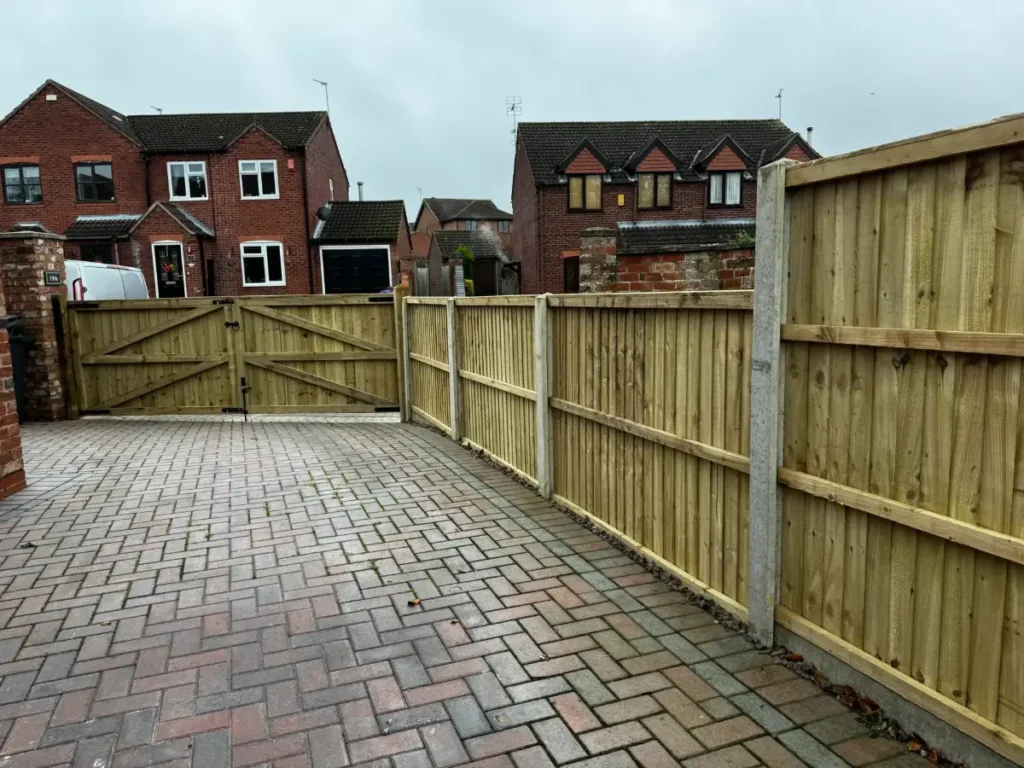
Block paving driveway with timber gates in Gainsborough
HARDER STONEGranite and Block Paving

Granite and Yorkshire stone are harder, although they still mark if the wrong product goes on. Block paving in concrete, clay and natural stone blocks also cleans the same way, with the jointing sand topped up once it has dried.
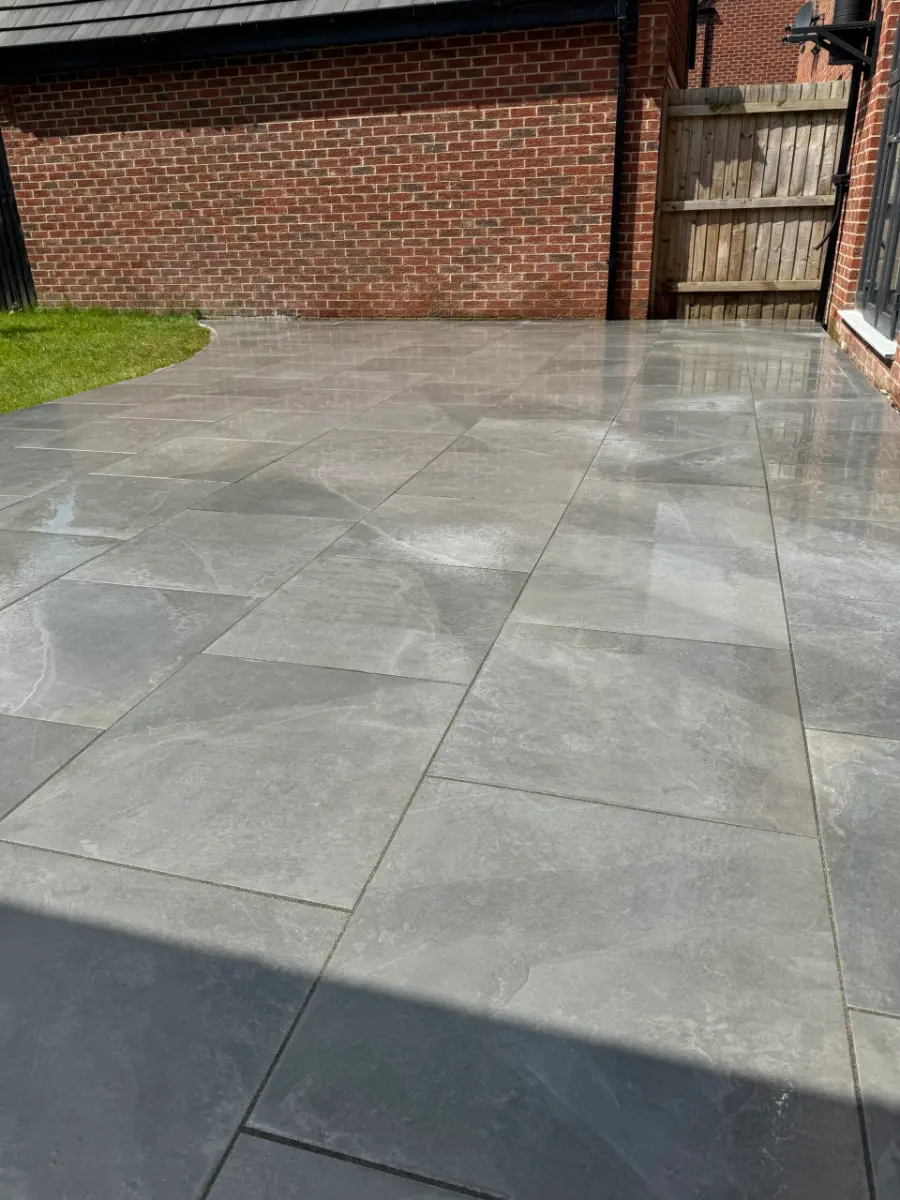
Grey porcelain paving across a rear garden in Lincolnshire, laid by Reshape Landscaping Ltd

Not sure if the staining will clean off?

We check the paving, the joints and the falls on a free site visit, and tell you if cleaning will hold or if the patio needs relaying.

Leaves, Frost and De-Icing Salt

Clearing leaves every week through leaf fall stops those marks forming and keeps drains and channels running.

Frost does most damage to paving in Lincolnshire where joints are open, so open joints are best refilled before the coldest weather.

Rock salt can also mark natural stone and concrete blocks. Use it sparingly on icy paving, and brush the residue off once the ice has gone.

Pots and furniture left in one spot all winter leave pale or green marks where the paving underneath cannot dry. Moving them every few weeks therefore keeps the colour even across the patio.

No two natural stone patios clean up the same, because every batch of sandstone and limestone varies in colour and texture.

Reshape Landscaping Ltd, Lincoln

Recent projects

RECENT PAVING WORK

Grey porcelain patio outside bifold doors on a brick house in Gainsborough, laid by Reshape Landscaping Ltd
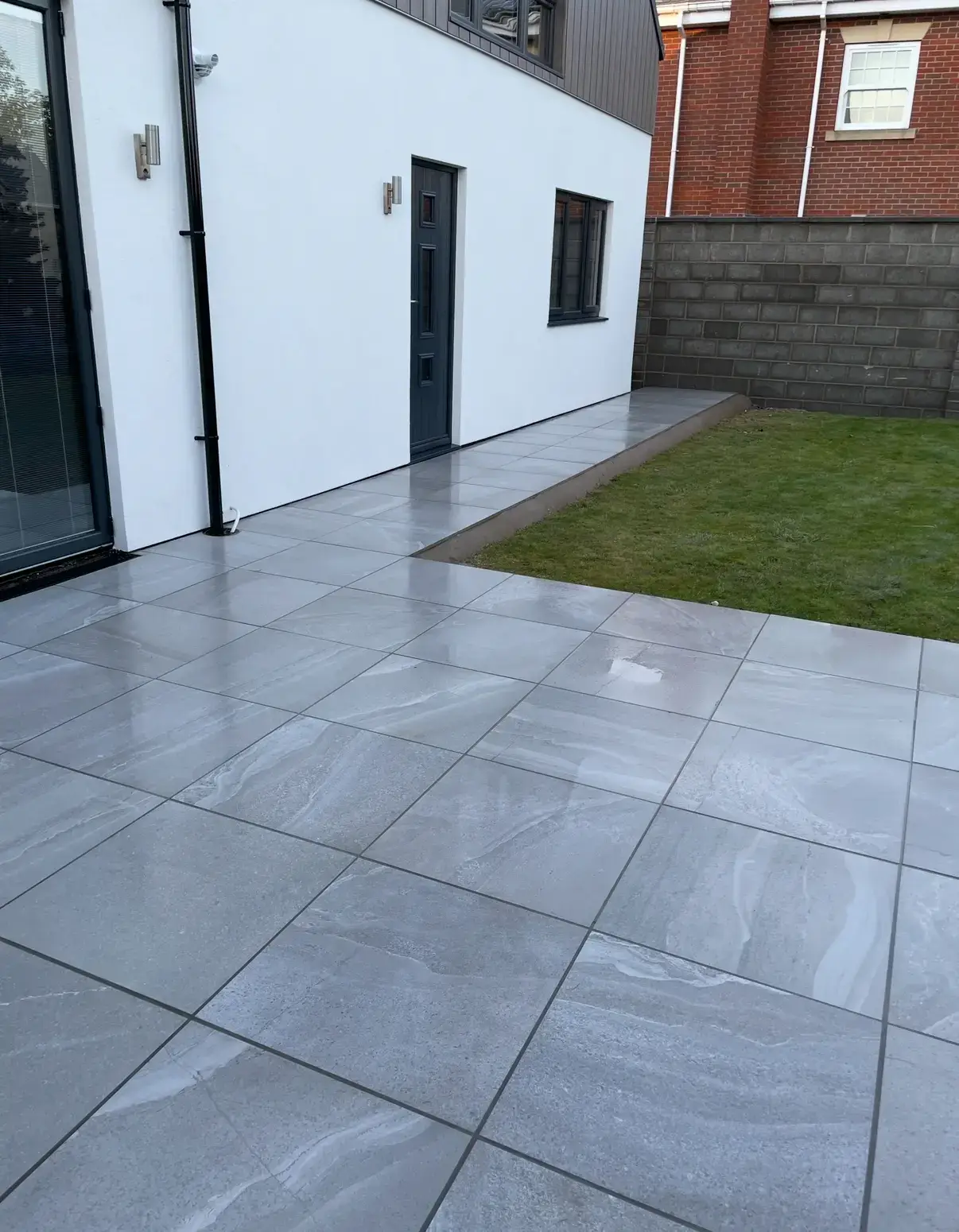
Large format grey porcelain paving across a rear garden in Lincoln, laid by Reshape Landscaping Ltd
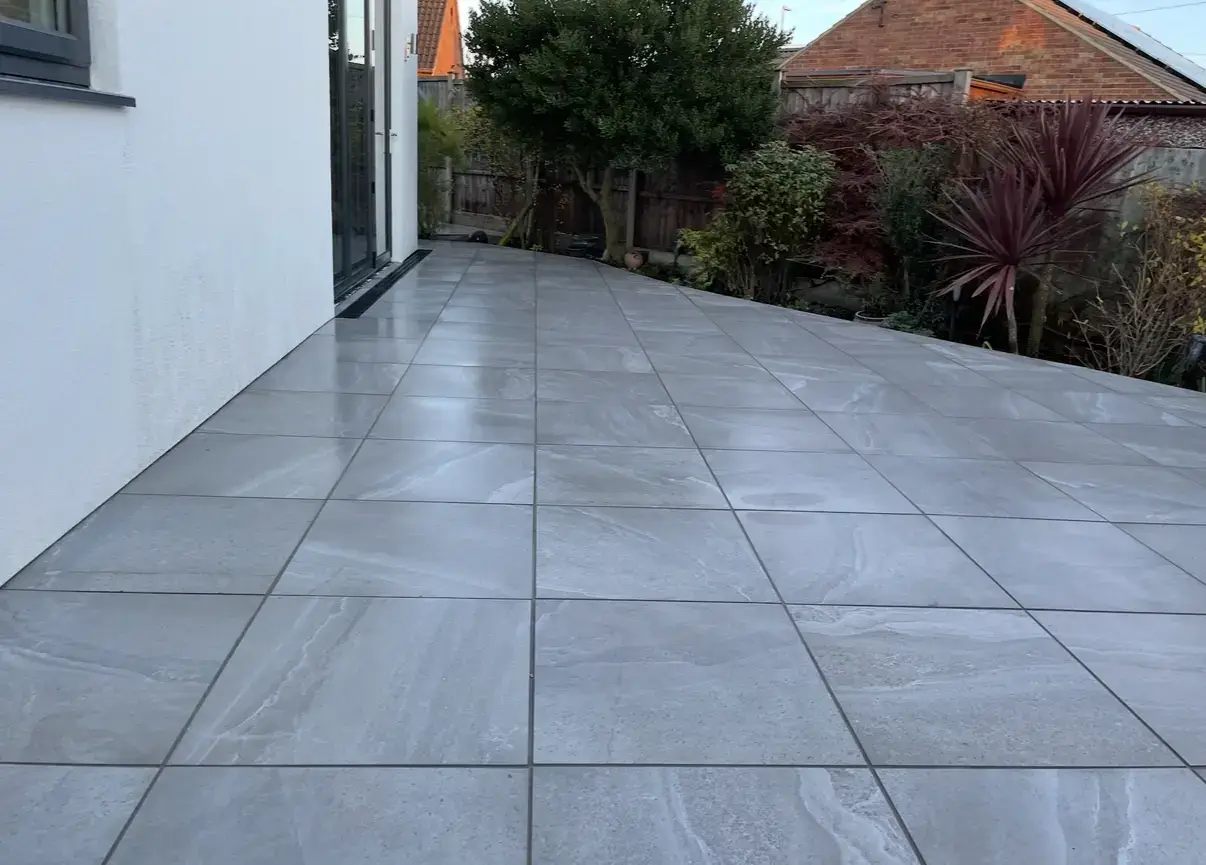
Grey stone-effect porcelain patio with a lawn edge beside a rendered house in Lincoln, by Reshape Landscaping Ltd
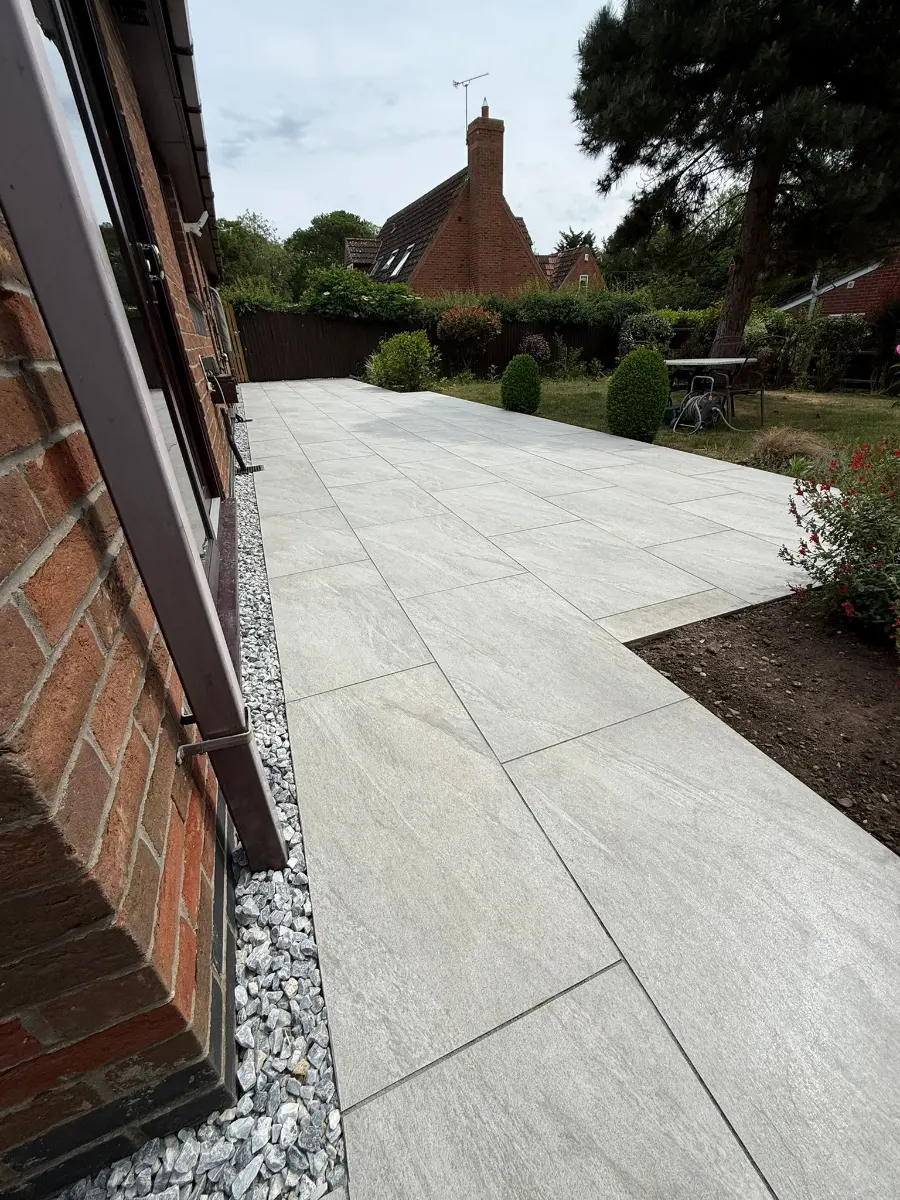
Light grey porcelain paving with a gravel strip along the house wall in Lincolnshire, by Reshape Landscaping Ltd
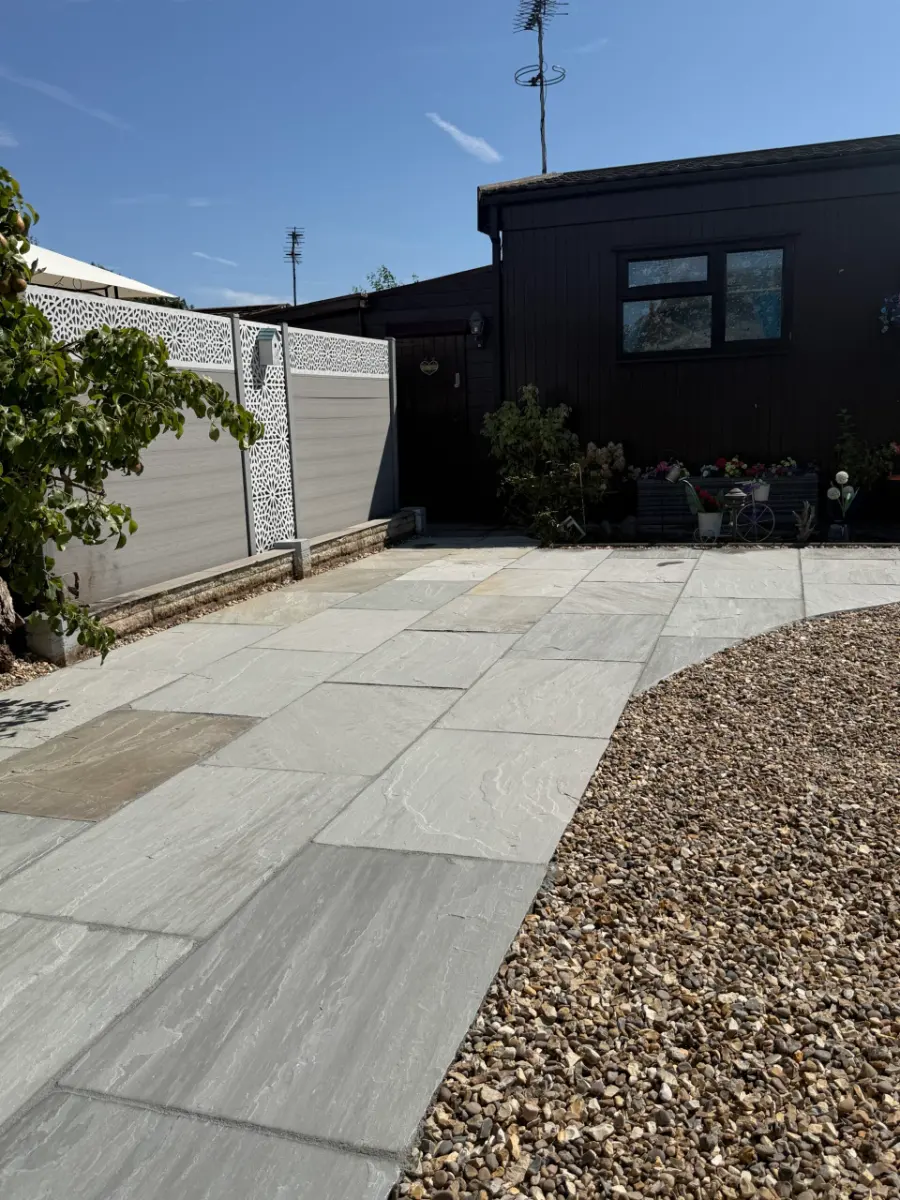
Grey riven paving path with gravel borders outside a timber garden building in Lincolnshire

When Cleaning Is Not Enough

Some patios stain because of how they were laid. Slabs that rock, sink or hold puddles, joints that keep washing out and algae that returns within weeks of cleaning all point to the bed or the falls.

When we relay paving in Lincolnshire, the old bed comes out, the sub-base is checked and made good, and the paving goes back on a full mortar bed. It is then laid to falls that carry water to a drain or soakaway.

Slabs that lift cleanly can often be cleaned and relaid. Otherwise, new paving goes down in their place. Our paving in Lincoln page covers the work around the city.

Explore the rest of what we do

What to Ask Patio Installers in Lincoln

Before a patio is relaid, ask what the paving will be bedded on, what falls it will be laid to and where the water will go. Also ask which jointing compound will be used, and check that it suits the paving. Ask too if any slabs will be reused, and how new paving will be matched to the old where they cannot.

Patio contractors quoting for relaying should also say what happens to the old bed and the sub-base. If a contractor skips any of these stages, ask what they are leaving out and why. To arrange a site visit, contact us.

WHY HOMEOWNERS PICK US

We are a British-owned and run landscaping company based in Lincoln, covering the city, Gainsborough, Scunthorpe, Sleaford and the surrounding areas.

  • Established in 2010, with over 400 completed projects.
  • Prestige Awards 2026 – Landscaper of the Year, Lincolnshire.
  • Houzz 2026 Best of Service award, judged on customer feedback.
  • Midlands Enterprise Awards 2026 – Best Bespoke Garden Landscaping Service, Lincolnshire.
  • Approved installers for Talasey Landscaping Solutions and Select Living Group.
  • Helped design and build a Japanese-inspired garden featured on ITV’s Garden of the Year.
  • Qualified through the National Design Academy.
  • Insured, including public liability.

Patio Cleaning: Frequently Asked Questions

For most patios, a stiff outdoor broom and a paving cleaner matched to the material do the job. Patio cleaners vary in strength, so dilute them as the label states and rinse well afterwards to stop residue drying on the surface.

They are usually lichens, which grow on sandstone, limestone and concrete paving that stays damp. They grip the surface tightly, so it can take a few weeks after treatment for the spots to fade as the lichen breaks down.

Yes. A small amount in warm water is fine for routine cleaning. Rinse it off fully, as soapy residue left to dry can leave a dull film and make the surface slippery.

Avoid wire brushes, which can scratch the surface, and any product containing hydrofluoric acid. Check that a cleaner is labelled as suitable for porcelain before it goes on.

It is best done on a dry day well above freezing, so the paving and joints can dry out before a frost. Water left in the joints overnight can freeze and loosen the jointing.

A brush every week through leaf fall and a full clean once or twice a year suits most patios. However, paving under trees or in full shade may need cleaning more often.

Areas We Cover

We lay and relay paving in Lincolnshire, with patios in Lincoln, Gainsborough, Scunthorpe, Sleaford and the surrounding areas. As a paving company in Lincoln, we work in porcelain, sandstone, limestone, granite and Yorkshire stone, along with block paving in Lincoln for paths and driveways. We also lay paving in Gainsborough and porcelain paving in Scunthorpe.

Book Your Free Site Visit

If a patio stays green, holds water or has started to rock, use the quote form or call us to arrange a site visit.

Our patios and paving page covers the full service. The Reshape blog has more guides on looking after a garden through the year.

We reply to every enquiry within 48 hours.

Keep reading

Share: